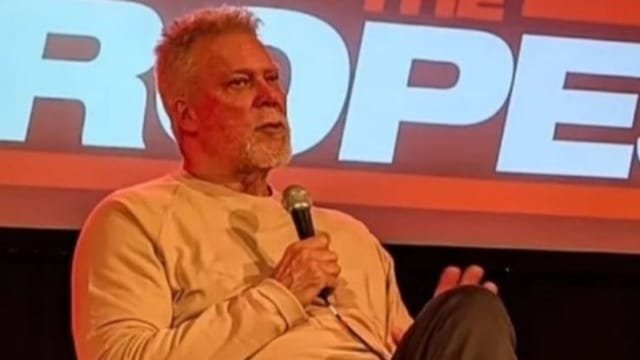
Kevin Nash WWE accusations have become one of the biggest talking points in the wrestling world after the Hall of Famer voiced concerns about royalty payouts and backstage conditions during a recent episode of his Kliq This podcast. The former WWE Champion claimed today’s royalty statements provide far less information than they did during the 1990s, making it difficult for performers to understand how merchandise revenue is calculated.
In addition to questioning WWE’s royalty reporting system, Nash also criticized the company’s handling of talent during the recent WWE Hall of Fame ceremony, alleging there was inadequate food available backstage and expressing disappointment with how he was treated by talent relations.
While these remarks reflect Nash’s personal experience and perspective, they have sparked broader discussions about financial transparency, talent relations, and how WWE balances its corporate growth with performer satisfaction.
Kevin Nash Questions WWE’s Royalty Payment Transparency
The centerpiece of Nash’s criticism focused on how royalty statements have changed over the years.
According to the WWE Hall of Famer, royalty reports issued during his full-time wrestling career were far more comprehensive. He recalled receiving lengthy statements that broke down merchandise sales across numerous categories, allowing talent to understand exactly where their earnings came from.
Nash argued that today’s statements are significantly shorter and provide only broad categories, making it difficult to determine total merchandise sales or calculate how royalties are generated.
“The actual breakdown that you receive is so… in the old days, the breakdown… was literally 50 pages thick. Now it’s like three.”
He suggested that the simplified reporting leaves performers with limited visibility into the commercial success of merchandise connected to their names, likenesses, or intellectual property.
Why Royalty Transparency Matters in Professional Wrestling
Royalty payments represent an important source of income for many current and former WWE performers.
Depending on contractual agreements, wrestlers may earn royalties from:
- Replica championship titles
- T-shirts and apparel
- Action figures
- Video games
- Trading cards
- Licensed collectibles
- Digital merchandise and intellectual property
Because merchandise often remains on sale years after a superstar’s active career ends, royalty income can become a meaningful long-term revenue stream.
Nash believes detailed reporting allows performers to better understand the value of their brand and verify how royalty payments are calculated.
Comparison: Nash’s Description of Then vs. Now
| Royalty Reporting | Earlier WWE Era | Current System (According to Nash) |
|---|---|---|
| Report Length | Approximately 50 pages | Around three pages |
| Sales Breakdown | Detailed product categories | Broad intellectual property categories |
| Transparency | High level of itemization | Limited information provided |
| Revenue Analysis | Easier to estimate sales | More difficult to verify totals |
Kevin Nash’s Concerns About Merchandise Revenue
During the podcast discussion, Nash explained that broad royalty categories make it challenging for talent to estimate the total revenue generated by merchandise.
He used a simplified financial example to illustrate why detailed reporting is important, arguing that without itemized sales information, performers cannot accurately determine how successful individual products have been.
His comments were not directed at any single product but rather at the overall structure of royalty reporting.
Hall of Fame Ceremony Experience Draws More Criticism
Nash also expressed disappointment with his experience during the recent WWE Hall of Fame ceremony, where he inducted former NBA star and nWo associate Dennis Rodman.
According to Nash, talent spent many hours backstage before the ceremony concluded, but the available food options were extremely limited.
“Be there at three, leave at midnight… absolutely not a stitch of food for the talent available.”
He claimed there was little protein available for performers, describing the catering as insufficient for individuals expected to remain at the venue throughout the day.
Concerns About Talent Relations
Beyond catering, Nash said he felt overlooked by WWE’s talent relations department during the event.
He stated that a senior official did not acknowledge him until later in the evening, leaving him feeling disappointed after returning for one of WWE’s most prestigious annual ceremonies.
These comments reflect Nash’s personal account of the event and have generated discussion among wrestling fans regarding how former legends are welcomed during major WWE occasions.
Why Veteran Voices Continue to Shape Wrestling Conversations
Kevin Nash remains one of wrestling’s most influential personalities despite retiring from regular in-ring competition.
As a founding member of the New World Order (nWo), multiple-time world champion, and WWE Hall of Famer, his opinions continue to attract attention throughout the industry.
His podcast frequently explores subjects including:
- Business practices in professional wrestling
- Talent contracts
- Locker room culture
- Creative decision-making
- Industry history
Because of his decades of experience, many fans view his observations as valuable insight into how the wrestling business has evolved.
How WWE’s Business Model Has Changed
Professional wrestling has transformed dramatically since Nash’s full-time career in the 1990s.
Today’s WWE generates revenue from multiple global sources, including streaming partnerships, international media rights, premium live events, sponsorships, licensing agreements, and digital platforms.
As the company’s business model has evolved, administrative systems—including royalty reporting—may also have changed to reflect modern commercial operations.
Nash’s comments highlight the ongoing debate over whether those changes have improved efficiency while reducing financial transparency for performers.
Industry-Wide Discussion on Performer Compensation
Questions surrounding royalty payments are not unique to WWE.
Across sports and entertainment, athletes, actors, musicians, and creators often seek greater clarity regarding licensing income, residual payments, and intellectual property earnings.
Nash’s remarks therefore extend beyond wrestling and touch on a broader issue affecting many entertainment industries: balancing streamlined reporting with sufficient transparency for talent.
What This Means for WWE
Although WWE has not publicly responded to Nash’s remarks, comments from respected Hall of Famers often generate significant discussion within the wrestling community.
For fans, these conversations provide a rare glimpse into the business side of professional wrestling—an area that typically receives far less attention than storylines and championship matches.
Whether or not changes result from such discussions, they continue to fuel interest in how modern wrestling companies support both active performers and retired legends.
Conclusion
Kevin Nash’s latest comments have placed the spotlight on two important issues: the transparency of WWE royalty payments and the treatment of talent during major company events. By comparing today’s royalty reports with those from earlier decades, Nash argued that performers now receive less detailed information about merchandise revenue, making it harder to understand how payments are calculated.
His criticism of backstage arrangements during the WWE Hall of Fame ceremony further added to the discussion about how wrestling legends are supported when they return for company events.
While these remarks represent Nash’s personal perspective, they have reopened broader conversations about performer welfare, financial transparency, and the evolving relationship between WWE and the talent that helped build its global success.
For breaking news and live news updates, like us on Facebook or follow us on Twitter and Instagram. Read more on Latest Sports on thefoxdaily.com.






COMMENTS 0