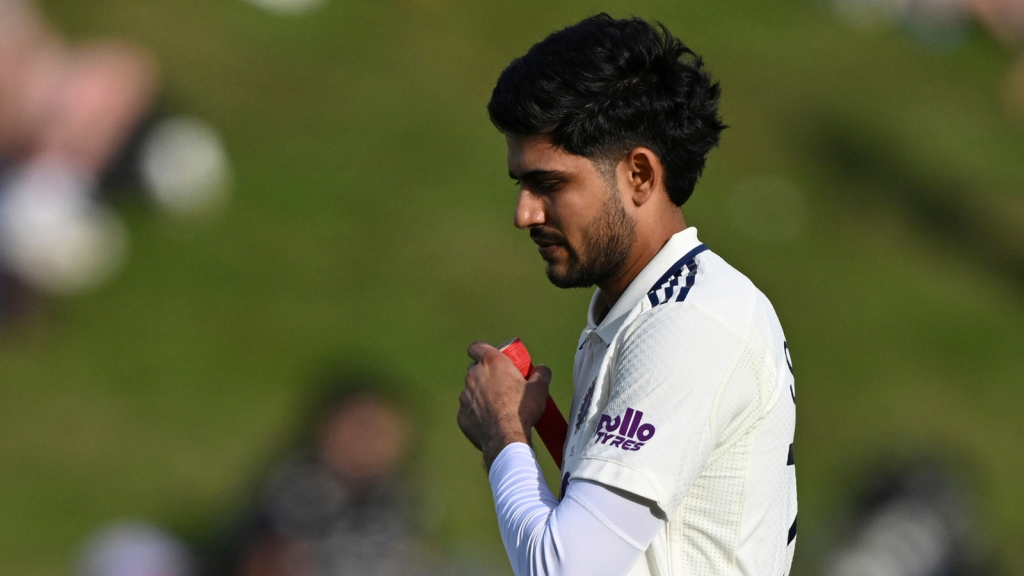
India captain Shubman Gill has criticised the pitch prepared for the first Test in Wellington after his team’s attempt to secure victory ended in a draw. With more than 1,300 runs scored for the loss of just 24 wickets across five days, Gill felt the surface became increasingly flat and slow, making it difficult for India to force a result.
India had created an opportunity to take control early in the match after reducing the hosts to 70/5 on the opening day. However, a strong recovery led by Henry Nicholls and Glenn Phillips changed the course of the contest. Their double-century partnership helped the hosts reach 368, leaving India with a difficult task despite building a substantial first-innings lead.
The visitors declared their first innings midway through the fourth day and then bowled for 120 overs in an effort to complete the victory. However, they managed to take only five wickets, allowing the hosts to survive until the end of the match.
For Gill, the nature of the pitch was a major reason India could not convert their advantage into a win. The result was particularly disappointing because the team needed victories to improve its position in the World Test Championship (WTC) standings.
Gill questions the quality of the Wellington pitch
Gill explained that India’s expectations about the playing surface changed as the match progressed. The team initially believed the pitch would offer considerably more assistance to the bowlers, but conditions became increasingly favourable for batting over the final three days.
According to the India captain, the surface did not deteriorate significantly despite the number of overs bowled and the time spent playing on it. The lack of visible indentations and the gradual loss of pace made it difficult for India’s bowlers to create the pressure required to take regular wickets.
“When we started the Test match, we thought there’ll be a lot more in the wicket. [But] on Day(s) 3, 4, and 5, it just went flatter and flatter. There were no indentations on the wicket. There was no impact of the overs being bowled on the wicket, or even the days being played. The wicket just got slower, so having seen that, I think it was not a great Test wicket, especially if you want results,” Gill said after the game.
His comments reflected the frustration within the Indian camp after a match in which the bowlers had to work for long periods without receiving enough assistance from the surface. India had made an encouraging start by taking five early wickets, but the conditions later became more difficult for the attack.
Test pitches in New Zealand can often begin with a noticeable green covering, offering movement and assistance to fast bowlers. As matches progress, however, those surfaces can become flatter, reducing the amount of help available to the bowling side. The Wellington contest followed that pattern, with batting becoming increasingly comfortable as the days passed.
Early breakthrough lost after Nicholls and Phillips partnership
India appeared to be in a strong position on the first day after dismissing five opposition batters for just 70 runs. The early wickets gave the visitors an opportunity to put the hosts under pressure and potentially take control of the match.
However, Henry Nicholls and Glenn Phillips produced a crucial response, putting together a double-century partnership that transformed the innings. Their resistance prevented India from building on the early breakthroughs and helped the hosts recover to a total of 368.
The partnership was particularly important because it allowed the batting side to move beyond a difficult start without losing control of the innings. As the pitch became slower and flatter, the Indian bowlers found it increasingly challenging to break through.
India eventually built a substantial first-innings lead and declared midway through the fourth day. That decision gave the visitors an opportunity to attack the opposition and attempt to take the remaining wickets before the match ended.
Despite bowling 120 overs, India could dismiss only five batters in the second innings. The hosts successfully resisted the pressure, and the match ended without a result. For a side that had worked hard to establish an advantage, the inability to finish the job was a major disappointment.
WTC pressure makes the draw more frustrating
The result carried greater importance because of India’s position in the World Test Championship standings. India remained fourth in the table, and the dropped opportunity to collect a victory made their route to the final more difficult.
Under the WTC format, teams compete for points across a series of Test matches, making every result important in the race to finish among the leading sides. A draw can still provide points, but it does not offer the same benefit as a victory. For India, the Wellington result meant missing an opportunity to make meaningful progress in the standings.
Gill acknowledged that the importance attached to WTC qualification has changed the way teams and supporters view drawn Test matches. In earlier periods, draws were more common, particularly during five-match series in which conditions could make it difficult for either side to force a result.
“We talk about results a lot more because of the WTC. Before, draws were a lot more common, so people didn’t talk about draws as much,” Gill said.
The India captain pointed out that drawn matches were a more familiar part of Test Cricket in previous years. He recalled that during five-match series, it was not unusual for two games to end without a winner. In recent years, however, the number of draws has decreased, increasing the pressure on teams to produce decisive results.
“For the last six-seven years, there haven’t been as many draws; otherwise, earlier if a team went to play a five-match series, two matches would definitely end in draws. So, it was a bit common back then; now it’s not that common. That’s why we aren’t used to draws. Because of that, the frustration definitely feels greater.”
Gill’s remarks underline how the WTC has added another layer of importance to traditional Test cricket. Teams are no longer focused only on winning individual matches and series; they must also consider how every result affects their chances of reaching the championship final.
India’s remaining Tests leave little room for mistakes
India still have opportunities to improve their position, but the remaining schedule makes the task challenging. Following the second Test, which is scheduled to begin in Christchurch on Friday, the team has only a five-Test home series against Australia remaining in the current WTC cycle.
That leaves India with six matches in which to strengthen their position and move closer to qualification. The second Test will therefore be particularly important, as another dropped opportunity could increase the pressure heading into the home series.
Despite remaining fourth in the standings, Gill has not given up hope of reaching the WTC final. The captain believes India can still put themselves in a strong position if they produce consistent performances and win most of their remaining matches.
“Even from now on, if we play well and if we win, I think five out of the next six, I think we should be in a good position to qualify for the WTC [final],” Gill said.
His target is clear: India need five victories from their next six Tests to give themselves a strong opportunity to qualify. Achieving that objective will require the team to perform consistently in Christchurch and then make the most of home conditions against Australia.
The challenge will involve both batting and bowling. India’s attack will need to take advantage of helpful conditions when they are available, while the batters must build substantial innings and put the opposition under pressure. The Wellington draw showed how difficult it can become to force a result when a pitch offers limited assistance to bowlers.
Second Test becomes an important opportunity
India’s immediate focus will now shift to the second Test in Christchurch. After failing to turn their advantage into a victory in Wellington, the visitors will be keen to respond and avoid losing further ground in the WTC standings.
The first match also provides lessons for the bowling attack. Taking early wickets is important, but India must find ways to maintain pressure when opposition batters settle at the crease. The long partnership between Nicholls and Phillips demonstrated how quickly an initially strong position can change if a team cannot break a developing stand.
Pitch conditions will remain an important factor, particularly in New Zealand, where the balance between pace bowling and batting can change during a Test match. India’s ability to adapt to those changes could influence the outcome of the next contest.
For Gill, the priority is to turn frustration into a stronger performance. His criticism of the Wellington surface reflects the difficulty India faced, but the team still has a route back into contention if it can deliver the results required in the remaining matches.
India’s WTC final hopes remain alive
The draw in Wellington was a missed opportunity for India. After reducing the hosts to 70/5, building a substantial first-innings lead and bowling 120 overs in the second innings, the visitors could not find the final wickets needed to secure victory.
Gill believes the pitch became too flat and slow to produce the kind of contest that would favour a decisive result. His comments also highlighted the growing pressure created by the World Test Championship, where a draw can have a significant impact on a team’s qualification prospects.
India remain fourth in the standings, but the captain is still targeting five victories from the next six Tests. The upcoming match in Christchurch and the five-Test home series against Australia will determine whether the team can turn that ambition into reality.
The task is demanding, but Gill has made it clear that India have not abandoned their hopes of reaching the final. Their response in the remaining matches will be crucial, and the team will need to convert strong positions into victories if it wants to remain in the WTC title race.
For breaking news and live news updates, like us on Facebook or follow us on Twitter and Instagram. Read more on Latest Cricket on thefoxdaily.com.






COMMENTS 0