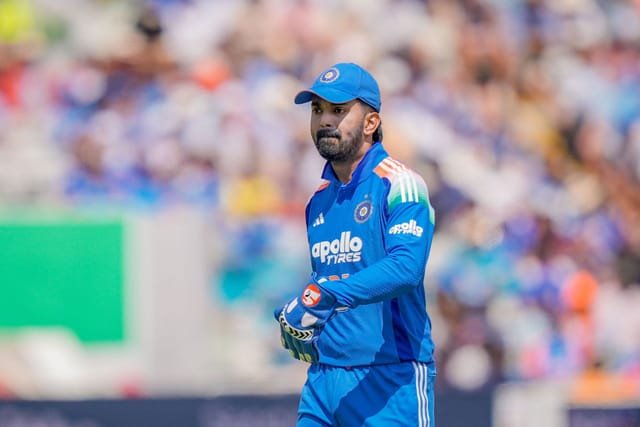
Team selection and batting-order decisions often define ODI cricket, but few tactical calls have generated as much immediate discussion as India’s surprising choice to send Washington Sundar ahead of KL Rahul during the first ODI against England at Edgbaston.
What initially appeared to be a routine batting adjustment quickly evolved into one of the biggest talking points of the match. Former India pacer Dodda Ganesh openly criticized the move, questioning why one of India’s most successful ODI middle-order batters was pushed down the order despite possessing an exceptional record at No. 5.
The debate goes beyond a single match. It touches upon a larger question facing modern cricket teams: should batting positions be determined by proven statistical success or by tactical flexibility based on match situations?
What Happened During India’s Run Chase?
India appeared to be cruising toward victory while chasing England’s target of 259 at Edgbaston.
The visitors had established a strong platform before captain Shubman Gill was forced to leave the field temporarily after suffering cramps.
With India comfortably placed, many expected KL Rahul to walk in at No. 5.
Instead, the team management surprised everyone by promoting all-rounder Washington Sundar ahead of the experienced wicketkeeper-batter.
The move immediately raised eyebrows among fans, commentators, and former players.
While tactical promotions are common in modern white-ball cricket, Rahul’s outstanding record in the role made the decision particularly controversial.
Why the KL Rahul Decision Became Controversial
The criticism centered around one simple fact: KL Rahul has been one of India’s most productive ODI batters at No. 5.
Over the years, he has transformed himself into a reliable middle-order anchor capable of both rebuilding innings and accelerating during the death overs.
His performances in pressure situations have repeatedly justified India’s faith in him as a middle-order specialist.
Moving him away from that position naturally invited scrutiny.
Critics argued that batting roles should not be altered without compelling tactical reasons, especially when a player has demonstrated consistent success in a particular slot.
KL Rahul’s Outstanding Record at No. 5
The numbers help explain why many observers were surprised.
| Position | Performance Trend |
|---|---|
| No. 5 | One of India’s most productive middle-order batters |
| No. 6 | Noticeably lower returns compared to No. 5 |
| Role Strength | Anchoring and finishing innings |
| Experience | Extensive ODI middle-order success |
Rahul’s success at No. 5 has been built on his ability to adapt to different match scenarios. Whether arriving during a collapse or entering when acceleration is required, he has consistently delivered stability.
This versatility has made him one of India’s most valuable ODI assets.
Why India May Have Promoted Washington Sundar
Although the decision attracted criticism, it likely emerged from a strategic thought process rather than impulse.
Modern ODI cricket increasingly rewards flexible batting orders, particularly when teams want to maximize specific matchups.
Possible reasons behind the promotion include:
- Maintaining a left-right batting combination.
- Allowing Rahul to play a finishing role later in the innings.
- Giving Sundar an opportunity against a particular bowling phase.
- Increasing batting depth and flexibility.
- Experimenting ahead of major ICC tournaments.
International teams frequently make similar tactical adjustments, particularly when conditions favor certain batting styles.
However, the effectiveness of such strategies often depends entirely on the eventual result.
Dodda Ganesh’s Strong Reaction
Former India fast bowler Dodda Ganesh was among the most vocal critics of the move.
He argued that Rahul’s established success at No. 5 should have made him the automatic choice once Gill left the field.
His criticism reflected a traditional cricketing viewpoint that emphasizes role clarity and maximizing players in positions where they have historically excelled.
The former pacer also suggested that even if Sundar succeeded with the bat, the underlying decision would still remain questionable because it ignored Rahul’s proven credentials.
That perspective resonated with many fans who believe statistics should play a major role in determining batting positions.
The Bigger Question: Data vs Tactical Innovation
The controversy highlights an increasingly important debate in modern cricket.
Teams today rely heavily on analytics, matchups, and situational planning.
As a result, batting orders are no longer fixed in the traditional sense.
Many coaches prefer dynamic lineups where players can move according to conditions and game situations.
However, critics argue that excessive experimentation can disrupt player confidence and reduce consistency.
Finding the right balance between statistical evidence and tactical flexibility remains one of the most difficult challenges for coaching staffs.
Washington Sundar’s Growing Importance in India’s ODI Plans
The promotion also signals how highly India values Washington Sundar’s all-round abilities.
While he is primarily known for his off-spin bowling, Sundar has steadily developed into a useful lower-middle-order batter.
His calm temperament and ability to rotate strike make him an attractive option in challenging run chases.
India’s management may view him as a long-term all-round solution capable of providing balance in ICC tournaments.
If that is indeed the case, opportunities higher up the order could become more frequent in the future.
Why Batting Order Stability Matters Before Major ICC Events
One factor that makes the debate especially significant is the proximity of future ICC tournaments.
Teams often spend bilateral series experimenting with combinations before settling on a preferred structure.
However, prolonged uncertainty can create complications.
- Players become unsure of their roles.
- Preparation routines are disrupted.
- Match-specific planning becomes harder.
- Consistency may suffer.
For a team with championship ambitions, establishing clarity in the batting order remains crucial.
That is why every major batting decision attracts such intense attention.
Could India Be Preparing for a Different ODI Approach?
One intriguing possibility is that India’s management is intentionally moving toward a more aggressive and adaptable ODI strategy.
Recent global trends suggest teams are placing greater emphasis on flexibility rather than fixed batting positions.
Successful sides often promote players based on match situations instead of rigid hierarchy.
If India is embracing that philosophy, the Sundar promotion may represent a glimpse into their future planning rather than a one-off experiment.
Whether that approach succeeds will ultimately depend on results against elite opposition.
What This Means for KL Rahul Going Forward
Despite the debate, KL Rahul’s position in India’s ODI setup remains secure.
His consistency, experience, and adaptability make him one of the team’s most trusted batters.
One tactical adjustment is unlikely to alter his long-term importance.
However, the incident does raise questions about how India envisions its middle order moving forward.
If management continues experimenting with batting positions, Rahul may increasingly find himself used as a flexible option rather than a fixed No. 5.
That evolution could significantly shape India’s ODI strategy over the next few years.
Conclusion
India’s decision to send Washington Sundar ahead of KL Rahul in the first ODI against England may appear like a minor tactical adjustment, but it has sparked a much larger conversation about team strategy, player roles, and modern cricket thinking.
Supporters of the move view it as a progressive attempt to increase flexibility and maximize match-specific advantages. Critics argue that ignoring Rahul’s exceptional record at No. 5 unnecessarily weakens one of India’s proven strengths.
As cricket continues evolving, such debates are likely to become increasingly common. What remains certain is that batting-order decisions will continue to be scrutinized, especially when they involve players as important as KL Rahul.
Whether the move proves visionary or misguided, it has already succeeded in highlighting one of the most fascinating tactical discussions in contemporary ODI cricket.
For breaking news and live news updates, like us on Facebook or follow us on Twitter and Instagram. Read more on Latest Sports on thefoxdaily.com.






COMMENTS 0