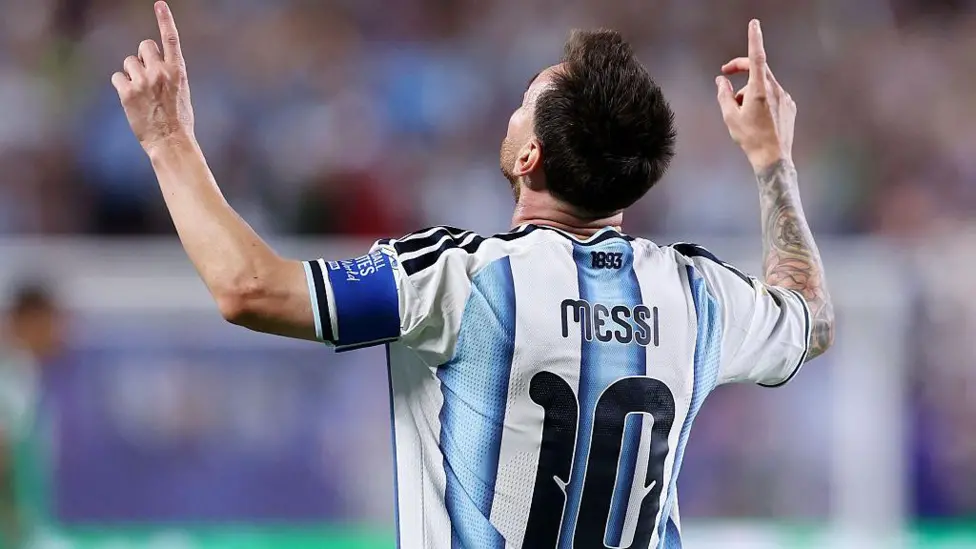
The Lionel Messi World Cup record 2026 story is no longer just about goals, penalties, or statistics. It has evolved into something deeper: a case study in longevity, elite psychology, and the sustained motivation required to perform at the highest level into the late 30s.
Even after breaking the FIFA World Cup scoring record and continuing to deliver decisive performances for Argentina, the bigger question now surrounds how Messi is still doing it—physically, mentally, and emotionally—at an age when most footballers have already retired.
Insights from football figures like Olivier Giroud, Wayne Rooney, and sports psychologists highlight that Messi’s continued dominance is not accidental. It is built on discipline, internal motivation, and an almost childlike connection to the game.
Primary keyword: Lionel Messi World Cup record 2026
SEO keywords: Messi mentality 2026 World Cup, Messi longevity in football, sports psychology elite athletes, Ronaldo vs Messi World Cup 2026, Messi fitness and diet routine, Messi motivation analysis, ageing footballers performance, World Cup scoring record Messi, elite athlete mindset football, Messi career longevity factors
Why Messi Is Still Dominating at 39: The Core Explanation
One of the most striking themes emerging from Messi’s 2026 World Cup performances is that his success is no longer driven by physical explosiveness alone. Instead, it is powered by a combination of:
- Elite technical ability that does not decline significantly with age
- Extreme discipline in lifestyle and recovery
- Deep psychological motivation
- Continuous adaptation to physical limitations
This combination allows him to remain decisive even when his athletic peak years are behind him.
Olivier Giroud on Messi: “It’s in His DNA to Compete”
Former teammate and France striker Olivier Giroud has pointed out that Messi’s longevity is rooted in an unchanging competitive mindset.
According to Giroud, what separates Messi from ordinary elite players is not just talent, but a relentless internal drive to improve even after achieving everything in football.
“It’s clear just how passionate Messi still is for football and you can tell it’s in his DNA to always be a competitor.”
Giroud also emphasizes the importance of “life hygiene” for athletes at this stage of their careers—sleep, diet, recovery, and physical maintenance become as important as training itself.
At elite level beyond 35, performance is no longer about pushing harder—it is about recovering smarter.
The Hidden Foundation: Lifestyle Discipline and Sports Science
Modern football has extended careers significantly, but only for those who fully embrace sports science. Messi’s continued performance in the World Cup record 2026 run reflects this evolution.
Key factors include:
- Precision-controlled training loads
- Personalized recovery systems
- Strict nutritional planning
- Sleep optimization
- Injury prevention routines
At this level, small margins decide whether a player can compete in consecutive high-intensity tournaments or decline physically.
The Psychological Battle: Why Motivation Becomes Harder With Age
Sports psychologist Michael Caulfield explains that elite athletes face a different kind of challenge in their late 30s—mental fatigue rather than physical decline.
After winning everything, the challenge is no longer achievement. It becomes repetition.
The key question shifts from “Can I win this?” to “Can I still commit to doing this every day?”
According to Caulfield, what defines athletes like Messi is their ability to endure the “daily grind” of training, rehab, and competition for decades without losing internal drive.
“They have to maintain the sheer will to go through rehab after injuries when they know they’ve already won everything.”
Messi and the “Childlike Joy” Factor
One of the most repeated ideas from those who have worked with Messi is that he has never lost his emotional connection to football.
Even at 39, he is often seen practicing small technical drills, keepy-ups, and rondos—activities associated with youth academies rather than global superstars.
This is not symbolic—it is structural to his performance.
Psychologists argue that this “childlike joy” is one of the strongest predictors of long-term athletic longevity.
Wayne Rooney’s Perspective: Skill Never Fades
Former England striker Wayne Rooney, who played against Messi at his peak, has highlighted a key truth about ageing athletes: physical decline affects speed and stamina, but not elite skill.
“The one thing age can never take away from players is their ability with the ball.”
This explains why Messi remains decisive even in reduced physical phases of his career. His decision-making, spatial awareness, and technical precision compensate for lost acceleration.
In tight World Cup matches, these qualities matter more than raw speed.
Rivalry Psychology: Messi vs Ronaldo at 2026 World Cup Stage
The 2026 World Cup also continues the long-running narrative of Lionel Messi and Cristiano Ronaldo competing at the highest level deep into their careers.
While Messi has broken the World Cup scoring record with Argentina, Ronaldo’s presence with Portugal adds a comparative psychological layer to the tournament.
Rooney notes that rivalry itself has historically pushed both players beyond normal limits, forcing constant reinvention and sustained elite performance.
Even as they age, neither player appears willing to accept decline as final.
Why Elite Athletes Refuse to Stop
Experts suggest that athletes like Messi do not continue simply because they can—but because their identity is tied to competition.
Three key psychological drivers explain this:
- Unfinished mastery: the belief there is still something to improve
- Identity fusion: sport becomes inseparable from self
- Intrinsic joy: enjoyment of the process itself
This is why retirement is often more psychologically difficult than physical decline.
Comparing Generations: Why Messi’s Longevity Stands Out
In previous eras, footballers rarely remained elite beyond their early 30s. Today, players like Messi, Ronaldo, and Djokovic in tennis show a different model of longevity.
This shift is driven by:
- Advanced recovery technology
- Better injury management systems
- Nutrition science
- Lower tolerance for unnecessary physical strain in training
However, technology alone is not enough. Psychological discipline remains the decisive factor.
What Messi’s 2026 World Cup Form Really Represents
Messi’s record-breaking performances are not just statistical achievements—they represent a complete athlete lifecycle still operating at elite level.
His ability to score, create, and influence matches at the World Cup after two decades reflects a rare blend of:
- Technical mastery
- Emotional intelligence
- Physical management
- Competitive obsession
Very few athletes in any sport sustain this combination across multiple decades.
Conclusion: The Real Story Behind the Record
The Lionel Messi World Cup record 2026 narrative is not only about becoming the highest goal scorer in FIFA World Cup history. It is about how he continues to do it—through discipline, motivation, and a mindset that refuses to fade.
From Giroud’s comments on passion, to Rooney’s emphasis on skill, to psychologists explaining long-term motivation, the conclusion is consistent: Messi’s greatness is not only physical or technical, but deeply psychological.
Even as younger generations rise, Messi’s presence at the top level reflects something rare in sport—an athlete who continues to evolve without losing his core identity.
And that, perhaps, is the real record that may never be broken.
For breaking news and live news updates, like us on Facebook or follow us on Twitter and Instagram. Read more on Latest Sports on thefoxdaily.com.





COMMENTS 0