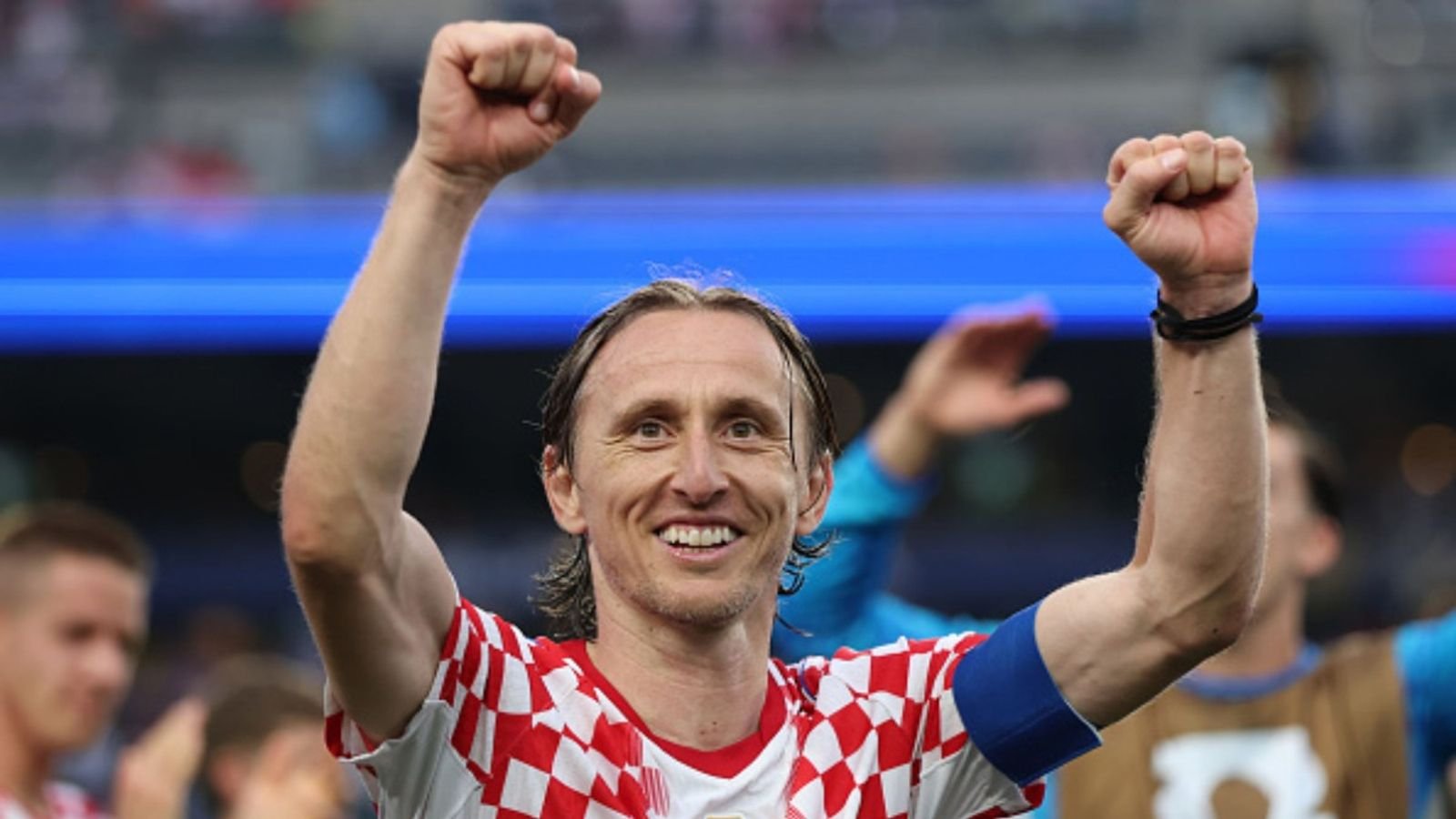
Luka Modrić FIFA World Cup record became another unforgettable chapter in football history after the Croatian legend created a new milestone during Croatia’s dramatic victory over Ghana at the FIFA World Cup 2026.
At the age of 40, Modrić became the oldest player ever to register an assist in FIFA World Cup history, proving once again that intelligence, technique, and football awareness can remain elite even as physical demands increase.
The AC Milan midfielder delivered a perfectly placed corner kick that Nikola Vlašić converted in the 83rd minute, helping Croatia complete a 2-1 comeback victory and secure their place in the Round of 32.
| Record Detail | Information |
|---|---|
| Player | Luka Modrić |
| Age | 40 years |
| Team | Croatia |
| Achievement | Oldest player to provide an assist in FIFA World Cup history |
| Opponent | Ghana |
| Assist Type | Corner kick delivery |
A historic moment from Croatia’s football icon
Some players rely on speed and physical dominance. Luka Modrić has built his career on something different — vision, timing, creativity, and an extraordinary understanding of the game.
During Croatia’s clash against Ghana, those qualities were on full display. With the match finely balanced, Modrić stepped up with a moment of quality that changed the direction of the game.
His corner found Vlašić inside the box, and the resulting goal gave Croatia a crucial win in their World Cup campaign.
The assist was not just another statistic. It represented the continued influence of a player who has spent more than a decade performing at the highest level of international football.
How Luka Modrić continues to challenge football’s age limits
Modern football has become increasingly demanding, with players expected to cover more ground, press aggressively, and maintain intensity throughout matches.
For many midfielders, reaching their late 30s means a reduced role. Modrić, however, has adapted his style instead of trying to compete only through physical ability.
- Elite decision-making: Modrić often creates danger before opponents recognize the opportunity.
- Technical quality: His passing range remains one of his biggest strengths.
- Game control: He can slow or accelerate the tempo when needed.
- Experience: His understanding of tournament pressure provides Croatia with leadership.
Modrić’s World Cup journey: From young talent to global legend
Luka Modrić’s World Cup story has evolved across generations.
When he first represented Croatia at the tournament, he was seen as a talented midfielder from a growing football nation. Years later, he became the leader of a Croatian team that reached the FIFA World Cup final in 2018.
That tournament transformed his global reputation. Modrić won the Golden Ball as the best player of the competition and later claimed the Ballon d’Or, breaking the long dominance of Lionel Messi and Cristiano Ronaldo in the award race.
| World Cup Edition | Modrić’s Role |
|---|---|
| 2006 | Young midfielder gaining international experience |
| 2014 | Important creative figure for Croatia |
| 2018 | Captain and Golden Ball winner |
| 2022 | Veteran leader guiding Croatia deep into the tournament |
| 2026 | Historic contributor at age 40 |
Why Modrić’s assist record matters
Records in football are often dominated by goalscorers. Strikers naturally receive attention because goals decide matches.
However, Modrić’s achievement highlights the importance of creative players who influence games without always being the final scorer.
An assist requires more than just technical execution. It involves reading the situation, understanding teammates’ movement, and delivering under pressure.
That is exactly what Modrić has done throughout his career.
Croatia’s fighting mentality continues
Croatia’s victory over Ghana also reflected a familiar pattern from recent tournaments — resilience.
The Croatian national team has repeatedly shown an ability to compete against stronger opponents and survive difficult moments.
The combination of experienced leaders like Modrić and emerging players gives Croatia a balanced squad heading into the knockout stage.
Comparing Modrić’s longevity with other football legends
| Player | Known For | Longevity Example |
|---|---|---|
| Luka Modrić | Midfield control and creativity | World Cup contribution at 40 |
| Cristiano Ronaldo | Elite goalscoring longevity | Maintaining international impact into his late 30s |
| Lionel Messi | Playmaking and attacking influence | Continuing as a decisive player in major tournaments |
The secret behind Modrić’s continued success
Modrić’s career offers an important lesson about evolution in football.
Instead of depending only on athletic ability, he has developed a style based on positioning and intelligence. This allows him to influence matches even when younger players may have greater physical speed.
His ability to remain competitive suggests that football longevity is increasingly connected to adaptation, preparation, and tactical awareness.
What lies ahead for Luka Modrić and Croatia?
Croatia’s next challenge will come in the knockout rounds, where every mistake can end a World Cup journey.
For Modrić, every match could become another historic moment. At this stage of his career, his contribution is measured not only by goals or assists but by the calmness and leadership he brings to the team.
The 2026 World Cup may represent one of his final international appearances, but his impact on Croatian football is already permanent.
Conclusion
Luka Modrić’s latest FIFA World Cup record is another reminder that football greatness is not limited by age.
At 40, the Croatian midfielder produced a decisive assist, became the oldest World Cup player to create a goal, and helped his nation advance in the tournament.
While younger stars continue to dominate headlines, Modrić’s journey proves that intelligence, creativity, and experience can still define the biggest moments in football.
For breaking news and live news updates, like us on Facebook or follow us on Twitter and Instagram. Read more on Latest Sports on thefoxdaily.com.






COMMENTS 0