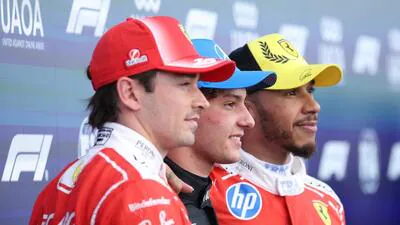
The 2026 Formula 1 season was expected to usher in a new era of unpredictability. Sweeping technical regulations promised to reshuffle the competitive order, create fresh storylines, and potentially end years of dominance by a select few teams. While those expectations have largely been met, a deeper examination of the championship reveals a striking reality: the fight for the drivers’ title increasingly appears to be an internal Mercedes affair.
Ferrari has staged an impressive resurgence, Red Bull continues to possess the ability to strike when opportunities arise, and McLaren remains close enough to influence the outcome of races. Yet across varying circuit layouts, weather conditions, and strategic scenarios, Mercedes has consistently delivered the most complete package. That consistency has transformed the championship narrative from a multi-team battle into a high-pressure duel between George Russell and rookie phenomenon Kimi Antonelli.
As Formula 1 enters the decisive phase of the season, the biggest question is no longer which team has the fastest car. Instead, it is whether Mercedes can successfully manage two drivers chasing the same dream without allowing rivals to capitalize on internal conflict.
The 2026 Formula 1 Season Has Created a New Competitive Landscape
Formula 1’s latest technical regulations were designed to reduce performance gaps and encourage closer competition. Unlike previous seasons where one team often enjoyed a significant advantage, the current campaign has seen multiple teams capable of fighting for victories on different weekends.
The result has been one of the most competitive grids in recent memory. Ferrari has rediscovered winning form, Red Bull remains dangerous whenever conditions suit its package, and McLaren continues to demonstrate impressive pace across various circuits.
However, championship-winning campaigns are rarely built on occasional brilliance. Titles are usually secured through relentless consistency, and that is where Mercedes has separated itself from the competition.
Rather than dominating every race, Mercedes has mastered the art of maximizing results regardless of circumstances. This ability to consistently score points has gradually created a championship advantage that rivals have struggled to overcome.
Why Mercedes Holds the Strongest Position in the Championship Race
Championships are often decided by the quality of a team’s baseline performance rather than peak performance. While rivals have shown flashes of speed, Mercedes has delivered a package that works effectively across a wide range of tracks.
This versatility provides several critical advantages:
- Greater strategic flexibility during race weekends.
- Reduced vulnerability to circuit-specific weaknesses.
- Consistent points accumulation.
- Improved reliability under changing conditions.
- Less pressure to rely on risky setups.
In modern Formula 1, where margins between teams are often measured in tenths of a second, consistency becomes a championship weapon. Mercedes has transformed that weapon into a season-long advantage.
| Team | Primary Strength | Current Challenge |
|---|---|---|
| Mercedes | Consistency across all circuits | Managing two title contenders |
| Ferrari | Improved race-winning pace | Maintaining consistency |
| Red Bull | Elite racecraft and recovery ability | Closing performance deficit |
| McLaren | Strong overall package | Converting pace into victories |
Kimi Antonelli: The Rookie Who Changed the Championship
Every generation produces a few drivers capable of rewriting expectations. In 2026, that driver appears to be Kimi Antonelli.
Historically, Formula 1 rookies require time to adapt. The jump from junior categories to motorsport’s highest level involves mastering new technology, understanding race management, handling media pressure, and competing against the world’s best drivers.
Antonelli has largely bypassed that learning curve.
Instead of gradually finding his footing, the Italian teenager arrived prepared to compete immediately. His early-season victories sent shockwaves throughout the paddock and instantly transformed him from a promising prospect into a legitimate championship contender.
What makes his rise particularly remarkable is not simply the number of races won, but the manner in which those victories were achieved. His performances have displayed composure, strategic awareness, and race management skills typically associated with experienced champions.
The Evolution of Modern Formula 1 Driver Development
Antonelli’s rapid success reflects a broader shift in how Formula 1 develops talent.
Modern driver academies operate with extraordinary sophistication. Young drivers are no longer simply taught how to drive fast. They are educated in every aspect of elite competition, including:
- Advanced simulator training.
- Sports psychology.
- Media communication.
- Technical engineering feedback.
- Data analysis.
- Physical conditioning.
- Race strategy understanding.
By the time many drivers reach Formula 1 today, they have accumulated years of preparation within professional development systems.
This evolution helps explain why newcomers can now challenge established stars much earlier than previous generations.
George Russell Faces the Biggest Test of His Career
While Antonelli’s emergence has been celebrated, it has simultaneously created a difficult situation for George Russell.
For years, Russell appeared destined to become Mercedes’ undisputed team leader. He patiently climbed through Formula 1’s ranks, demonstrated exceptional talent, and spent seasons preparing for a championship challenge.
The assumption was simple: once the opportunity arrived, Russell would naturally become the focal point of Mercedes’ future.
Antonelli’s arrival has complicated that narrative.
Instead of inheriting clear leadership status, Russell now finds himself competing against a teammate attracting enormous attention and delivering immediate results.
From a psychological perspective, this may represent the most demanding challenge of his career.
The Mental Battle Inside Formula 1 Teams
One of the unique aspects of Formula 1 is that a driver’s greatest rival is often sitting in the same garage.
Unlike most sports, teammates in Formula 1 use identical machinery and have access to similar resources. This creates direct comparisons that can become emotionally exhausting.
Drivers naturally measure themselves against their teammates because it provides the clearest indication of individual performance.
When a newcomer begins outperforming expectations, the pressure intensifies dramatically.
Russell’s response over the remainder of the season could define not only this championship but also his long-term legacy within Mercedes.
Lessons From Formula 1’s Greatest Internal Rivalries
Formula 1 history is filled with examples of teammates battling for championships.
Some rivalries elevated teams to unprecedented success, while others created divisions that damaged championship campaigns.
Several factors determine whether an internal title fight becomes productive or destructive:
- Clear communication from team management.
- Equal treatment of both drivers.
- Mutual professional respect.
- Strong leadership from engineers and executives.
- Strategic decision-making under pressure.
Mercedes has navigated such situations before, but every rivalry brings unique challenges.
The personalities involved, championship circumstances, and competitive environment all influence the outcome.
The Hidden Threat: Ferrari and Red Bull Are Still in the Fight
One of the biggest dangers for Mercedes is becoming too focused on its internal battle.
While headlines center on Russell and Antonelli, rival teams remain close enough to exploit any mistakes.
Ferrari’s resurgence has demonstrated that it possesses genuine race-winning pace. Red Bull continues to benefit from elite operational execution and world-class driving talent. McLaren remains capable of disrupting championship calculations on any given weekend.
History shows that prolonged teammate conflicts can create openings for external challengers.
If Mercedes drivers begin taking points from each other through aggressive racing, strategic disagreements, or unnecessary incidents, rivals could quickly close the gap.
This is why team management will play a crucial role during the second half of the season.
Could Team Orders Decide the 2026 Formula 1 Championship?
As the title race intensifies, one controversial topic is becoming increasingly relevant: team orders.
In an ideal world, teams allow drivers to compete freely until the final race. However, Formula 1 rarely operates in ideal conditions.
Championship mathematics often force difficult decisions.
If one driver establishes a meaningful advantage late in the season, Mercedes could face pressure to prioritize maximizing championship points over maintaining complete equality.
Such decisions are rarely popular among drivers.
Elite athletes reach the highest level because they possess extraordinary self-belief and competitive instincts. Asking a driver to sacrifice personal ambitions for team objectives can create lasting tension.
Nevertheless, championships are often won through calculated decisions rather than emotional ones.
Why Antonelli Represents Formula 1’s Future
Beyond the championship battle itself, Antonelli’s success symbolizes a broader transformation within Formula 1.
The sport is entering an era where younger drivers are arriving better prepared than ever before. Advanced technology, sophisticated development programs, and greater access to data have accelerated learning curves across motorsport.
Antonelli may simply be the most visible example of this trend.
His success suggests that future Formula 1 stars could reach championship-contending levels much earlier than previous generations.
This shift has significant implications for team strategies, driver contracts, and long-term talent development.
Championship Prediction: Why Mercedes Remains the Favorite
Although Formula 1 remains unpredictable, the evidence increasingly points toward Mercedes producing the 2026 world champion.
The team’s combination of performance, reliability, operational excellence, and driver strength gives it advantages that competitors have struggled to match consistently.
The key question is not whether Mercedes can win the championship—it is which driver will emerge on top.
| Championship Factor | Advantage |
|---|---|
| Car Performance | Mercedes |
| Consistency | Mercedes |
| Experience | George Russell |
| Momentum | Kimi Antonelli |
| Outside Threat | Ferrari and Red Bull |
If Antonelli maintains his remarkable form, he could become one of the youngest champions in Formula 1 history. If Russell responds with the resilience many expect, his experience may prove decisive during the season’s pressure-filled final rounds.
Conclusion: Formula 1 Has Found Its Defining Storyline of 2026
The 2026 Formula 1 season began with questions about technical regulations, team performance, and competitive balance. As the championship unfolds, those questions have largely been answered.
Mercedes has emerged as the benchmark team. Ferrari, Red Bull, and McLaren remain dangerous challengers, but consistency has elevated the Silver Arrows above the field.
More importantly, Formula 1 has discovered its defining storyline: the battle between George Russell and Kimi Antonelli.
It is a clash between experience and youth, expectation and opportunity, patience and momentum. It embodies everything that makes Formula 1 compelling—not just technology and speed, but human ambition.
Whether the championship ultimately belongs to Russell or Antonelli, the rivalry is shaping up to become one of the most memorable title fights of the modern Formula 1 era. And with rivals waiting for any sign of weakness, every race from this point forward could determine the future of the sport’s newest championship saga.
For breaking news and live news updates, like us on Facebook or follow us on Twitter and Instagram. Read more on Latest Sports on thefoxdaily.com.





COMMENTS 0