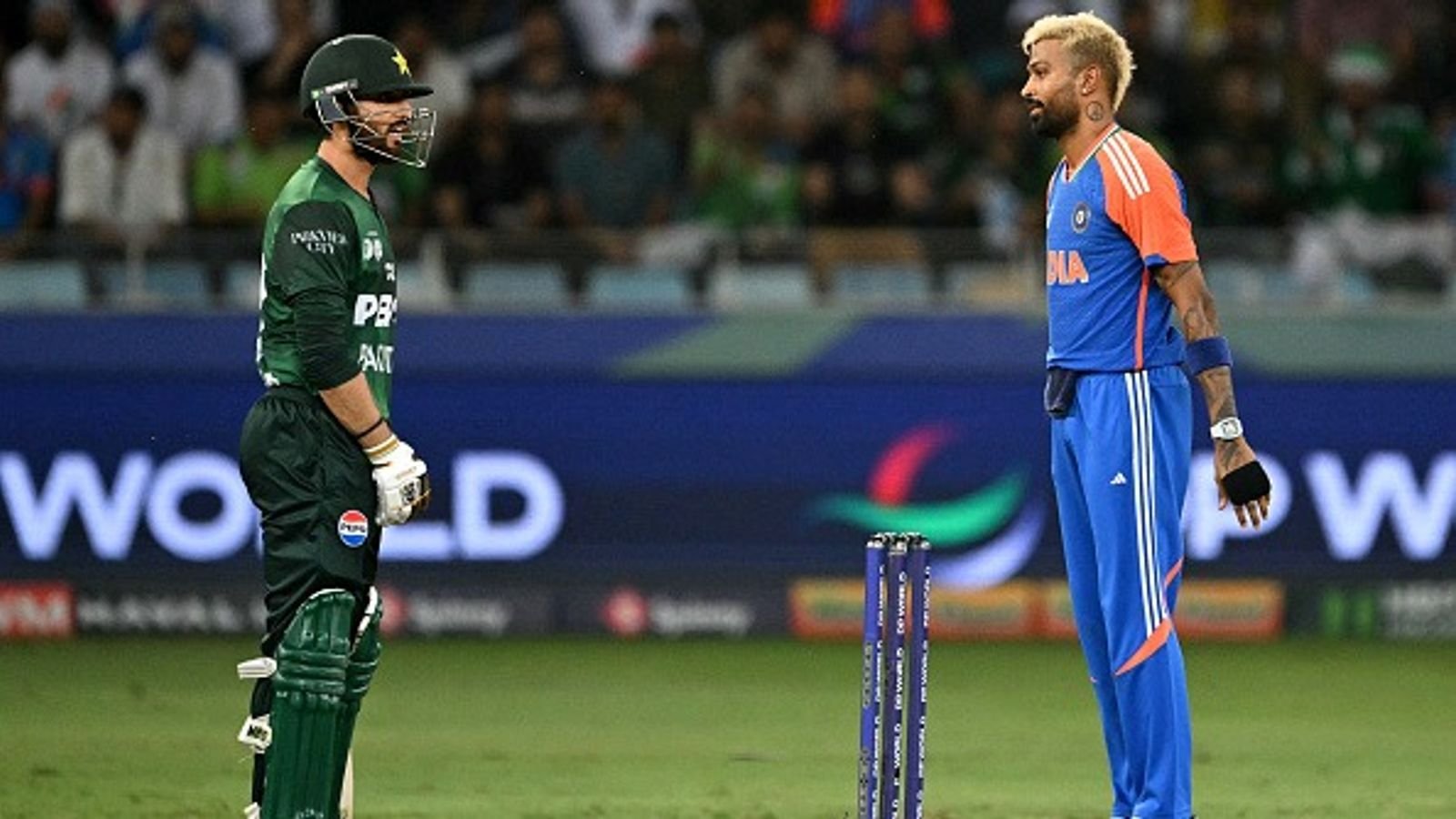
Few rivalries in world sport generate as much passion, pressure, and scrutiny as India versus Pakistan. Every meeting between the two cricketing giants carries enormous emotional significance, often overshadowing performances against every other opponent. That reality was once again highlighted when Pakistan’s white-ball head coach Mike Hesson described India as “the best team by a mile,” a candid assessment that reflects the current balance of power in international cricket.
Hesson’s remarks were not merely praise for India’s achievements. They were also an attempt to shift the conversation surrounding Pakistan cricket. Rather than judging the team solely by results against India, he argued that Pakistan’s broader performances over the past year show meaningful progress. His message was simple: sustainable success comes from building consistency before expecting major ICC trophies.
His comments have reignited discussion about why India currently leads world cricket and what Pakistan must do to bridge one of the widest competitive gaps seen in the rivalry’s modern history.
Why Mike Hesson’s Statement Matters
Publicly acknowledging the superiority of a traditional rival is never easy, especially in one of cricket’s fiercest contests. Coaches generally avoid making definitive comparisons, preferring diplomatic responses. Hesson instead chose realism.
His statement reflects an understanding that modern international cricket is driven by long-term planning rather than isolated victories. India has spent years building a system capable of producing elite players across every format, while Pakistan is still working toward achieving similar consistency.
Rather than treating India’s dominance as an excuse, Hesson used it as a benchmark for where Pakistan hopes to reach.
India’s Rise: Years of Planning, Not Overnight Success
India’s current position at the top of world cricket is the result of more than talented individuals. It is built upon an ecosystem that continuously develops world-class cricketers.
Several factors have contributed to India’s sustained dominance:
- Strong domestic tournaments that expose players to high-pressure cricket.
- Excellent talent identification from junior levels.
- World-class fitness and sports science programs.
- Large pool of international-quality fast bowlers and spinners.
- Depth that allows seamless replacement of injured or resting stars.
- Stable financial resources supporting player development.
This combination has enabled India to remain competitive across Tests, One-Day Internationals, and T20 Internationals without depending on only a handful of superstars.
Pakistan’s Progress Is Bigger Than the India Results
Although defeats against India dominate headlines, Hesson believes they should not define Pakistan’s overall trajectory.
According to the coach, Pakistan has shown encouraging improvement in bilateral cricket and multi-team competitions against other nations. The team’s ability to defeat strong international opponents demonstrates that progress is being made, even if the biggest hurdle remains India.
From a coaching perspective, sustainable improvement is measured through consistency rather than emotional reactions to one rivalry.
The 2025 Asia Cup: A Tournament of Contrasting Narratives
The Asia Cup offered two very different stories.
For India, it reinforced their status as Asia’s strongest cricket team. They defeated Pakistan in every meeting, including the tournament final, showcasing composure under pressure and greater squad depth.
For Pakistan, however, the tournament presented a more complex picture. Outside matches against India, they remained competitive and secured victories against other opponents, suggesting that their overall level had improved compared to previous seasons.
| India’s Takeaway | Pakistan’s Takeaway |
|---|---|
| Dominated every encounter with Pakistan. | Competitive against every other team. |
| Won the Asia Cup title. | Showed improved consistency outside India matches. |
| Maintained tactical discipline under pressure. | Still struggled in high-pressure moments against India. |
| Displayed squad depth across departments. | Need stronger finishing ability in crucial matches. |
The Final Collapse That Defined the Tournament
The Asia Cup final illustrated one of Pakistan’s biggest challenges.
After establishing a commanding position early in their innings, Pakistan suffered a dramatic batting collapse that transformed a winning situation into defeat. Such collapses often reflect more than technical shortcomings—they expose issues involving pressure management, decision-making, and execution during critical moments.
India capitalized on those mistakes with disciplined bowling and calm batting during the chase, once again demonstrating why elite teams consistently convert opportunities into victories.
Consistency Is the Missing Ingredient
Hesson emphasized that Pakistan cannot realistically expect to jump directly from inconsistent performances to winning ICC tournaments.
Successful international teams generally follow a predictable progression:
- Improve domestic standards.
- Win bilateral series consistently.
- Develop squad depth.
- Build confidence in multi-nation tournaments.
- Compete for global championships.
Skipping any of these stages often results in temporary success rather than sustained excellence.
Why India Continue to Win the Biggest Matches
One characteristic separates elite teams from merely talented teams: consistency under pressure.
India have repeatedly demonstrated the ability to remain calm during knockout matches, recover from difficult situations, and adapt their tactics according to conditions.
Their success is rarely dependent on one individual. Different players step forward in different matches, making the team significantly harder to beat.
That depth allows India to maintain high performance levels regardless of injuries, workload management, or changes in playing conditions.
Pakistan’s Statistical Improvement Under Mike Hesson
Hesson highlighted that Pakistan’s recent results represent a considerable improvement compared to earlier years.
The coach believes the team’s winning percentage has risen dramatically over the past year, reflecting better preparation and improved execution.
Pakistan has also enjoyed success in T20 tri-series competitions while becoming far more competitive in bilateral cricket. Those achievements indicate that the rebuilding process is producing measurable progress even if the highest-profile victories remain elusive.
The Psychological Factor in India-Pakistan Cricket
Cricket between India and Pakistan involves unique mental challenges.
The pressure extends far beyond the field, with millions of supporters, relentless media coverage, and enormous expectations influencing every contest.
Teams capable of separating emotion from execution often gain a decisive advantage.
India’s recent record suggests they have become increasingly comfortable handling those expectations, while Pakistan continues searching for greater composure during defining moments.
Beyond Talent: Modern Cricket Rewards Systems
International cricket has evolved significantly over the past decade.
Talent alone is no longer enough to remain among the world’s best teams.
Modern success depends on:
- Advanced analytics.
- Sports psychology.
- Fitness monitoring.
- Player workload management.
- Data-driven tactical planning.
- Strong domestic competitions.
India has invested heavily across each of these areas, creating an environment where excellence becomes sustainable rather than occasional.
Can Pakistan Close the Gap?
The gap between India and Pakistan is significant, but not impossible to reduce.
Pakistan continues to produce naturally gifted cricketers capable of competing with the world’s best. The challenge lies in building a system that consistently develops those players while minimizing periods of decline.
If Pakistan continues improving its domestic structure, strengthens player development pathways, and maintains coaching stability, the team could gradually become a genuine contender in future ICC tournaments.
However, closing the gap requires patience. Cricketing transformations rarely happen within a single season.
What This Means for the India-Pakistan Rivalry
One-sided rivalries rarely remain one-sided forever.
History has repeatedly shown that dominant eras eventually give way to new competitive cycles. Pakistan’s rebuilding process may take time, but stronger competition ultimately benefits international cricket.
For fans, the ideal rivalry is one where every encounter feels unpredictable. That unpredictability has been missing in several recent India-Pakistan contests, making Pakistan’s long-term improvement important for the sport itself.
The Bigger Lesson from Hesson’s Honest Assessment
Mike Hesson’s comments stand out because they focus on realism rather than emotion.
Acknowledging India’s superiority does not represent surrender. Instead, it establishes a clear benchmark against which Pakistan can measure its progress.
Elite sporting organizations improve by honestly evaluating where they stand instead of denying uncomfortable truths.
In many ways, Hesson’s willingness to publicly recognize India’s current dominance may prove to be an important step in Pakistan’s rebuilding journey.
Conclusion
Mike Hesson’s admission that India are currently “the best team by a mile” reflects the reality of international cricket rather than rivalry-driven emotion. India’s dominance is the result of years of investment in infrastructure, player development, tactical evolution, and squad depth. Pakistan, meanwhile, appears to be moving in the right direction under Hesson’s leadership, showing greater consistency against most opponents while still struggling to overcome their biggest rival.
The challenge ahead is not simply defeating India in one high-profile match. It is creating a sustainable cricketing system capable of producing consistent success across formats and tournaments. If Pakistan remains committed to that long-term vision, future India-Pakistan clashes could once again become evenly contested spectacles. Until then, India’s position at the summit of world cricket remains well deserved, and Hesson’s assessment serves as both a reality check and a roadmap for Pakistan’s future.
For breaking news and live news updates, like us on Facebook or follow us on Twitter and Instagram. Read more on Latest Sports on thefoxdaily.com.






COMMENTS 0