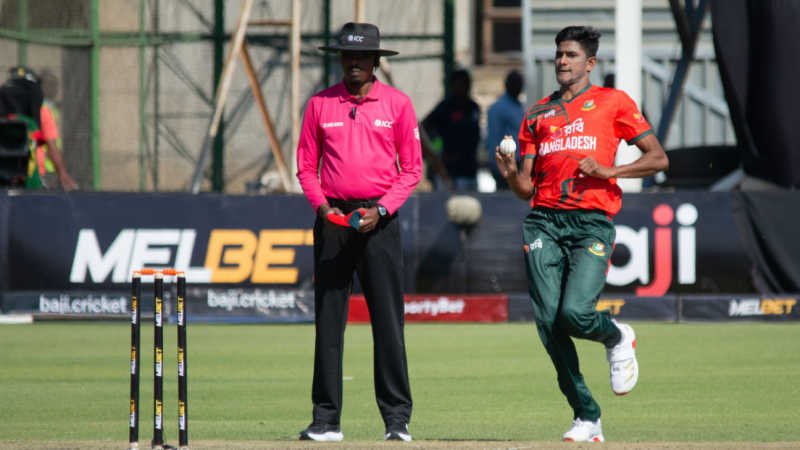
Nahid Rana‘s injury has dealt bangladesh a significant blow ahead of their highly anticipated Test tour of Australia, with chief selector Habibul Bashar admitting the team will miss one of its most dangerous fast bowlers despite following a carefully monitored workload management plan. The 23-year-old pacer, who has emerged as Bangladesh’s leading fast-bowling weapon in 2026, has been ruled out with a side strain, forcing the visitors to rethink their pace attack before their first Test series in Australia in more than two decades.
The timing of the injury could hardly be worse. Bangladesh enters one of the toughest overseas assignments in world cricket hoping to challenge a full-strength Australian side in conditions traditionally dominated by fast bowlers. Rana’s pace, bounce, and confidence made him one of the players expected to play a defining role, but his absence now shifts the spotlight to the rest of Bangladesh’s bowling unit and raises fresh questions about balancing player workload with international commitments.
Nahid Rana Ruled Out of Landmark Australia Test Tour
Bangladesh’s upcoming two-Test series against Australia carries historic significance, marking the nation’s first Test tour of Australia in 23 years. Expectations were high that Nahid Rana would spearhead the pace attack after producing the finest spell of his international career this season.
Instead, the young fast bowler will remain sidelined after suffering a side strain during Bangladesh’s limited-overs tour of Zimbabwe. The injury ended his tour prematurely and ruled him out of one of the biggest opportunities of his career.
While Bangladesh has not provided a definitive recovery timeline beyond confirming his absence for the Australia Tests, the immediate priority is ensuring the injury heals completely rather than risking a recurrence.
Habibul Bashar Defends Bangladesh’s Workload Management
Following Rana’s injury, attention naturally turned toward Bangladesh’s management of one of their most valuable fast bowlers. Habibul Bashar firmly rejected suggestions that excessive workload caused the setback, explaining that modern monitoring systems were used throughout the season.
According to Bashar, Bangladesh carefully tracked Rana’s bowling loads using GPS-based performance monitoring, allowing selectors and coaches to determine which matches he should play while avoiding unnecessary strain.
The management even rested him from the one-off Test against Zimbabwe after Australia’s earlier tour of Bangladesh, believing that limiting his workload would leave him fully prepared for Australian conditions.
Despite those precautions, injuries remain one of the unavoidable realities of fast bowling, particularly for athletes regularly operating at high speeds.
Why Nahid Rana Is So Important to Bangladesh
Over the past year, Nahid Rana has transformed from a promising young quick into Bangladesh’s most exciting pace prospect. His ability to consistently bowl at high pace while extracting extra bounce has given Bangladesh a weapon they have historically lacked.
Unlike many previous Bangladesh pace attacks that relied heavily on swing and accuracy, Rana offers genuine speed capable of troubling even elite international batters.
His performances throughout 2026 underline that progress, making him one of the country’s standout performers across formats.
| Why Nahid Rana Matters | Impact on Bangladesh |
|---|---|
| Express pace | Creates pressure on batting-friendly pitches |
| Extra bounce | Especially valuable in Australian conditions |
| Excellent 2026 form | Established himself as Bangladesh’s strike bowler |
| Ability to take wickets in bursts | Changes the momentum of matches quickly |
An Outstanding 2026 Season Comes to an Abrupt Halt
Few fast bowlers in international cricket have enjoyed the kind of breakthrough campaign Rana produced this year. His impressive wicket tally, including multiple five-wicket hauls, reflected not only consistency but also an increasing ability to dominate matches.
One of the defining moments of his season came during the ODI series against Zimbabwe, where he recorded Bangladesh’s best-ever bowling figures by a fast bowler in One-Day Internationals.
Earlier in the year, he had also troubled Australia’s batting lineup during the ODI series in Dhaka, strengthening expectations that he could become Bangladesh’s biggest threat during the Test series on Australian soil.
Why Australia Would Have Suited Rana’s Bowling Style
Australian pitches have traditionally rewarded genuine pace and steep bounce. Those conditions appeared perfectly suited to Rana’s natural strengths.
While Bangladesh’s spin attack remains central to their strategy, overseas success in Australia generally depends on fast bowlers creating breakthroughs with the new ball.
Rana’s ability to hit hard lengths at high speed could have provided Bangladesh with an attacking option rarely available on previous tours.
That possibility makes his absence particularly disappointing from both a tactical and developmental perspective.
The Difficult Balance Between Rest and Match Practice
Modern cricket presents selectors with an increasingly complex challenge.
Fast bowlers require regular rest to reduce injury risks, yet they also need sufficient match overs to maintain rhythm, fitness, and confidence.
Bashar acknowledged that balancing those competing priorities is never straightforward. Completely resting a bowler before a major series can leave them underprepared, while playing continuously increases physical stress.
Rana’s case illustrates how even carefully planned workloads cannot completely eliminate injuries in professional sport.
Zimbabwe Tour Decisions Come Under Scrutiny
Some observers questioned whether Rana should have featured in Bangladesh’s limited-overs matches against Zimbabwe after being rested from the Test.
Bashar defended that decision by explaining that the ODI series formed an important part of Bangladesh’s long-term preparations for the upcoming ICC Cricket World Cup.
The selectors believed maintaining Rana’s match fitness outweighed the risks involved, particularly after limiting his participation earlier in the tour.
Unfortunately, the side strain occurred despite those precautions, highlighting the unpredictable nature of injuries among fast bowlers.
Bangladesh’s Defeat to Zimbabwe Sparks Honest Reflection
Beyond Rana’s injury, Bashar also addressed criticism following Bangladesh’s surprising defeat to Zimbabwe in the Test match.
Rather than blaming the bowling unit, he identified batting failures as the primary reason behind the disappointing result.
Bangladesh still fielded experienced Test bowlers capable of competing effectively, but insufficient batting performances prevented the team from controlling the match.
That assessment shifts attention toward improving batting consistency before facing an Australian attack featuring some of the world’s best fast bowlers.
Taskin Ahmed and Fellow Pacers Face Bigger Responsibility
Without Rana, Bangladesh’s pace attack will depend heavily on experienced names including Taskin Ahmed, Hasan Mahmud, Khaled Ahmed, and Ebadot Hossain.
Taskin, when fully fit, remains Bangladesh’s most experienced fast bowler and will likely lead the attack against Australia.
Meanwhile, Hasan Mahmud has shown encouraging progress in recent international matches, while Khaled and Ebadot continue developing into dependable red-ball bowlers.
Their collective performance will largely determine Bangladesh’s ability to compete in unfamiliar Australian conditions.
| Bangladesh Pace Options | Expected Role |
|---|---|
| Taskin Ahmed | Lead fast bowler and new-ball specialist |
| Hasan Mahmud | Supporting pace option with recent good form |
| Khaled Ahmed | Consistent seam bowling in longer spells |
| Ebadot Hossain | Experienced Test fast bowler providing depth |
Soumya Sarkar Returns as Bangladesh Searches for Stability
Another major selection talking point has been the return of Soumya Sarkar to Bangladesh’s Test squad.
Bashar openly admitted that the decision reflected the team’s limited opening batting options rather than ideal long-term planning.
Although Soumya has spent recent years focusing primarily on white-ball cricket, selectors believe his previous experience against fast bowling makes him a safer option than inexperienced domestic players who have yet to face elite international attacks.
The honesty surrounding the decision offers a rare glimpse into the practical challenges selectors face when balancing current competitiveness with future development.
Bangladesh’s Top-Order Challenge
If Soumya features in the playing XI, Bangladesh could field an almost entirely left-handed top order.
While left-right batting combinations often provide tactical advantages, too many players of the same handedness can simplify opposition bowling plans, particularly against high-quality pace attacks.
The selectors acknowledged this concern but ultimately prioritized experience over ideal batting balance.
Meanwhile, Mahmudul Hasan Joy has been sent to the Bangladesh A setup in South Africa, giving him an opportunity to regain confidence before returning to international contention.
What Rana’s Injury Means for Bangladesh’s Future
Beyond this Australia tour, Bangladesh’s management will carefully monitor Rana’s recovery because he represents one of the country’s most valuable long-term investments.
Fast bowlers capable of consistently exceeding high pace while remaining effective across formats remain relatively rare in Bangladesh’s cricketing history.
Protecting his long-term fitness could ultimately prove more important than rushing him back for a single series.
The episode also reinforces how modern sports science can significantly reduce injury risk without completely eliminating it.
Future Outlook
Bangladesh enters its historic Test tour knowing the challenge has become considerably tougher without Nahid Rana. His pace, aggression, and wicket-taking ability would have provided an ideal weapon against Australian batters on fast, bouncy pitches.
However, international cricket frequently tests a team’s depth as much as its star performers. The responsibility now falls on Taskin Ahmed and the rest of Bangladesh’s pace attack to deliver disciplined performances while the batting unit must improve after recent inconsistencies.
For Nahid Rana, the focus shifts toward a complete recovery and a return later in the season. His outstanding performances throughout 2026 have already established him as one of Bangladesh’s brightest cricketing talents, and this injury is unlikely to diminish the long-term expectations surrounding his career. If managed carefully, he remains well positioned to become the leader of Bangladesh’s fast-bowling attack for years to come.
For breaking news and live news updates, like us on Facebook or follow us on Twitter and Instagram. Read more on Latest Sports on thefoxdaily.com.






COMMENTS 0