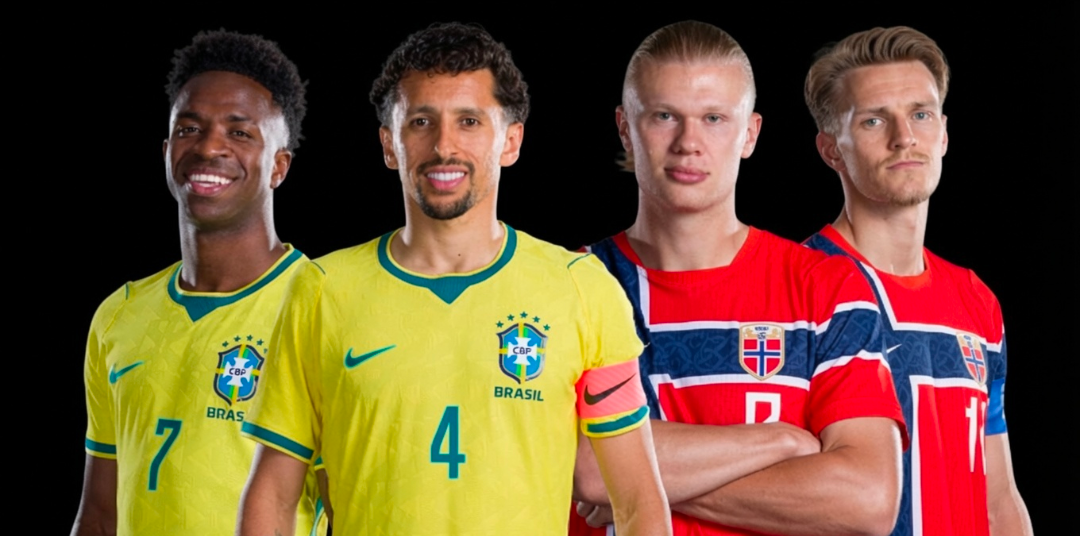
The build-up to the highly anticipated Brazil vs Norway FIFA World Cup 2026 Round of 16 match has taken a dramatic turn after Norway received mixed news regarding the fitness of defender Julian Ryerson. While the Borussia Dortmund star has returned to full training, uncertainty continues to surround his availability for one of the biggest matches in Norwegian football history.
As Norway prepares to face tournament favorites Brazil at New York New Jersey Stadium in East Rutherford, the potential absence of Ryerson could significantly alter the tactical landscape of the contest. Against a Brazilian side packed with attacking talent, every defensive decision may prove decisive.
The situation highlights a recurring reality of major international tournaments: success is often determined not only by talent but also by player availability, squad depth, and tactical adaptability during the knockout stages.
Why Julian Ryerson Is So Important to Norway’s World Cup Campaign
Julian Ryerson has quietly become one of Norway’s most valuable players over the past few years. Known for his versatility, defensive discipline, and relentless work rate, the 27-year-old has developed into a dependable figure both for club and country.
Unlike many modern full-backs who focus primarily on attacking contributions, Ryerson provides balance. He combines defensive awareness with the ability to support attacks, making him particularly valuable in high-pressure knockout matches where transitions can decide outcomes.
His importance becomes even greater against opponents like Brazil, who possess explosive pace and technical quality across the front line.
Norway’s coaching staff understands that stopping Brazil’s attack requires more than simply defending deep. It demands intelligent positioning, disciplined tracking, and the ability to win crucial one-on-one battles—areas where Ryerson typically excels.
How the Injury Happened
Ryerson suffered a thigh injury during Norway’s group-stage encounter against Senegal, forcing him out of subsequent matches.
Since then, Norway has carefully managed his recovery process, prioritizing long-term fitness rather than rushing him back into action.
The defender subsequently missed important victories over Ivory Coast and France, two matches that demonstrated Norway’s resilience but also exposed moments where greater defensive stability could have been beneficial.
While his return to training is an encouraging development, participating in training sessions and being fully prepared for a high-intensity World Cup knockout match are two very different challenges.
Norway’s Medical Team Faces a Difficult Decision
One of the biggest questions facing Norway’s coaching and medical staff is whether Ryerson can realistically perform at maximum intensity.
Knockout football leaves little room for caution.
A player operating below full fitness risks not only aggravating an existing injury but also becoming a tactical vulnerability against elite opposition.
Reports earlier suggested that his chances of being available for the Brazil encounter were below fifty percent, illustrating the seriousness of the situation.
Even with positive progress in training, final decisions will likely depend on:
- Recovery response after training sessions
- Physical testing and medical evaluations
- Match-intensity movement assessments
- Pain management and flexibility levels
- Risk of reinjury during competition
The final call may not come until just hours before kickoff.
Brazil’s Attack Makes the Situation Even More Critical
The timing of Ryerson’s injury concern could hardly be worse.
Brazil enters the knockout stage with one of the tournament’s most dangerous attacking units. Their combination of pace, creativity, technical skill, and experience has made them one of the strongest contenders for the World Cup title.
Particular attention will focus on Brazil’s wide attackers, who consistently stretch defenses and create dangerous one-on-one situations.
For Norway, containing those threats will require exceptional discipline from their full-backs and wide defenders.
That responsibility is precisely why Ryerson’s potential absence has become such a major talking point.
The Vinicius Junior Factor
If fit, Ryerson would likely face one of football’s toughest assignments: slowing down Vinicius Junior.
The Brazilian winger has once again demonstrated why he is considered among the world’s elite attacking players. His acceleration, dribbling ability, and creativity make him a constant threat throughout ninety minutes.
Defending against Vinicius requires more than speed.
Players must maintain concentration, avoid committing too early, and consistently receive support from teammates.
Ryerson’s experience at the highest level of European football makes him one of Norway’s best-equipped defenders for that challenge.
Without him, Norway may need to significantly adjust its defensive structure.
Possible Replacements If Ryerson Misses Out
Norway does have alternative options available, although none offer exactly the same profile.
Marcus Pedersen
Pedersen stepped in during previous matches and performed competently when called upon. He offers energy, athleticism, and attacking intent but lacks some of Ryerson’s defensive experience in major international tournaments.
Fredrik Aursnes
Aursnes provides tactical flexibility and could be deployed in multiple positions if required. His football intelligence and versatility make him a valuable option, especially in matches that demand strategic adjustments.
However, moving Aursnes into a defensive role could affect Norway’s balance elsewhere on the pitch.
How Norway Has Reached the Knockout Stage
Norway’s journey to the Round of 16 has been one of the tournament’s most impressive stories.
Entering the competition without the expectations attached to traditional powerhouses, the Scandinavian nation has combined tactical discipline with attacking efficiency.
The team has demonstrated several strengths throughout the tournament:
- Strong defensive organization
- Effective counterattacking football
- Excellent team chemistry
- Physical intensity
- Mental resilience under pressure
Those qualities helped Norway secure notable victories and establish themselves as a genuine threat in the knockout rounds.
However, Brazil represents a significant step up in difficulty.
Brazil vs Norway: Tactical Battle to Watch
The matchup presents a fascinating clash of football philosophies.
| Norway | Brazil |
|---|---|
| Structured defensive shape | Attacking creativity |
| Counterattacking threat | Possession-based control |
| Physical intensity | Technical excellence |
| Team organization | Individual brilliance |
| Compact defensive lines | Wide attacking play |
The outcome could hinge on whether Norway can successfully limit Brazil’s opportunities in wide areas while remaining dangerous on the counterattack.
That challenge becomes significantly harder if one of their most reliable defenders is unavailable.
The Psychological Impact of Injury Uncertainty
Injuries affect more than just tactics.
Uncertainty surrounding key players can influence preparation, training plans, and even player confidence.
Coaches must often prepare multiple game plans depending on whether a star player is available.
For Norway, this means balancing optimism regarding Ryerson’s recovery with the practical necessity of preparing alternatives.
The team’s ability to remain focused despite the uncertainty will be crucial.
Can Norway Pull Off Another World Cup Surprise?
Norway enters the match as the underdog, but knockout football regularly produces unexpected results.
History shows that disciplined, well-organized teams can frustrate even the most talented opponents.
Norway’s path to success likely depends on:
- Defensive concentration
- Set-piece effectiveness
- Clinical finishing
- Limiting turnovers
- Managing Brazil’s transitions
If they execute their game plan effectively, they have the potential to make life uncomfortable for the five-time world champions.
What This Match Means for Norway’s Football Future
Regardless of the result, Norway’s performance at the FIFA World Cup 2026 represents a significant milestone for the nation’s football development.
The tournament has showcased the country’s growing depth, improved tactical sophistication, and ability to compete with elite opponents.
A victory over Brazil would rank among the greatest achievements in Norwegian football history. Even a competitive performance against one of the tournament favorites would further strengthen confidence heading into future international competitions.
Conclusion
The fitness of Julian Ryerson has emerged as one of the biggest storylines ahead of Norway’s blockbuster FIFA World Cup 2026 Round of 16 clash against Brazil. Although the defender has returned to training, significant uncertainty remains regarding whether he can start one of the most important matches of Norway’s modern football era.
His potential absence would force tactical adjustments and place additional pressure on Norway’s defensive unit against a Brazilian attack loaded with world-class talent. However, Norway has already demonstrated resilience throughout the tournament and will believe it can compete regardless of the final team selection.
As kickoff approaches, all eyes will remain on Ryerson’s fitness status. His availability could prove to be one of the defining factors in a fascinating knockout battle between underdog determination and Brazilian ambition.
For breaking news and live news updates, like us on Facebook or follow us on Twitter and Instagram. Read more on Latest Sports on thefoxdaily.com.






COMMENTS 0