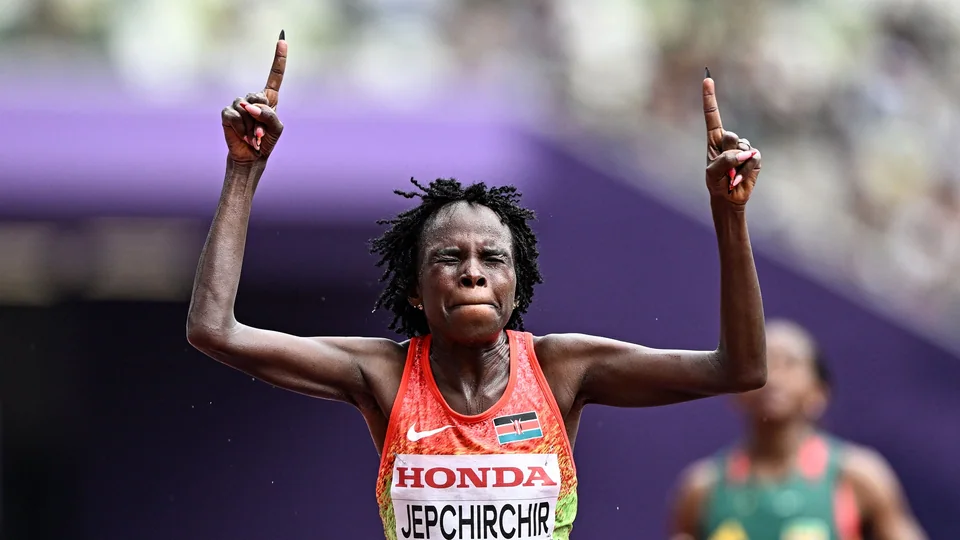
Kenyan distance-running star Peres Jepchirchir has been handed a three-year ban after an out-of-competition doping test detected traces of erythropoietin (EPO), the Athletics Integrity Unit (AIU) announced on Thursday. The suspension marks a major development in the career of the reigning marathon world champion, who previously won Olympic gold at the Tokyo Games in 2021 and established herself as one of the most successful athletes in women’s distance running.
The 33-year-old’s suspension took effect from October 20, according to the AIU. Her positive sample was collected in Kenya before her victory at the Sydney Marathon in August. The organisation confirmed that the case resulted in a three-year ban, adding another high-profile name to the list of Kenyan athletes who have faced anti-doping sanctions in recent years.
Jepchirchir is not the only Kenyan runner affected by the latest disciplinary announcements. Veronica Loleo, a silver medallist in the half-marathon at the 2026 World Road Running Championships, also received a three-year suspension for the same prohibited substance. Meanwhile, marathon runner Ronald Korir was handed a six-year ban after failing to explain abnormalities identified in his Athlete Biological Passport.
The cases have renewed attention on Kenya’s anti-doping efforts, particularly as the country prepares to host the 2029 World Athletics Championships in Nairobi. While officials have acknowledged progress in tackling doping, they have also stressed that further work is required to protect the reputation of Kenyan athletics and athletes competing cleanly.
Peres Jepchirchir Handed Three-Year Ban for EPO Doping
The Athletics Integrity Unit confirmed that Jepchirchir has received a three-year ban following an adverse finding in an out-of-competition sample. The test detected traces of EPO, a prohibited substance associated with increasing the body’s ability to transport oxygen.
The sample was collected in Kenya before Jepchirchir competed in the Sydney Marathon in August, where she went on to secure victory. The AIU subsequently confirmed the suspension, which began on October 20.
EPO, or erythropoietin, is a hormone that stimulates the production of red blood cells. In endurance sports such as marathon running, the substance is prohibited because increasing red blood cell production can improve the body’s oxygen-carrying capacity and potentially enhance endurance performance.
Anti-doping authorities monitor athletes through both in-competition and out-of-competition testing. The latter is particularly important because prohibited substances may be used during training periods rather than immediately before competitions.
Jepchirchir’s case is significant because of her status in international athletics. She is a former Olympic champion, reigning marathon world champion and multiple-time winner of major international road races. Her suspension therefore represents a major setback for an athlete whose career has included some of the sport’s biggest achievements.
Who Is Peres Jepchirchir? A Look at Her Successful Running Career
Peres Jepchirchir is one of Kenya’s most decorated female long-distance runners. Over the years, she has established herself through major victories on the international marathon circuit and performances at the highest level of athletics.
One of the defining moments of her career came at the Tokyo Olympic Games in 2021. The Olympics had been postponed by a year because of the COVID-19 pandemic, but Jepchirchir delivered a memorable performance in the women’s marathon to win the gold medal.
Her Olympic triumph placed her among Kenya’s most celebrated distance runners and strengthened the country’s reputation as a leading force in international marathon competition.
Jepchirchir also achieved considerable success at the World Marathon Majors. She won the 2021 New York City Marathon, the 2022 Boston Marathon and the 2024 London Marathon. These victories demonstrated her ability to compete successfully across different courses and against elite international fields.
She was also a former world record-holder in the half-marathon, further underlining her achievements beyond the traditional marathon distance.
Her career reached another major milestone when she became the world marathon champion. That achievement added a global title to an already impressive collection of Olympic and major marathon honours.
However, the three-year suspension now places a serious question mark over the next stage of her athletics career. The ban also means that her achievements and reputation will be discussed alongside the anti-doping case that led to the sanction.
How the EPO Finding Affects an Endurance Athlete
EPO is one of the substances prohibited under anti-doping regulations because of its potential effect on endurance performance. The hormone naturally occurs in the body and plays an important role in regulating red blood cell production.
Red blood cells carry oxygen from the lungs to muscles and other tissues. During prolonged physical activity, oxygen delivery is an important factor in an athlete’s ability to sustain performance. Increasing the number of red blood cells can potentially improve oxygen transport, which explains why synthetic EPO has been associated with doping in endurance sports.
Marathon running places substantial demands on an athlete’s cardiovascular and respiratory systems. Competitors must maintain a demanding pace over 42.195 kilometres, making endurance and efficient oxygen delivery essential components of performance.
Anti-doping organisations therefore treat the use of prohibited EPO as a serious violation. Testing programmes are designed to identify the presence of banned substances and help maintain fair competition.
In Jepchirchir’s case, the AIU said an out-of-competition sample collected in Kenya showed traces of EPO. The organisation subsequently confirmed the three-year suspension. The details provided in the announcement do not establish any broader involvement by other athletes or individuals.
Two More Kenyan Runners Receive Doping Bans
Jepchirchir’s suspension was announced alongside disciplinary action involving two other Kenyan athletes. Their cases have added to concerns about doping in one of the world’s most successful distance-running nations.
Veronica Loleo Receives Three-Year Suspension
Veronica Loleo was handed a three-year ban for the same offence involving EPO. She had won silver in the half-marathon at the 2026 World Road Running Championships, making the suspension another significant development for Kenyan road running.
Her case demonstrates that the latest anti-doping action is not limited to athletes competing in the full marathon. The half-marathon is also a major endurance event, and athletes in the discipline are subject to the same anti-doping requirements.
Ronald Korir Handed Six-Year Ban
Kenyan marathon runner Ronald Korir received a six-year suspension after he was unable to explain abnormalities identified in his Athlete Biological Passport.
The Athlete Biological Passport is an anti-doping monitoring system that tracks selected biological markers over time. Instead of relying exclusively on the detection of a particular prohibited substance in a single sample, it helps authorities identify unusual changes in an athlete’s biological profile that may require further investigation.
Abnormalities in the passport do not automatically describe the exact method used or establish the presence of a specific substance. However, unexplained changes can form the basis of an anti-doping case under the applicable rules.
Korir’s six-year ban is longer than the three-year suspensions imposed on Jepchirchir and Loleo. The three cases highlight different types of anti-doping violations and the disciplinary action taken by the AIU.
More Than 140 Kenyan Athletes Suspended or Banned Since 2017
The latest cases add to a substantial number of Kenyan athletes who have faced anti-doping suspensions or bans since 2017. According to the supplied report, more than 140 athletes from the country have been suspended or banned by the Athletics Integrity Unit during that period.
The list includes current women’s marathon world record-holder Ruth Chepngetich, whose case has also attracted significant attention within international athletics.
Kenya has long been recognised as one of the leading nations in distance running. Its athletes have achieved success at the Olympic Games, World Athletics Championships and major road races around the world.
That record makes doping cases involving prominent Kenyan athletes particularly sensitive. Every high-profile suspension raises questions about the effectiveness of testing, athlete education and the wider systems designed to protect clean competition.
At the same time, individual doping cases should not be used to judge an entire country’s athletics community. Thousands of athletes train and compete under anti-doping regulations, and the actions of individuals do not establish that other runners are involved in prohibited practices.
The challenge for Kenyan authorities is to ensure that athletes who compete cleanly receive adequate support while those who violate anti-doping rules face the consequences established under the regulations.
AIU Chief Brett Clothier Says Kenya Still Has Work to Do
AIU chief executive Brett Clothier acknowledged that Kenyan authorities have made progress in tackling doping over the past five years. However, he said the latest cases demonstrate that the country still faces considerable challenges.
“The Kenyan authorities have made a lot of progress in the fight against doping in the last five years, but these cases highlight that there is still a long way to go,” Clothier said in a statement.
His remarks recognise the efforts made by Kenyan anti-doping authorities while also pointing to the need for continued enforcement and stronger safeguards.
The increase in testing and the identification of violations are important parts of an effective anti-doping system. However, authorities must also work to prevent prohibited practices through education, monitoring and cooperation with athletes, coaches and sports organisations.
For Kenya, the latest cases arrive at a time when international attention is already focused on the country’s preparations for a major athletics event.
ADAK Chief Says Doping Cases Hurt Kenya’s National Reputation
Peninah Wahome, head of the Anti-Doping Agency of Kenya (ADAK), described the latest suspensions as a major setback for the country’s efforts to fight doping.
“The suspensions are a big blow to our current push to fight doping. It hurts our national integrity and pride as a nation,” Wahome said.
However, Wahome also emphasised that individual athletes should be held responsible for their own decisions rather than allowing the actions of a few competitors to define the entire athletics community.
“It’s an individual decision by an athlete to dope, and let’s not condemn all the athletes. Those who have been caught go to show that we’re making good progress and we will continue to safeguard clean athletes who are prepared to protect the country’s image,” she told AFP.
Her comments highlight two priorities for Kenyan athletics: maintaining accountability for anti-doping violations and protecting athletes who follow the rules.
The distinction is important for a country whose international sporting reputation has been built largely through the achievements of its distance runners. Protecting that reputation requires effective action against doping without unfairly questioning the integrity of every Kenyan athlete.
Nairobi’s 2029 World Athletics Championships Put Kenya Under Greater Scrutiny
Kenya’s anti-doping record is likely to receive additional attention following the decision to award Nairobi the 2029 World Athletics Championships.
Hosting a major international athletics competition is an important milestone for the country. It provides an opportunity to showcase Kenya’s sporting culture, organisational capabilities and long-standing contribution to global athletics.
However, the responsibility of hosting such an event also brings increased scrutiny. International sports organisations, athletes and spectators will expect strong anti-doping arrangements and confidence in the integrity of competition.
Kenya’s ability to demonstrate effective testing, transparent investigations and consistent enforcement will therefore be important in the lead-up to the championships.
The latest suspensions could intensify discussions about the country’s anti-doping policies, but they also provide an opportunity for authorities to demonstrate that violations are being identified and addressed.
For the organisers, maintaining confidence in the competition will be just as important as preparing the venues and operational arrangements required for a major global sporting event.
WADA Chief Witold Banka Calls for Zero Tolerance on Doping
The World Anti-Doping Agency (WADA) has also been involved in discussions about Kenya’s anti-doping efforts. The country hosted a three-day visit from WADA last month, during which the organisation’s president, Witold Banka, urged Kenya to maintain a zero-tolerance approach towards doping.
Banka highlighted the importance of protecting the credibility associated with Kenya’s reputation as a major centre of distance running.
“Kenya proudly calls itself the Home of Champions. But for that home to remain respected and credible, it must also be clean,” Banka said.
His statement underlined the connection between sporting success and public confidence in fair competition. Kenya’s achievements in athletics have made the country famous worldwide, but maintaining that reputation also requires strong anti-doping standards.
WADA’s involvement reflects the international importance of the issue. Anti-doping enforcement is not solely a national responsibility; it also depends on cooperation between national agencies, international federations and global monitoring organisations.
What Happens Next for Peres Jepchirchir?
Jepchirchir’s three-year suspension represents a major setback for an athlete whose career has included Olympic gold, a world marathon title and victories at several major international races.
The ban took effect on October 20, according to the AIU announcement. Its impact on her future participation in elite athletics will depend on the applicable anti-doping regulations and the duration of the suspension.
For now, the immediate focus remains on the disciplinary decision and its wider implications for Kenyan athletics. The case has also renewed discussion about the importance of out-of-competition testing, particularly in endurance sports where athletes spend much of their preparation time away from major events.
The suspensions involving Loleo and Korir further demonstrate the range of anti-doping cases being handled by the authorities. Their outcomes underline the importance of maintaining consistent standards across different events and types of violations.
Conclusion: Peres Jepchirchir’s Ban Raises Fresh Questions for Kenyan Athletics
The three-year ban handed to Peres Jepchirchir is one of the most significant recent developments involving Kenyan athletics. The Olympic champion and reigning marathon world champion was suspended after an out-of-competition sample collected in Kenya showed traces of the banned substance EPO.
The AIU also confirmed three-year and six-year bans for Veronica Loleo and Ronald Korir, respectively. These cases add to the more than 140 Kenyan athletes reported to have been suspended or banned since 2017.
Kenyan officials have acknowledged the damage such cases can cause to the country’s sporting reputation while insisting that individual violations should not be used to condemn all athletes. AIU chief Brett Clothier has also recognised progress made by the authorities but stressed that further work remains necessary.
With Nairobi set to host the 2029 World Athletics Championships, Kenya will face increased international attention over its anti-doping policies. The priority will be to strengthen testing, protect clean athletes and maintain confidence in the integrity of competition.
Jepchirchir’s suspension is a major development in her own sporting career, but its wider significance extends to the future of Kenyan distance running and the country’s efforts to preserve its reputation as the Home of Champions.
For breaking news and live news updates, like us on Facebook or follow us on Twitter and Instagram. Read more on Latest Sports on thefoxdaily.com.






COMMENTS 0