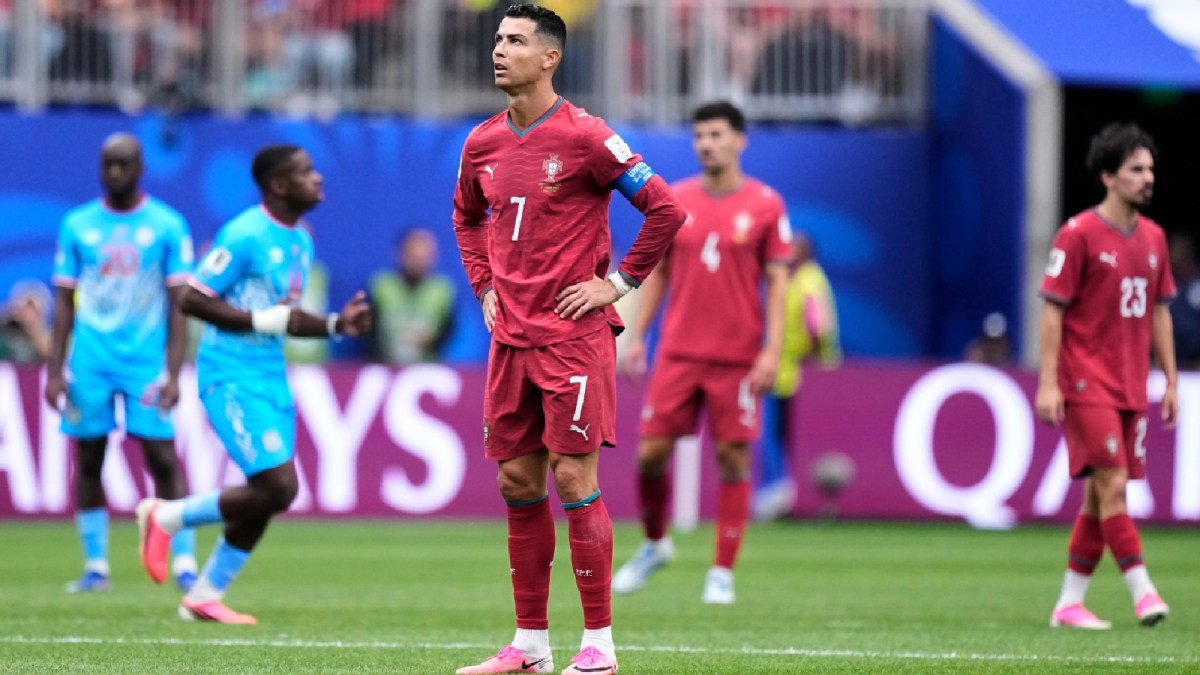
The 2026 FIFA World Cup delivered another reminder that reputation alone guarantees nothing on football’s biggest stage. Tournament favourites Portugal were held to a surprising 1-1 draw by a resilient DR Congo side in their Group K opener at Houston on June 17.
While much of the pre-match attention centred around cristiano Ronaldo becoming the first male footballer to feature in six FIFA World Cups, it was DR Congo who emerged with the bigger story. Returning to the tournament for the first time in 52 years, the African nation showcased tactical discipline, defensive organisation, and unwavering belief to secure a historic point.
Portugal started brightly through Joao Neves’ early goal, but Yoane Wissa’s first-half equaliser ensured the Leopards marked their long-awaited return to the global stage with a result that could reshape Group K.
The draw leaves Portugal with questions to answer about their attacking efficiency, while DR Congo have announced themselves as potential dark horses capable of disrupting established powers.
Portugal vs DR Congo: Match at a Glance
| Match | Portugal vs DR Congo |
|---|---|
| Tournament | FIFA World Cup 2026 – Group K |
| Date | June 17, 2026 |
| Venue | Houston, United States |
| Final Score | Portugal 1-1 DR Congo |
| Portugal Scorer | Joao Neves (6′) |
| DR Congo Scorer | Yoane Wissa (45+) |
| Player Milestone | Cristiano Ronaldo’s sixth FIFA World Cup appearance |
How the Match Unfolded
Portugal could hardly have asked for a better start. Within six minutes, Pedro Neto delivered an inviting cross into the penalty area, where midfielder Joao Neves rose unchallenged to head home and give Roberto Martinez’s side an early advantage.
The goal appeared to validate expectations that Portugal would comfortably control proceedings against World Cup debutants returning after more than half a century away from the tournament.
However, football often rewards resilience over reputation.
Despite Portugal dominating possession for large stretches, their control lacked penetration. The midfield circulated the ball efficiently but struggled to break down DR Congo’s compact defensive structure.
The African side remained patient, refusing to panic after conceding early. Instead, they focused on staying organised, limiting spaces between the lines, and waiting for opportunities to attack in transition.
That patience paid off deep into first-half stoppage time.
Arthur Masuaku delivered a dangerous cross into the box, and Yoane Wissa found himself unmarked to power home a header, scoring DR Congo’s first-ever FIFA World Cup goal.
For Portugal, the timing of the equaliser was a psychological blow. For DR Congo, it was a moment decades in the making.
DR Congo’s Historic Return Ends in Celebration
Before this tournament, DR Congo’s only previous World Cup appearance came in 1974, when they competed as Zaire.
Their return after a 52-year absence represents one of African football’s most remarkable comeback stories.
Qualifying for the expanded 48-team tournament was an achievement in itself, but securing a point against one of Europe’s strongest squads immediately elevates expectations.
The result also highlights the growing competitiveness of African football on the global stage.
Teams from the continent are no longer content with merely participating. They are arriving with clear tactical identities, greater technical quality, and increasing confidence against traditional football powers.
DR Congo’s disciplined performance embodied that evolution.
Cristiano Ronaldo’s Record Night Ends in Disappointment
At 41 years old, Cristiano Ronaldo added another chapter to his extraordinary career by appearing in his sixth FIFA World Cup.
The Portugal captain now shares the record for most men’s World Cup appearances with Lionel Messi, further cementing his legacy as one of football’s enduring icons.
However, the milestone was not accompanied by the fairy-tale performance many anticipated.
Ronaldo struggled to influence the game consistently as DR Congo’s defenders denied him space inside the penalty area. The veteran forward had two clear opportunities in the second half but fired wide on both occasions.
While his movement remained intelligent, Portugal often failed to provide the quality service needed to maximise his strengths.
The performance raises an important question facing Portugal throughout the tournament: can they balance their emotional connection to Ronaldo with the tactical demands of modern international football?
His leadership and experience remain invaluable, but Portugal may need greater attacking fluidity if they are to challenge for the title.
Why Portugal’s Performance Will Concern Roberto Martinez
The draw exposed several issues Portugal must address quickly.
Possession Without Purpose
Portugal controlled the ball for long periods but created surprisingly few clear-cut chances. Their only shot on target resulted in Joao Neves’ early goal.
Against stronger opponents, sterile possession without attacking penetration could prove costly.
Lack of Intensity
After taking the lead, Portugal appeared content to control the game rather than increase the pressure.
That approach allowed DR Congo to settle and gradually gain confidence.
Overreliance on Individual Brilliance
Too often, Portugal looked to moments of magic from players like Ronaldo, Rafael Leao, or Pedro Neto instead of creating collective attacking patterns.
Championship-winning teams typically combine individual talent with structured offensive systems.
Yoane Wissa and the Players Who Changed the Match
Yoane Wissa’s equaliser will forever hold a special place in Congolese football history.
Beyond the goal itself, his relentless work rate and intelligent movement consistently troubled Portugal’s defence.
Arthur Masuaku also deserves significant credit for delivering the decisive assist and providing an attacking outlet from wide areas.
At the other end, DR Congo’s defensive unit executed its game plan brilliantly, limiting Portugal’s opportunities and keeping Ronaldo largely isolated.
Cedric Bakambu nearly created an even bigger upset in the second half when his effort struck the post.
Had that chance gone in, one of the World Cup’s biggest early shocks could have become reality.
Group K Scenario: What This Result Means
The draw significantly alters the dynamics of Group K.
Portugal entered the tournament as clear favourites to top the group, but dropping points in their opening match increases the pressure heading into the remaining fixtures.
Meanwhile, DR Congo have gained momentum and belief.
With Uzbekistan set to face Colombia in the group’s other opening match, every point could prove decisive in determining qualification for the knockout rounds.
| Team | Matches Played | Points |
|---|---|---|
| Portugal | 1 | 1 |
| DR Congo | 1 | 1 |
| Colombia | 0 | 0 |
| Uzbekistan | 0 | 0 |
Portugal cannot afford another slip-up, while DR Congo have given themselves a genuine opportunity to progress beyond the group stage.
The Bigger Picture: The Expanded World Cup’s Competitive Impact
Results like this underline why FIFA expanded the tournament to 48 teams.
Critics feared the additional spots would lead to one-sided contests, but the early stages of the 2026 World Cup have instead showcased the growing depth of international football.
Nations once considered outsiders are arriving better prepared, tactically sophisticated, and capable of competing against elite opponents.
DR Congo’s performance demonstrated that the gap between football’s traditional powers and emerging nations continues to narrow.
For fans, that unpredictability is precisely what makes the World Cup unique.
What’s Next for Portugal and DR Congo?
Portugal must quickly regroup and rediscover their attacking rhythm if they hope to fulfil their status as title contenders.
Manager Roberto Martinez may need to consider tactical adjustments to generate more creativity and ensure Ronaldo receives better support in advanced areas.
For DR Congo, the focus will shift to maintaining their momentum and capitalising on the confidence gained from this result.
After waiting more than five decades for another World Cup appearance, they have already created history. Now, they have a genuine opportunity to create even more.
Conclusion
Portugal’s 1-1 draw against DR Congo will be remembered as one of the defining early stories of the 2026 FIFA World Cup.
While Cristiano Ronaldo achieved a historic milestone by appearing in his sixth tournament, it was DR Congo who captured global attention through their fearless and disciplined display.
Yoane Wissa’s equaliser ensured the African nation’s long-awaited return to football’s grandest stage ended in celebration rather than disappointment.
For Portugal, the result serves as an early warning that talent alone will not guarantee success. For DR Congo, it proves they belong among the world’s best.
And for the rest of the tournament, Group K just became significantly more intriguing.
For breaking news and live news updates, like us on Facebook or follow us on Twitter and Instagram. Read more on Latest Sports on thefoxdaily.com.



COMMENTS 0