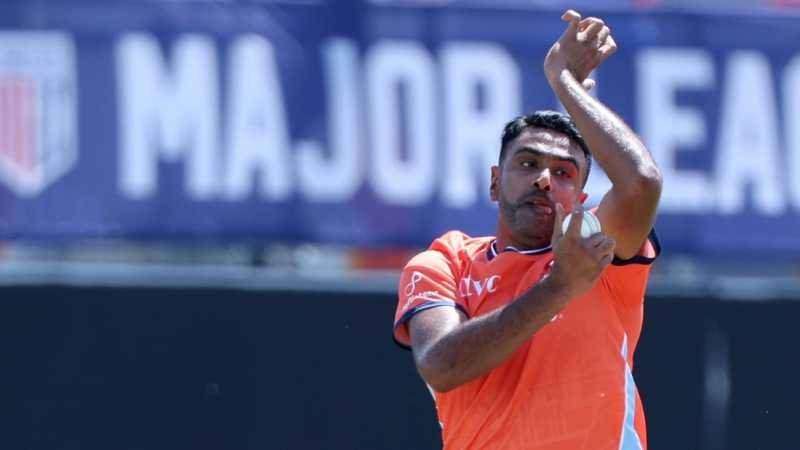
Cricket is entering one of the most transformative periods in its history. With the sport set to return to the Olympic Games at Los Angeles 2028 after more than a century, attention is shifting beyond traditional powerhouses toward expanding the game’s global footprint. Former India off-spinner Ravichandran Ashwin believes competitions such as the European T20 Premier League (ETPL) could become one of the biggest catalysts in that journey.
Having accepted the role of captain and mentor of the Dublin Guardians franchise, Ashwin sees the inaugural ETPL as much more than another franchise tournament. In his view, it represents an opportunity to develop players from emerging cricket nations, increase the sport’s popularity across Europe, and strengthen cricket’s case as a truly global Olympic discipline.
His comments arrive at a time when cricket’s governing bodies are investing heavily in expanding the game beyond Asia, Australia, and England. While established leagues such as the IPL, Big Bash League, SA20, Major League Cricket, and ILT20 continue to dominate headlines, Europe’s newest franchise competition is aiming to create its own identity by focusing on long-term player development and international growth.
Why the European T20 Premier League Matters
The ETPL is expected to feature franchises representing Ireland, Scotland, and the Netherlands—three countries that have consistently produced talented cricketers despite limited domestic opportunities compared to Full Member nations.
Unlike many established franchise leagues that primarily attract international superstars, the ETPL has a broader mission. It seeks to combine experienced overseas professionals with local players, creating an environment where emerging talent can learn directly from some of the game’s most accomplished names.
Ashwin believes that this model could significantly improve the quality of cricket in Europe while giving local players regular exposure to high-pressure professional competition.
Cricket’s Olympic Return Creates a New Opportunity
One of the biggest reasons behind Ashwin’s excitement is cricket’s inclusion in the Los Angeles 2028 Olympic Games. The sport will make its Olympic comeback for the first time since 1900, introducing cricket to millions of new viewers worldwide.
Global sporting events often accelerate the popularity of emerging sports, especially in countries where they have historically received limited attention. Ashwin argues that leagues like the ETPL can ensure Europe has a stronger pool of competitive players ready to represent their nations when Olympic cricket begins.
The timing therefore becomes especially significant. Building competitive squads cannot happen overnight. Domestic leagues must begin developing talent years before major international tournaments arrive.
Why T20 Cricket Is Driving Global Expansion
Ashwin strongly believes that the T20 format is the ideal vehicle for cricket’s international growth.
Modern sports audiences increasingly prefer fast-paced competitions that fit into busy schedules. T20 cricket delivers entertainment, tactical variety, and dramatic finishes within a few hours, making it easier for new fans to understand and enjoy.
Several advantages make T20 particularly suitable for global expansion:
- Shorter match duration appeals to modern audiences.
- Simple format is easier for first-time viewers to understand.
- Broadcasters can reach larger audiences during prime-time windows.
- Players from Associate nations receive more opportunities.
- Franchise leagues provide financial sustainability.
- Olympic scheduling becomes significantly easier.
These factors have helped T20 become cricket’s fastest-growing format over the past two decades.
Can Europe Become Cricket’s Next Growth Market?
For decades, cricket’s commercial success has largely depended on South Asia, Australia, England, New Zealand, and parts of the Caribbean. Europe, despite its sporting infrastructure and large population, remains an underdeveloped cricket market.
Countries such as Ireland, Scotland, and the Netherlands have demonstrated their ability to compete with stronger opponents in ICC tournaments. However, limited professional opportunities have often slowed long-term progress.
The ETPL aims to address that challenge by providing players with consistent high-quality competition at home rather than relying solely on international fixtures.
| Potential Benefit | Impact on European Cricket |
|---|---|
| Professional T20 League | More competitive domestic structure |
| International Mentors | Improved player development |
| Regular Broadcast Coverage | Greater fan engagement |
| Olympic Preparation | Stronger national teams |
| Franchise Investment | Better infrastructure and financial support |
Ashwin’s Leadership Role Extends Beyond Playing
As captain and mentor of the Dublin Guardians, Ashwin is expected to contribute far beyond his performances with the ball.
One of his primary responsibilities will be helping younger players understand tactical cricket, game awareness, and adapting to different match situations.
Throughout his international career, Ashwin has earned a reputation as one of cricket’s sharpest thinkers. His ability to analyze conditions, anticipate batters’ plans, and continuously evolve his bowling has made him one of the most successful spinners of the modern era.
Those qualities could prove equally valuable in a mentorship role.
Adaptability Remains the Biggest Skill in Modern Cricket
Ashwin also used India’s recent T20I series defeat in Ireland to highlight one of cricket’s most important lessons—adaptability.
Different conditions demand different approaches. Batters, bowlers, and captains who quickly adjust to unfamiliar environments often outperform more naturally talented opponents.
European conditions, known for seam movement, changing weather, and slower outfields, present unique challenges that many players from traditional cricket nations rarely encounter during franchise tournaments.
Competing regularly in Ireland, Scotland, and the Netherlands could therefore improve players’ overall cricketing intelligence.
Why Emerging Nations Stand to Benefit Most
Perhaps the most important aspect of Ashwin’s vision is its focus on Associate and emerging cricket nations.
Rather than building a competition entirely around international stars, the ETPL aims to strengthen local cricket ecosystems by giving homegrown players opportunities to train and compete alongside experienced professionals.
This model has successfully accelerated player development in several other sports, where domestic leagues serve as stepping stones to international competition.
If executed effectively, the ETPL could help produce the next generation of European cricketers capable of competing consistently against the world’s strongest teams.
The Future of ODI Cricket Remains Uncertain
Ashwin also expressed the view that T20 cricket is likely to remain the dominant force in cricket’s expansion, while the long-term future of One-Day Internationals continues to generate debate.
With crowded international calendars and increasing franchise commitments, administrators face the difficult task of balancing all three formats without overburdening players.
Although Test cricket remains the sport’s traditional pinnacle, T20 has become its primary growth engine from both commercial and global participation perspectives.
What Success Would Mean for the ETPL
The inaugural season will be closely watched by cricket administrators, broadcasters, sponsors, and players worldwide.
If the tournament succeeds in attracting competitive cricket, strong attendance, and television audiences, it could encourage further investment in European cricket and inspire similar regional leagues in emerging markets.
More importantly, it could strengthen the talent pipeline ahead of future ICC events and the Olympic Games, helping cricket become less dependent on a handful of traditional powerhouse nations.
Conclusion
R Ashwin‘s belief in the European T20 Premier League extends well beyond winning matches or lifting trophies. He sees the competition as an important step in cricket’s global evolution—one that can develop players, strengthen emerging nations, and prepare the sport for its long-awaited Olympic return in Los Angeles in 2028.
While the ETPL will face the challenges common to every new league, its long-term vision aligns with cricket’s broader ambition of expanding into new markets. If it successfully combines competitive cricket with meaningful player development, the tournament could become far more than another franchise league—it could help shape the future of international cricket for the next generation.
For breaking news and live news updates, like us on Facebook or follow us on Twitter and Instagram. Read more on Latest Sports on thefoxdaily.com.





COMMENTS 0