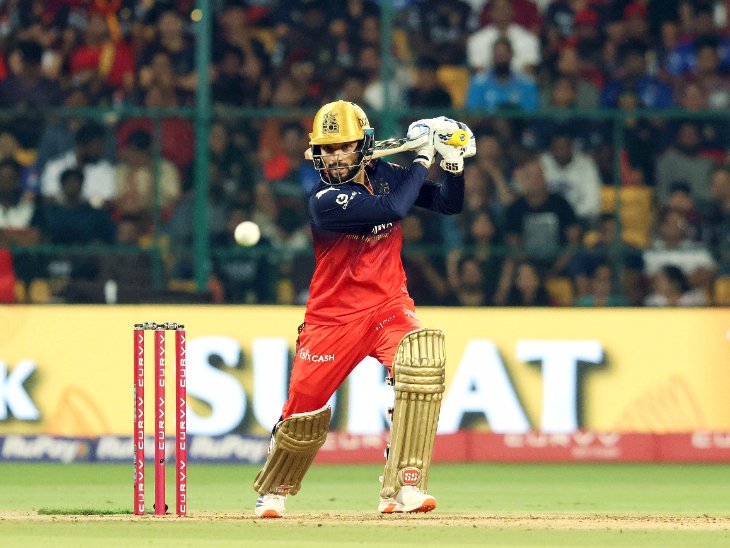
India’s shocking T20I struggles against Ireland exposed a major middle-overs problem, and Rajat Patidar’s explosive numbers suggest he could provide the attacking option the team needs before the England series
Rajat Patidar India T20I comeback has become one of the biggest talking points after India’s disappointing 2-0 T20I series defeat against Ireland. While the loss raised questions about batting consistency, the bigger issue was not just the collapse — it was India’s inability to dominate the crucial middle overs.
The phase between overs 7 and 15 often decides modern T20 matches. It is the period where teams either build momentum for a huge finish or lose control before the death overs arrive. Against Ireland, India struggled to find that attacking rhythm, and Rajat Patidar’s recent performances provide an interesting solution.
The Royal Challengers Bengaluru batter has developed a reputation as one of the most dangerous middle-order hitters in Indian cricket. His ability to attack spin, pace variations and defensive fields makes him a potential answer to a very specific problem India discovered in Belfast.
India’s Ireland defeat revealed a middle-order weakness
India’s two-match T20I series against Ireland was not simply a case of poor batting. The deeper issue was the team’s inability to control the middle phase of the innings.
During the series, India struggled in overs 7 to 15, scoring at a significantly slower rate compared to Ireland. The problem was not surviving the opening overs or finishing the innings. The problem was building pressure during the period when field restrictions had ended but attacking opportunities still existed.
| Team | Overs 7-15 Performance | Impact |
|---|---|---|
| India | Struggled for momentum | Lost control before death overs |
| Ireland | Maintained stronger scoring rate | Built competitive totals |
In T20 cricket, teams cannot afford long periods without boundary pressure. Even if wickets are protected, a slow middle phase creates impossible pressure later.
This is exactly where Rajat Patidar’s profile becomes interesting.
Why Rajat Patidar fits India’s middle-order requirement
Patidar’s biggest strength is not simply power hitting. It is his ability to accelerate immediately after the powerplay.
His batting style is designed for the modern T20 middle overs. He can attack spinners, punish pace variations and maintain a high scoring rate without depending only on the final five overs.
Unlike traditional middle-order batters who often focus on rebuilding after early wickets, Patidar plays with a different mindset. His role is to change the match situation.
- Counter-attacking ability: Can shift momentum quickly after the powerplay.
- Range of shots: Effective against pace, spin and slower bowling.
- Pressure handling: Has experience playing important innings in high-pressure situations.
- Boundary option: Can create big overs before the death phase.
Patidar’s numbers explain why selectors could consider him
The strongest argument for Rajat Patidar is not based on reputation. It is based on role clarity.
His performances in the middle overs show a batter who specializes in the exact area where India struggled against Ireland.
During the middle phase, Patidar has produced an aggressive scoring approach, combining boundary hitting with strike rotation. His ability to maintain a high strike rate between overs 7 and 15 separates him from many conventional middle-order options.
The important point is that Patidar does not simply attack one type of bowler.
Patidar is not only a spin-hitting option
One common problem with T20 selections is choosing players who only work in specific matchups. For example, some batters are excellent against spin but struggle when teams use pace-off bowling.
Patidar’s value comes from his flexibility.
Against spin, he has shown the ability to clear boundaries and disrupt defensive fields. Against fast bowlers, his timing and back-foot play allow him to maintain aggression.
This makes him a more complete middle-order option rather than a specialist pick.
What India missed against Ireland: A batter who changes momentum
The biggest difference between successful T20 teams and average performances is often the ability to create a turning point.
India had players capable of stabilising innings, but the team lacked someone who could take responsibility for changing the match direction.
In the Ireland series, India often reached a stage where the innings needed one explosive over. However, that pressure-release moment never arrived consistently.
A player like Patidar provides that possibility because he does not need the match to be perfectly set before attacking.
Comparison: Rajat Patidar vs traditional middle-order approach
| Aspect | Traditional Middle-Order Role | Rajat Patidar Profile |
|---|---|---|
| Main focus | Stabilise innings | Stabilise and accelerate |
| Risk approach | Lower risk batting | Calculated aggression |
| Best phase | Often death overs | Middle overs |
| Impact | Protect wickets | Create pressure on bowlers |
The risk India must accept with Patidar
Every attacking batter comes with risk. Patidar is not a guaranteed solution who will succeed in every international match.
Aggressive middle-order batting naturally creates dismissal chances. Players who attempt to dominate bowling attacks will occasionally fail.
However, India’s Ireland problem was not excessive risk-taking. It was hesitation.
The team had enough players capable of extending innings, but lacked someone willing to take control during the most important phase.
Why IPL performances matter but cannot guarantee success
IPL numbers alone should never decide international selection. The jump from franchise cricket to international cricket is significant.
International bowlers study weaknesses more carefully, pressure situations are different and every mistake is punished.
However, IPL performances can reveal skill sets. In Patidar’s case, the data highlights a specific ability rather than just general form.
India does not need another batter who can simply score runs. They need someone who can solve a tactical problem.
Rajat Patidar and India’s future T20 strategy
The modern T20 game is moving toward specialists. Teams are increasingly selecting players based on specific phases of the match.
Some players dominate powerplays. Others finish games. The most valuable players control the middle overs because that is where matches often change direction.
Patidar fits that modern approach.
His inclusion would not just be about replacing a player. It would be about creating a clearer batting structure.
What India should learn before England T20I series
The upcoming England series gives India an opportunity to correct the issues exposed by Ireland.
The defeat showed that talent alone is not enough. A T20 lineup needs clearly defined roles.
India must decide whether they want a middle order built around safety or one built around controlling the game.
Rajat Patidar represents the second option.
Conclusion: Rajat Patidar could be the answer to India’s middle-over problem
The Ireland series defeat was a warning sign, but it also highlighted a clear solution.
India’s biggest weakness was not the opening phase or the finishing ability. It was the inability to dominate overs 7 to 15.
Rajat Patidar’s middle-order batting style directly addresses that weakness. He brings aggression, versatility and the ability to create momentum when the innings needs it most.
Whether selectors immediately turn to him remains uncertain, but the argument is clear: India need a batter who does not just survive the middle overs — they need one who owns them.
For breaking news and live news updates, like us on Facebook or follow us on Twitter and Instagram. Read more on Latest Sports on thefoxdaily.com.






COMMENTS 0