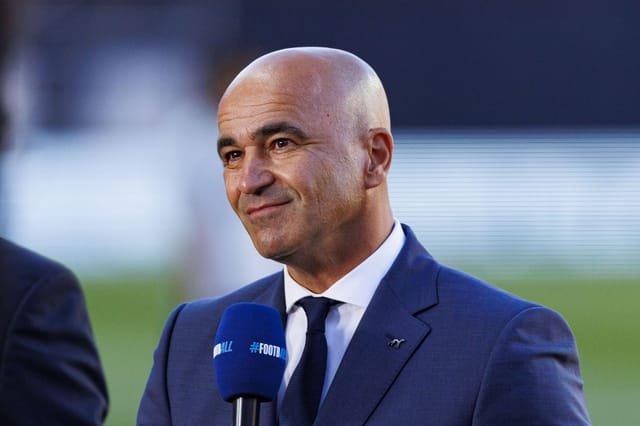
The 2026 FIFA World Cup build-up for Portugal has taken on a deeply emotional tone after head coach Roberto Martínez made a heartfelt promise to the family of a fan who tragically passed away ahead of a friendly match against Nigeria. While Portugal continue their preparation as one of the tournament favourites, this incident has added a powerful human dimension to their campaign—reminding players and supporters that football is far bigger than competition alone.
This article explores not only the incident and Martínez’s response, but also the wider implications for Portugal’s World Cup 2026 campaign, Cristiano Ronaldo’s final tournament storyline, tactical strengths, group-stage outlook, and why this moment could quietly shape the team’s mentality going forward.
Primary keyword: Portugal 2026 FIFA World Cup
Related semantic keywords: Roberto Martínez Portugal, Cristiano Ronaldo World Cup 2026, Portugal squad 2026, Portugal vs Nigeria friendly, FIFA World Cup Group K, Portugal football team analysis, João Neves Vitinha, Portugal tactical system, Ronaldo last World Cup, Portugal title contenders
Who, What, When, Where, Why, and How: The Incident Explained
During Portugal’s pre-World Cup friendly against Nigeria at the Estádio Dr. Magalhães Pessoa in Leiria, a tragic medical emergency unfolded in the stands. A supporter suffered a cardiorespiratory arrest before the match. Despite immediate intervention from emergency services and rapid transfer to hospital, the fan could not be revived.
The match itself went ahead, ending in a 2-1 victory for Portugal, but the result was overshadowed by the incident. In the post-match environment, head coach Roberto Martínez addressed the situation with visible emotion, extending condolences and making a symbolic promise that Portugal would dedicate their World Cup opener to the fan’s memory.
This gesture quickly resonated across the football world, highlighting how modern football leadership extends beyond tactics and results into emotional intelligence and human connection.
Roberto Martínez’s Leadership Style: More Than Just Tactics
Since taking charge of Portugal, Roberto Martínez has been focused on blending tactical discipline with emotional cohesion. His response to this tragedy reflects a leadership approach rooted in empathy, unity, and psychological strength.
Modern elite football managers are increasingly judged not only on formations and substitutions but also on how they manage group mentality during emotionally difficult moments. Martínez’s promise to the grieving family may seem symbolic, but within elite sport psychology, such moments often become motivational anchors for teams.
Portugal’s squad, already filled with high-profile personalities and young emerging stars, will likely carry this emotional context into their tournament mindset. In tightly contested World Cup matches, motivation and unity often become decisive factors.
Portugal vs Nigeria Friendly: Tactical Insights and Performance Review
On the pitch, Portugal’s 2-1 victory over Nigeria provided both positives and areas of concern. The match showcased Portugal’s attacking depth but also exposed moments of inefficiency in finishing and game control.
Francisco Conceição’s decisive goal highlighted the squad’s ability to produce match-winners from wide attacking positions, while Pedro Neto continued to demonstrate his growing importance in transitional attacks. However, Nigeria’s physical structure and counter-attacking threat ensured Portugal could not dominate comfortably.
The performance also reignited discussions around Cristiano Ronaldo’s role in the squad. Despite his legendary status, the forward struggled to influence the game significantly, a narrative that has become increasingly common in recent high-intensity matches.
Cristiano Ronaldo and the 2026 FIFA World Cup: The Final Chapter?
The 2026 FIFA World Cup is widely expected to be Cristiano Ronaldo’s final appearance on football’s biggest stage. At 41, Ronaldo remains one of the most recognizable figures in global sport, but his role within the team is evolving.
Against Nigeria, Ronaldo had limited impact, missing key chances and struggling to impose himself in open play. While such performances raise questions among critics, it is important to interpret them within a broader context: his role is no longer purely explosive, but increasingly strategic and situational.
Portugal’s system under Martínez now relies heavily on midfield creativity and dynamic wide play, with players like Bruno Fernandes, Bernardo Silva, Vitinha, and João Neves driving progression. Ronaldo’s presence still commands defensive attention, which indirectly creates space for younger attackers.
The emotional promise made by Martínez could also serve as a psychological catalyst for Ronaldo, who has historically thrived under emotionally charged narratives and high-pressure tournaments.
Portugal Squad 2026: A Blend of Youth, Experience, and Tactical Balance
Portugal’s current squad is widely considered one of the most balanced in world football. The combination of emerging talent and established stars gives them both immediate competitiveness and long-term sustainability.
Players like João Neves and Vitinha represent the next generation of midfield intelligence, while Nuno Mendes and Rúben Dias provide structural stability in defense. Bernardo Silva and Bruno Fernandes remain central to Portugal’s creative output, offering control in possession and unpredictability in the final third.
This balance is critical because modern World Cup winners typically require both youthful energy and experienced leadership. Portugal appear to have both in abundance.
Group K Analysis: Portugal’s Path to the Knockout Stage
Portugal have been drawn into Group K alongside the Democratic Republic of Congo, Uzbekistan, and Colombia. On paper, Portugal are clear favourites to top the group, but World Cup history repeatedly shows that no match is guaranteed.
Colombia present the biggest tactical challenge due to their physical intensity and attacking transitions. DR Congo and Uzbekistan may adopt compact defensive structures, making them difficult to break down without patience and creativity.
Portugal’s ability to manage low-block opposition will likely determine whether they progress smoothly or face early complications.
| Team | Strength | Key Challenge vs Portugal |
|---|---|---|
| Portugal | Elite midfield creativity, balanced squad, strong defense | Managing expectations and finishing efficiency |
| Colombia | Physicality, counter-attacks, attacking flair | Defensive transitions against technical midfield |
| DR Congo | Athleticism, defensive compactness | Breaking deep defensive lines |
| Uzbekistan | Discipline, structured defense | Lack of experience at elite level |
Why Martínez’s Promise Matters Beyond Emotion
At first glance, Martínez’s promise to the fan’s family may seem like a simple gesture of respect. However, in elite football environments, emotional triggers often become part of team identity.
Such moments can unify squads, especially before major tournaments. Teams often adopt symbolic motivations—dedicating performances, adopting causes, or channeling emotion into competitive intensity.
For Portugal, this incident could strengthen internal cohesion at a crucial moment in their World Cup preparation phase. Emotional alignment often translates into improved defensive discipline, greater work rate, and stronger late-game resilience.
Comparing Portugal’s 2026 Team to Previous Generations
Portugal’s current squad is arguably more balanced than their Euro 2016-winning team, and more tactically flexible than their 2006 World Cup semi-final side.
Unlike previous generations that relied heavily on individual brilliance, this team operates with a more structured midfield ecosystem. The presence of multiple playmakers reduces dependency on any single player, including Ronaldo.
This evolution reflects a broader trend in international football: collective systems are increasingly outperforming superstar-dependent teams.
Key Insight: Portugal’s Biggest Strength Is Also Their Biggest Risk
Portugal’s depth is undeniable, but it also presents a tactical challenge. Too many creative midfielders can sometimes lead to over-complex decision-making in the final third. Against compact defensive teams, simplicity often wins World Cup matches.
If Portugal overplay in attacking zones, they risk frustrating matches similar to past tournaments where dominance did not translate into goals.
Prediction: How Far Can Portugal Go in 2026?
Based on current squad strength, tactical setup, and group-stage outlook, Portugal are legitimate contenders for at least a semi-final finish. Their ceiling depends on three key factors:
- Ronaldo’s effectiveness in high-pressure knockout moments
- Midfield efficiency against defensive teams
- Defensive concentration in transition moments
If João Neves and Vitinha continue their rapid development and Bruno Fernandes maintains consistency, Portugal could realistically challenge for the title. However, World Cup success often hinges on small margins, not just squad quality.
Conclusion: A Campaign Defined by Emotion, Evolution, and Expectation
The 2026 FIFA World Cup journey for Portugal is already layered with meaning. Roberto Martínez’s promise to a grieving family adds emotional depth to a squad already under immense pressure and expectation. At the same time, Cristiano Ronaldo’s final World Cup narrative adds historical significance to every match.
Portugal enter the tournament not just as contenders, but as a team balancing legacy, transition, and ambition. Whether this emotional moment becomes a footnote or a defining spark will depend on how they respond when the world’s biggest stage begins in Houston.
One thing is clear: Portugal’s World Cup story in 2026 will be about far more than football alone.
For breaking news and live news updates, like us on Facebook or follow us on Twitter and Instagram. Read more on Latest Sports on thefoxdaily.com.




COMMENTS 0