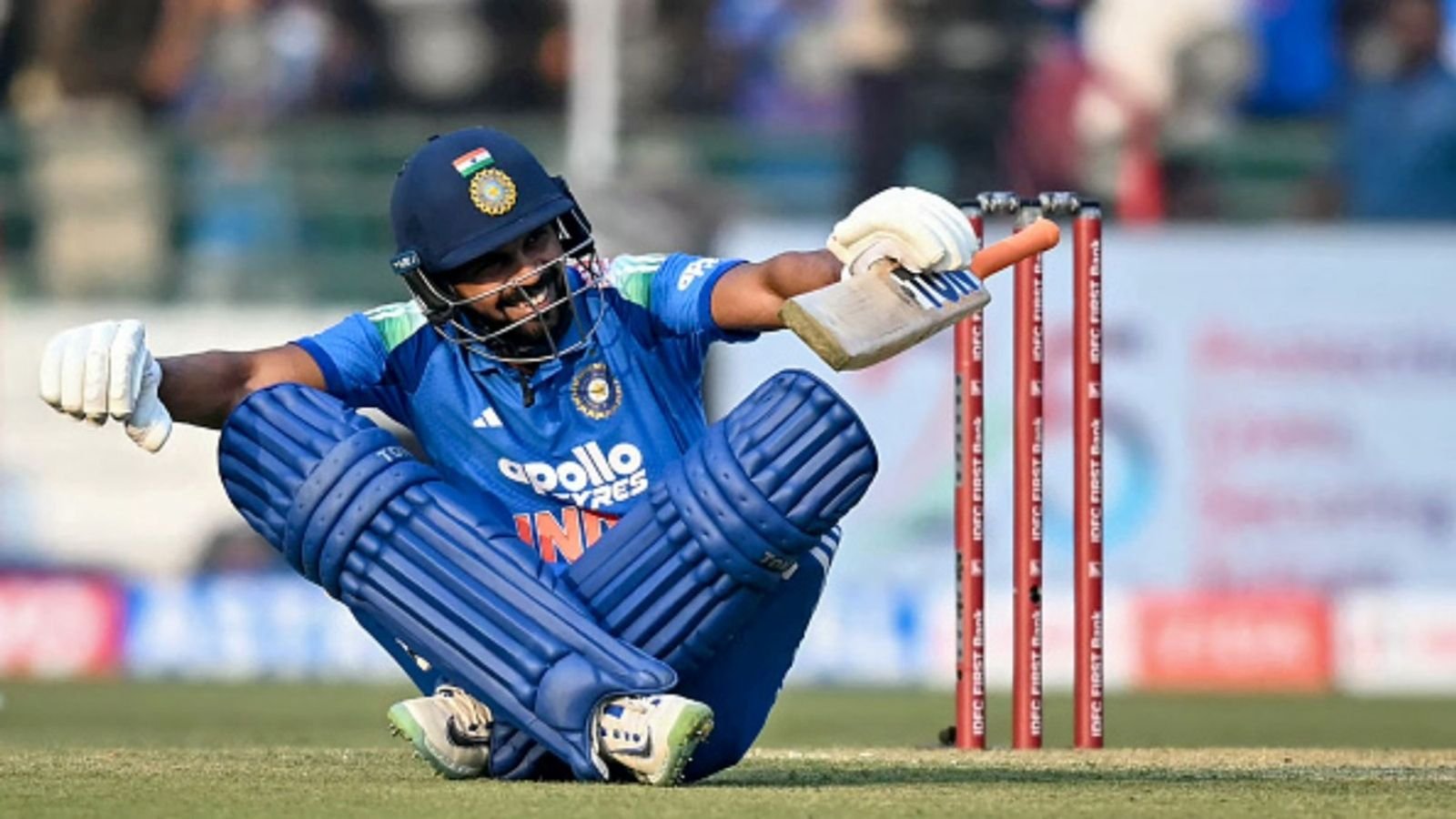
Ruturaj Gaikwad India comeback hopes remain alive despite his continued absence from the national squad. The Chennai Super Kings captain has made it clear that he is not allowing selection uncertainty to dominate his thinking, choosing instead to concentrate on scoring runs and being ready whenever the selectors call.
Gaikwad spoke about his situation at an event in Coimbatore on September 1, 2026, after another period outside the India setup. His comments came at an important point in the domestic calendar, with the West Indies ODI series approaching and several Indian players expected to be involved in the Asian Games in Japan.
The 29-year-old has already experienced the frustration of being close to an India opportunity without being able to turn it into a permanent place. He returned to the ODI side against South Africa in 2025 as a replacement for the injured Shreyas Iyer and responded with a century. Yet that performance did not result in a sustained place in the squad.
Now, with another domestic season approaching, Gaikwad appears to be taking a deliberately simple approach: make runs, stay consistent and let the selectors make the decision.
Gaikwad’s message is simple: score runs and wait
Gaikwad’s response to his continued absence was notable for its lack of frustration.
He expressed confidence that he can return to the Indian team, but did not suggest that he deserves selection ahead of another player or criticise the selection process.
That attitude could become particularly important during the next few months because India’s batting pool remains highly competitive.
Gaikwad’s route back is therefore unlikely to come through public arguments. It will come through performances.
His stated priority is consistency, something he has demonstrated at various stages of his domestic and India A career.
For a player competing for a place in India’s ODI setup, however, consistency has to be considered alongside role, position and team balance.
Why Gaikwad has found himself outside the India XI
Gaikwad’s situation is partly a consequence of the depth available to Indian Cricket.
India currently has several established batters competing for limited positions. The selection challenge becomes even more complicated when the team management wants players to perform specific roles rather than simply selecting the best individual numbers.
Reports surrounding Gaikwad’s previous omission suggested that the team management did not want batters to be regularly moved away from their preferred positions.
This is an important tactical issue.
Gaikwad has primarily been recognised as an opening batter, and his strongest performances have often come when he has been given the responsibility of starting an innings. But India’s limited-overs teams have other established options at the top of the order.
That means Gaikwad is not competing only against another batter’s statistics. He is competing against the combination of player role, team balance and existing selection priorities.
His recent India A form gives him something to build on
Gaikwad’s recent performances have not been uniformly outstanding, but his India A campaign in the one-day tri-series in Sri Lanka provided a significant positive signal.
He entered the competition after replacing an injured Riyan Parag in the India A squad led by Tilak Varma.
Gaikwad made an immediate impact by scoring a century against Sri Lanka A. He also produced a half-century against Afghanistan A before following it with scores of 37, 30 and 40.
Across the tri-series, he averaged 54.8.
That record is important because it demonstrates the kind of consistency required from a player attempting to force his way back into international contention.
However, his performances in the unofficial Tests against Sri Lanka A were considerably quieter. He scored only 36 runs across three innings.
That contrast illustrates the central challenge facing Gaikwad: his potential is not really in question, but maintaining strong output across formats and opportunities is crucial.
Duleep Trophy provided another mixed signal
Gaikwad also featured for West Zone in the 2026 Duleep Trophy quarter-final against North Zone.
His first innings ended with a single-digit score, but he responded with a brisk half-century in the second innings.
The two innings tell a familiar story about batting.
Even established players rarely produce identical performances every time they walk to the crease. For Gaikwad, though, every domestic innings carries additional significance because he is trying to convince selectors that he can translate his domestic success into sustained international production.
The positive aspect is that he responded to a disappointing first innings rather than allowing it to become a second failure.
That ability to recover within the same match is valuable, particularly for a batter trying to rebuild momentum.
Gaikwad’s numbers show why the selectors cannot ignore him forever
The strongest argument in Gaikwad’s favour comes from his List A record.
He has scored 5,334 runs from 100 innings in List A cricket at an average of 58.61. His record includes 21 centuries and 20 fifties.
Those numbers are significant because List A cricket is the domestic format most closely aligned with ODI cricket.
His international ODI record, however, is far less impressive so far.
Gaikwad has played nine ODIs and scored 228 runs from eight innings at an average of 28.50, with a strike rate close to 90.
| Format | Matches/innings | Runs | Average | Key record |
|---|---|---|---|---|
| ODIs | 9 matches, 8 innings | 228 | 28.50 | Strike rate close to 90 |
| List A | 100 innings | 5,334 | 58.61 | 21 centuries, 20 fifties |
The contrast is revealing.
Gaikwad has a substantial domestic one-day record, but he has not yet converted that success into a similarly convincing international ODI record.
That is perhaps the biggest reason his comeback case remains unfinished rather than guaranteed.
The West Indies ODI series could create an opening
The upcoming ODI series against the West Indies could become an important opportunity for Gaikwad.
The series is scheduled from September 27 to October 3, 2026. Several Indian players are expected to be involved in the Asian Games in Japan during this period, potentially creating openings in the ODI squad.
That does not mean Gaikwad is automatically guaranteed a place.
Selection opportunities depend on squad planning, player availability, fitness and the roles the team management wants to fill.
But the circumstances make the series particularly relevant to Gaikwad’s comeback campaign.
If selected, he would have a clear opportunity to demonstrate whether his strong List A record can translate into international ODI consistency.
Why the Asian Games could indirectly help Gaikwad
The Asian Games are not directly connected to Gaikwad’s selection battle, but the scheduling creates an interesting situation for India’s ODI squad.
When established players are unavailable because of international commitments elsewhere, selectors sometimes have an opportunity to examine players who might otherwise remain outside the immediate first-choice group.
For Gaikwad, this could be particularly valuable because he does not need an extended theoretical debate about his ability.
He needs matches.
If an opportunity arrives, his job becomes straightforward: score enough runs to make the selection discussion difficult to ignore.
This is also where his recent India A performances could help. The selectors already have evidence that he can produce significant one-day scores against quality opposition in a representative environment.
Gaikwad’s decision not to watch every India match is revealing
One of Gaikwad’s comments about his current situation was particularly interesting.
He explained that when he is not playing for India, he does not always watch the team’s matches because he is often busy practising and preparing for upcoming domestic tournaments.
That approach may seem surprising to some fans, but there is a logical reason behind it.
A player trying to return to the national team has limited control over selection decisions. He has much greater control over his training, preparation, fitness and performances.
Spending too much energy analysing every match in which he is not involved could potentially distract from the work required to prepare for his next opportunity.
Gaikwad appears to be prioritising the controllable part of the equation.
His CSK leadership adds another dimension
Gaikwad’s role as Chennai Super Kings captain also means that his development is not limited to his personal batting performances.
Leadership requires decision-making, responsibility and consistency under pressure. Those experiences can contribute to a player’s overall maturity, particularly when he is competing for a place in an international side.
At the same time, captaincy does not automatically strengthen a selection case.
International selection ultimately depends on what a player contributes in the role the national team requires.
For Gaikwad, that means his leadership experience can complement his case, but his batting remains the central argument.
The biggest challenge: turning potential into international consistency
Gaikwad’s career so far contains a noticeable gap between his domestic record and his international numbers.
That gap is not unusual for young or developing international players, but at 29, the window for establishing a long-term international role becomes increasingly important.
His List A average of 58.61 is strong evidence of his ability in the format. But selectors need confidence that those performances can be reproduced against international attacks and under the specific tactical demands of ODI cricket.
That is why the next opportunity, whenever it comes, could be more important than his previous selection battles.
Gaikwad does not necessarily need to produce a spectacular century every time. A sequence of reliable performances could be more valuable because it would address the consistency question directly.
What Gaikwad needs to prove in his next opportunity
- Consistency: He needs a sustained run of meaningful scores rather than one standout innings followed by quiet performances.
- Role clarity: He needs to demonstrate that he can contribute effectively in the position India wants him to occupy.
- International conversion: His strong List A record needs to translate into better ODI numbers.
- Adaptability: He must show that he can adjust to different match situations instead of relying only on favourable batting conditions.
- Pressure management: Every opportunity may carry additional attention because of the competition for India’s limited batting positions.
A comparison that explains Gaikwad’s selection problem
Gaikwad’s case highlights an increasingly common reality in Indian cricket: being statistically successful at domestic level does not automatically guarantee international selection.
India has a deep pool of batters who can produce large domestic numbers. Therefore, selectors must consider more than averages.
They have to assess whether a player fits the required batting position, whether his style complements the rest of the XI and whether he can solve a particular team problem.
In that environment, Gaikwad’s best strategy is arguably the one he has already identified himself: continue scoring and wait.
The more consistently he performs, the harder it becomes for selectors to overlook him when a suitable opportunity appears.
What could happen next?
Best-case scenario
Gaikwad could receive an ODI call-up for the West Indies series and convert the opportunity into a sequence of substantial scores. That would immediately strengthen his case for a longer international run.
Middle scenario
He could return to the squad but remain outside the first-choice XI. In that situation, domestic consistency would remain essential because another opportunity could arrive later in the season.
More difficult scenario
If his domestic performances become inconsistent while India’s established batters continue producing, the competition for his position would become even tougher.
The unique angle: Gaikwad’s biggest opponent may be role uncertainty
The most overlooked part of Gaikwad’s situation is that his biggest obstacle may not be another individual batter.
It may be the question of where exactly he fits.
Modern international teams increasingly select players according to defined roles. An opener is expected to do a particular job, while a middle-order batter may be judged through a completely different set of requirements.
Gaikwad’s domestic numbers prove that he can score heavily, but his international future could depend on whether India’s management sees a specific role in which his strengths can be maximised.
This makes the next selection decision particularly important. If the team has a clear role available for him, his path becomes much simpler.
If the team has no suitable position, even excellent domestic numbers may not immediately result in regular international appearances.
Ranji Trophy will provide another important platform
After the West Indies ODI series, Gaikwad is expected to feature in the Ranji Trophy, which begins on October 11.
The red-ball competition provides another opportunity for him to accumulate runs and demonstrate his broader batting consistency.
Although the Ranji Trophy is a different format from ODI cricket, sustained success in first-class cricket remains valuable for any batter hoping to remain in India’s wider selection picture.
It also provides a long-term platform rather than a short international window.
For Gaikwad, the domestic season could therefore become a marathon rather than a single selection trial.
Conclusion: Gaikwad’s comeback will be decided by what he does next
Ruturaj Gaikwad India comeback hopes are still very much alive, but his path back to the national team will require more than a single impressive innings.
His recent record provides reasons for optimism. He averaged 54.8 in the India A one-day tri-series in Sri Lanka, has an impressive List A average of 58.61 and has already demonstrated that he can score international-level runs when given an opportunity.
At the same time, his ODI average of 28.50 shows why selectors may still want greater evidence before giving him a permanent role.
The potential absence of several players during the Asian Games could create an opening during the West Indies ODI series. If that opportunity arrives, Gaikwad will have a chance to address the biggest question surrounding his career: can his outstanding domestic consistency become sustained international success?
For now, his approach is refreshingly straightforward. He is not trying to control the selectors’ decisions. He is concentrating on the one thing he can control: his own preparation and performances.
That may ultimately be the smartest route back to India.
For breaking news and live news updates, like us on Facebook or follow us on Twitter and Instagram. Read more on Latest Cricket on thefoxdaily.com.






COMMENTS 0