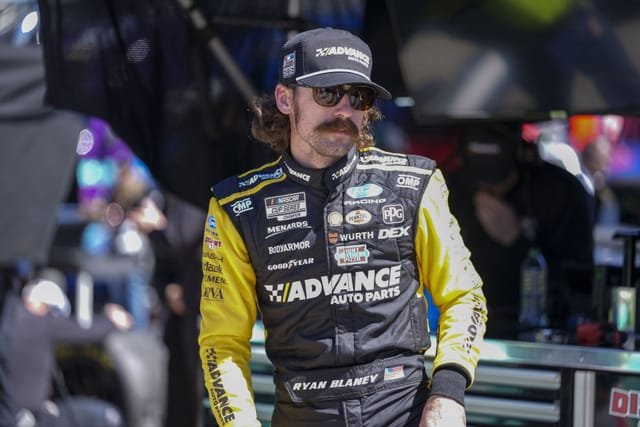
Success in NASCAR is often measured by speed, strategy, and execution. However, Ryan Blaney’s challenging outing at Sonoma Raceway served as a reminder that physical endurance can be just as important as horsepower. While fans focused on lap times and finishing positions, the Team Penske driver was fighting an entirely different battle inside the cockpit—one involving heat, dehydration, and muscle cramps that threatened to derail his race.
Blaney’s experience at Sonoma has sparked renewed discussion about the physical demands modern NASCAR drivers face, particularly during summer races where cockpit temperatures can become overwhelming. Although he managed to secure a strong top-six finish, the circumstances behind that result reveal a deeper story about driver conditioning, cooling technology, and the challenges teams face when equipment fails at the worst possible moment.
What Happened to Ryan Blaney at Sonoma Raceway?
The issue began after the conclusion of Stage 1 when Blaney attempted to activate his cooling suit. These systems are designed to circulate cooled water through a driver’s suit, helping regulate body temperature during long races. In high-temperature conditions, they are often considered essential equipment rather than a luxury.
Unfortunately for Blaney, the cooling system failed to function properly. As the race progressed, the situation became increasingly complicated. During a green-flag pit stop, his crew provided a specialized tool intended to remove trapped hot water from the cooling system. However, finding a secure place to store the device inside a cramped NASCAR cockpit proved difficult.
At some point during the race, the tool became dislodged and disappeared beneath the driver’s seat. Without it, the trapped water remained in the cooling shirt, effectively turning a cooling aid into an additional source of heat.
The result was a cascading series of physical challenges that affected hydration, comfort, and ultimately Blaney’s ability to drive at peak performance.
Why Cooling Suits Matter More Than Many Fans Realize
To casual viewers, a cooling suit malfunction may sound like a minor inconvenience. In reality, it can significantly affect a driver’s physical condition over the course of a race.
NASCAR race cars generate extreme cockpit temperatures, particularly on road courses and during summer events. Temperatures inside the vehicle can climb well above outside air temperatures, creating an environment that places tremendous stress on the human body.
Cooling suits help drivers:
- Maintain a stable core body temperature
- Reduce excessive sweating
- Improve concentration and reaction times
- Delay physical fatigue
- Minimize dehydration risks
- Enhance overall endurance during long races
When these systems fail, drivers can lose significant amounts of fluid through perspiration while experiencing rising body temperatures. The consequences extend beyond discomfort and can directly influence performance behind the wheel.
The Snowball Effect: How One Failure Led to Multiple Problems
One of the most important aspects of Blaney’s experience is how a single technical issue created a chain reaction of physical challenges.
Without proper cooling, the driver’s body must work harder to regulate temperature. Increased sweating accelerates fluid loss, which can quickly lead to dehydration. As hydration levels drop, muscle function becomes less efficient, increasing the likelihood of cramps and fatigue.
For Blaney, the most severe symptom emerged late in the race when painful cramps developed in his left calf.
That specific muscle plays a critical role in NASCAR competition because it controls braking input. Every approach to a corner requires precision, and an unexpected cramp can make consistent braking nearly impossible.
In a sport where fractions of a second determine success, physical limitations can dramatically alter a driver’s competitiveness.
The Hidden Athleticism of NASCAR Drivers
Stories like Blaney’s challenge the outdated perception that NASCAR drivers simply sit behind a steering wheel for several hours. Modern stock car racing demands elite levels of physical fitness.
Drivers routinely train like professional athletes, incorporating cardiovascular workouts, strength training, nutrition plans, and hydration strategies into their weekly routines.
During races, drivers must manage:
- High heart rates sustained for several hours
- Intense concentration under pressure
- Repeated braking and steering forces
- Heat stress
- Mental fatigue
- Rapid decision-making at high speeds
The physical strain becomes even greater when equipment failures eliminate tools designed to help regulate the body’s response to these challenges.
How Sonoma’s Road Course Increases Driver Workload
Sonoma Raceway presents unique difficulties compared to traditional oval tracks.
The California road course features a variety of elevation changes, heavy braking zones, and technical corners that require constant driver input. Unlike superspeedways where drivers may spend significant time maintaining momentum, Sonoma demands near-continuous physical engagement.
Every lap requires:
- Frequent gear changes
- Heavy braking applications
- Complex steering adjustments
- Constant throttle modulation
- High levels of concentration
When a driver is also battling dehydration and muscle cramps, these demands become significantly more difficult to manage.
| Challenge | Impact on Driver |
|---|---|
| High Cockpit Temperatures | Increased fatigue and fluid loss |
| Cooling System Failure | Reduced temperature regulation |
| Dehydration | Lower endurance and concentration |
| Muscle Cramps | Compromised braking and control |
| Road Course Layout | Higher physical workload per lap |
Why a Top-Six Finish May Be More Impressive Than It Looks
Finishing positions often tell only part of the story.
Considering the circumstances, Blaney’s top-six result ranks among the more resilient performances of his season. Many drivers experiencing severe dehydration and muscle cramps would struggle simply to remain competitive, let alone finish near the front of the field.
Maintaining pace while dealing with unpredictable leg cramps requires extraordinary mental discipline. Every braking zone becomes a potential risk, and every lap introduces uncertainty about whether the affected muscle will cooperate.
The result underscores not only Blaney’s talent but also the preparation and resilience required to compete at NASCAR’s highest level.
The Importance of Driver Safety Technology in Modern NASCAR
Over the years, NASCAR has made significant investments in driver safety. While much attention focuses on crash protection systems, heat management technology has quietly become another critical area of development.
Modern drivers benefit from:
- Advanced cooling systems
- Improved cockpit ventilation
- Better fire-resistant materials
- Enhanced hydration strategies
- Medical monitoring and support
Blaney’s experience demonstrates why these technologies continue evolving. Even small failures can have major consequences when drivers are subjected to extreme conditions for extended periods.
As NASCAR vehicles become more technologically advanced, reliability of support systems will remain a priority for teams and manufacturers.
Ryan Blaney’s Focus Shifts to Chicagoland Speedway
With Sonoma now in the rearview mirror, attention turns to Chicagoland Speedway and the next stage of the NASCAR Cup Series season.
Blaney enters the event carrying momentum from a strong Sonoma finish despite the challenges he faced. His participation in tire testing at Chicagoland earlier this year could provide valuable insight as teams return to the venue after a lengthy absence from the Cup Series schedule.
However, the challenge ahead remains substantial.
Ford teams have faced difficulties finding consistent speed on intermediate tracks throughout much of the 2026 campaign. While Team Penske continues to show flashes of competitiveness, converting speed into dominant performances has proven difficult against increasingly strong competition.
Shane van Gisbergen Presents a Major Challenge
One of the most intriguing matchups in the NASCAR In-Season Challenge features Blaney facing Shane van Gisbergen.
The New Zealand driver arrives at Chicagoland with considerable momentum after a dominant victory at Sonoma Raceway. His transition from international motorsport success to NASCAR competition continues to gain attention throughout the racing world.
Van Gisbergen’s rapid improvement on oval tracks may be one of the most significant developments of the season. Initially viewed primarily as a road-course specialist, he has steadily demonstrated increased comfort and competitiveness across multiple track types.
That evolution makes him a dangerous opponent in the tournament-style format of the In-Season Challenge.
What This Means for the NASCAR Playoff Race
While individual race results remain important, every event now carries increasing significance as the NASCAR playoff picture develops.
For Blaney, maintaining consistency could prove just as valuable as securing victories. Strong finishes help accumulate points, improve seeding opportunities, and build momentum heading into the most important portion of the season.
The ability to overcome adversity at Sonoma may ultimately provide confidence for future races where circumstances become equally challenging.
Championship contenders are often defined not by perfect weekends, but by how effectively they limit damage when problems arise.
A Bigger Lesson From Sonoma
Ryan Blaney’s Sonoma experience offers a broader lesson about the realities of professional motorsport. Behind every race result lies a complex combination of engineering, strategy, physical endurance, and mental toughness.
Fans often see only the final standings, but stories like this reveal the hidden battles unfolding inside the cockpit. A cooling suit malfunction may not generate headlines like a dramatic crash or last-lap pass, yet its impact can be just as significant to a driver’s performance.
As NASCAR continues pushing technological boundaries and drivers operate at increasingly demanding levels, the importance of reliability extends beyond engines and tires. Human performance systems are becoming just as critical to success.
Conclusion: Resilience Could Define Ryan Blaney’s Season
Ryan Blaney’s top-six finish at Sonoma Raceway was far more than a routine result. It was a demonstration of endurance, adaptability, and determination under difficult circumstances.
A failed cooling system, dehydration, and painful muscle cramps could have easily transformed the race into a disastrous weekend. Instead, Blaney managed to remain competitive and salvage a valuable finish while highlighting the physical demands that NASCAR drivers face every week.
Looking ahead to Chicagoland Speedway and the remainder of the 2026 season, the Sonoma experience may serve as a reminder that championship campaigns are often built on perseverance as much as outright speed. If Blaney continues showing the same resilience he displayed in California, he will remain a serious contender whenever the stakes become highest.
For breaking news and live news updates, like us on Facebook or follow us on Twitter and Instagram. Read more on Latest Sports on thefoxdaily.com.






COMMENTS 0