The NASCAR Cup Series is entering uncharted territory this weekend, and one of the sport’s most respected voices believes the rulebook should adapt accordingly.
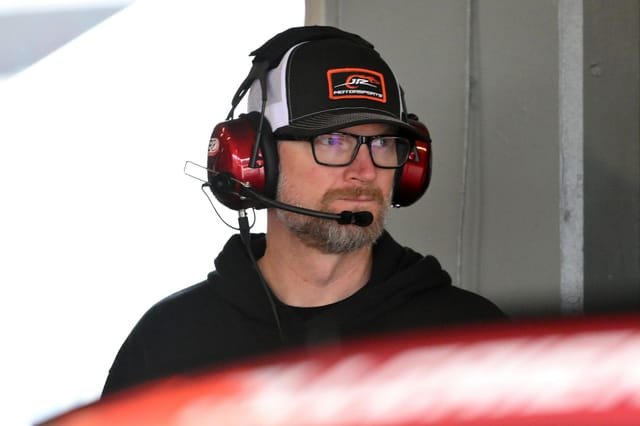
With the inaugural race weekend at the Qualcomm Circuit inside Naval Base Coronado set to debut in San Diego, NASCAR Hall of Famer Dale Earnhardt Jr. has urged officials to reconsider how caution periods are managed on the unique 3.4-mile street-style course.
Speaking on the Dale Jr. Download podcast, the former Cup Series driver argued that traditional caution procedures could unintentionally undermine the quality of racing at a venue unlike any other on the current schedule.
His concerns highlight a broader challenge facing NASCAR as it continues to expand into new markets and experiment with innovative track concepts.
Why the Coronado Circuit Presents a Unique Challenge for NASCAR
The Qualcomm Circuit is not just another road course.
Located within Naval Base Coronado in San Diego, the 3.4-mile layout is the longest circuit on the 2026 NASCAR calendar and features characteristics that differ significantly from traditional oval tracks.
Long lap distances, narrow sections, and limited passing zones create a unique set of logistical challenges for race officials.
One of the biggest concerns involves caution periods.
On shorter tracks, safety vehicles can quickly collect the field, allowing races to resume with minimal disruption. However, on a circuit exceeding three miles in length, a single caution could consume several laps, particularly if an incident occurs late in a stage.
That scenario could dramatically reduce green-flag racing and frustrate both drivers and fans.
Dale Earnhardt Jr.’s Proposal: Be More Selective With Yellow Flags
Earnhardt believes NASCAR should take a more measured approach when deciding whether to throw a caution flag.
While emphasizing that safety must remain the top priority, he suggested officials could exercise greater patience when a stopped car is positioned away from the racing line and does not pose an immediate danger.
“If a guy’s sitting there off to the side and he’s not in a bad spot, you might consider holding onto the flag just a little while.”
The proposal reflects a growing conversation within motorsports about balancing safety with maintaining competitive flow.
Modern racing series increasingly rely on technology, local yellow zones, and virtual safety car systems to minimize race interruptions while protecting drivers and track personnel.
Although NASCAR traditionally favors full-course cautions, the Coronado Circuit may require a more flexible approach.
Could NASCAR Introduce Event-Specific Officiating?
One of Earnhardt’s most compelling arguments is that unique tracks should not necessarily be governed by identical procedures.
Rather than applying a one-size-fits-all model, he believes NASCAR should tailor its officiating strategy to suit the demands of the venue.
This concept is already common in other forms of motorsport, where race control adapts regulations based on circuit characteristics.
Earnhardt expressed optimism that NASCAR officials are already discussing event-specific solutions.
“I would hope that they’re having some conversations internally about how they will officiate this event uniquely due to the length of the racetrack.”
Such flexibility could become increasingly important as NASCAR continues to diversify its schedule.
The Stage Racing Dilemma: Why Timing Matters
The current stage racing format adds another layer of complexity.
If a caution is triggered only a few laps before the end of a stage, competitors could spend a significant amount of time circulating behind the pace car before immediately entering another caution period for the stage break.
That sequence could create lengthy interruptions and reduce the overall number of competitive laps.
To address this issue, Earnhardt proposed a practical alternative.
Dale Jr.’s Solution: End Stages Early Under Caution
The NASCAR legend suggested that officials could shorten stages if a caution occurs close to a scheduled break.
Instead of completing multiple caution laps before the stage conclusion, NASCAR could immediately declare the stage over and begin the caution cycle.
“If the caution were to come out three laps before the end of the stage, why not throw the stage green checker right there and say, ‘The stage is ending early, and now we’re going to start that cycle so we can get back racing.'”
The approach could significantly reduce downtime while preserving the integrity of the competition.
| Current Challenge | Potential Impact | Dale Jr.’s Suggested Solution |
|---|---|---|
| Long caution laps on a 3.4-mile circuit | Reduced green-flag racing | Delay cautions when incidents are not dangerous |
| Cautions near stage endings | Extended periods behind the pace car | End stages early under caution |
| Traditional officiating model | Inefficiency on unique tracks | Implement event-specific protocols |
What NASCAR Has Already Done to Address Concerns
According to reports, NASCAR officials are already exploring ways to speed up caution procedures for the San Diego weekend.
The acknowledgment suggests the organization recognizes the challenges posed by the Coronado Circuit’s layout.
While no official rule changes have been announced, NASCAR’s willingness to evaluate alternatives demonstrates a broader commitment to innovation.
The success of the inaugural event could influence how future street races are managed across all three national series.
Why the Coronado Experiment Matters for NASCAR’s Future
The San Diego weekend represents more than just another stop on the calendar.
It is part of NASCAR’s ongoing effort to attract new audiences by bringing races to iconic locations and non-traditional venues.
Street circuits have helped Formula 1 and IndyCar expand their reach in major cities, and NASCAR hopes to achieve similar results.
However, success depends on delivering an entertaining product.
If races become dominated by lengthy caution periods, the novelty of the venue could quickly wear off.
Finding the right balance between safety and spectacle will be critical.
San Diego Race Weekend Schedule
| Series | Event | Day |
|---|---|---|
| Truck Series | Navy 250 | Friday |
| Xfinity Series | United Rentals Driven to Serve 250 | Saturday |
| Cup Series | Anduril 250 | Sunday |
Conclusion
Dale Earnhardt Jr.’s concerns about caution procedures at the Qualcomm Circuit reflect a larger question facing NASCAR: how should the sport adapt as it ventures into new territory?
The Coronado street race presents unique challenges that may require creative solutions, from modified caution protocols to more flexible stage rules.
As NASCAR continues to evolve, its ability to tailor officiating to different venues could become a defining factor in the success of future events.
This weekend’s San Diego debut will not only test drivers and teams—it may also shape the future of how NASCAR manages races on unconventional circuits.
For breaking news and live news updates, like us on Facebook or follow us on Twitter and Instagram. Read more on Latest Sports on thefoxdaily.com.



COMMENTS 0