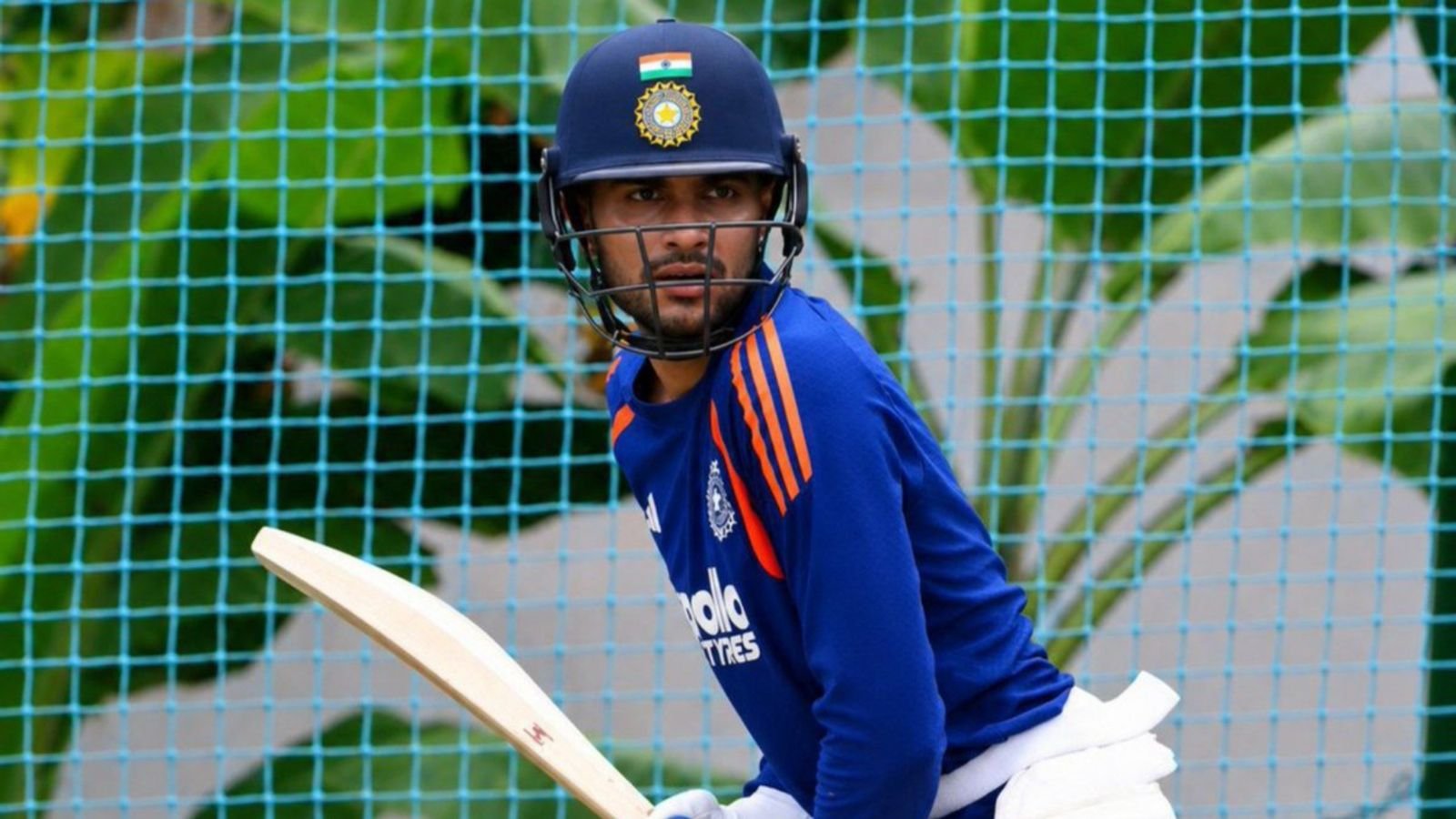
Shubman Gill injury update has provided India with a major reason for optimism ahead of the two-match Test series against Sri Lanka. India’s Test captain returned to batting practice in the nets in Colombo on Sunday, August 9, after a finger injury had kept him out of the ongoing three-day warm-up fixture against Sri Lanka Cricket XI.
Fresh visuals from Colombo showed Gill facing deliveries during a net session while the rest of the Indian squad remained involved in the final day of the warm-up match at the Nondescripts Cricket Club Ground. His return to batting is an encouraging development, although it does not by itself confirm that he will be fully fit for the opening Test.
India are scheduled to begin the first Test against Sri Lanka on August 15. With Jasprit Bumrah and Sai Sudharsan already dealing with injury concerns, Gill’s availability is particularly important for head coach Gautam Gambhir and the Indian team management.
The development also comes at a crucial stage of India’s World Test Championship campaign. With only two Tests against Sri Lanka in the series, every result carries significant importance for India’s pursuit of a strong position in the WTC standings.
Shubman Gill returns to batting practice in Colombo
Gill’s return to the nets is the clearest positive development India could have hoped for after his finger injury scare.
The captain did not participate in the warm-up fixture, raising concerns about whether the injury could interfere with his availability for the first Test. However, his presence with a bat in hand on Sunday offered an early indication that his recovery is progressing.
For a batter, returning to net practice is an important step because it allows the medical and coaching staff to assess how the injured finger responds to repeated contact with the ball. It can also help the player gradually regain confidence before facing the intensity of a Test match.
However, net practice and competitive match fitness are not identical. Gill will still need to demonstrate that he can bat comfortably for an extended period and handle the demands of a five-day Test before his availability can be considered completely secure.
Why Gill’s return is a major relief for Team India
The timing of the Shubman Gill injury update is particularly important because India already have concerns surrounding other key players.
Jasprit Bumrah and Sai Sudharsan are also dealing with injury issues, creating additional selection challenges for the Indian management. Losing another major player would have significantly complicated India’s preparations for the Sri Lanka series.
Gill’s importance goes beyond his role as a batter. As India’s Test captain, he is also responsible for leading the side through a demanding overseas assignment. His presence gives the team greater continuity in both the batting order and leadership group.
If Gill is cleared to play, India can prepare around a familiar top-order structure rather than making another major adjustment just days before the first Test.
Why the finger injury matters for a Test batter
Finger injuries can be particularly inconvenient for batters because the hands are involved in virtually every aspect of batting.
A batter needs to maintain a secure grip on the bat, control the angle of the blade and absorb the impact generated when the ball strikes the bat. Even a relatively small issue with a finger can affect comfort and confidence.
The challenge becomes greater in Test cricket because a player may have to face hundreds of deliveries across a long innings. A finger that feels manageable during a short net session could become more problematic after prolonged exposure to pace, spin and repeated impact.
That is why Gill’s return to practice should be viewed as encouraging rather than definitive.
The positive sign is that he is back facing deliveries. The remaining question is whether he can progress from controlled training to the physical demands of international Test cricket without aggravating the injury.
Gill’s availability could shape India’s batting strategy
India’s batting plans for the Sri Lanka Tests are likely to look significantly different depending on Gill’s fitness status.
If the captain is available, the team can retain greater stability in its preferred batting combination. If he is ruled out, India would need to make changes not only to the batting order but potentially to the leadership structure as well.
That makes Gill’s return valuable on two fronts.
First, India would regain an established top-order batter. Second, the team would retain its designated Test captain during an important overseas series.
For a side targeting WTC success, minimizing unnecessary disruption can be just as important as finding individual match-winners.
Gautam Gambhir gets a welcome selection boost
Head coach Gautam Gambhir will be closely monitoring Gill’s progress over the coming days.
India’s coaching staff now have a short window between Gill’s return to practice and the first Test on August 15. That period will allow them to evaluate his batting, assess his finger and determine whether he can withstand the workload required at Test level.
For Gambhir, having Gill available would remove one major selection problem at a time when the squad is already dealing with injury concerns.
It would also allow the coaching staff to focus more heavily on tactical preparation for Sri Lanka rather than spending the final days before the Test rebuilding the batting order.
The World Test Championship stakes make Gill even more important
The upcoming series is not merely a bilateral contest. India have significant WTC ambitions, making the two Tests against Sri Lanka important in the wider championship race.
India need strong results from the series to strengthen their position in the WTC standings and improve their chances of reaching the 2027 final at The Oval.
That makes every Test valuable.
A drawn or lost match can have consequences beyond the immediate series, particularly when teams are competing for a limited number of places in the championship final.
Gill’s role therefore becomes even more significant. India’s captain is expected to provide stability at the top or middle of the batting order while also making tactical decisions throughout long days in the field.
What Gill’s return means compared with missing the warm-up
| Development | Impact on India | What it means now |
|---|---|---|
| Gill misses warm-up match | Raised concerns about his fitness ahead of the Test series. | India needed to monitor the injury closely. |
| Gill returns to nets | Provides a positive indication that his recovery is progressing. | His fitness can now be assessed through batting practice. |
| First Test on August 15 | Leaves limited preparation time before the series begins. | Gill’s next few training sessions will be important. |
| Bumrah and Sudharsan injury concerns | Increase the pressure on India’s available core players. | Gill’s return becomes even more valuable. |
| WTC implications | Every Test result carries importance for India’s championship campaign. | India will want their strongest possible XI available. |
India still need to avoid rushing their captain
While Gill’s return to the nets is encouraging, India have little reason to take unnecessary risks with their captain.
The first Test is still several days away, giving the medical team time to monitor his recovery. The priority should be ensuring that Gill can bat without significant discomfort and that the finger is strong enough to withstand a lengthy innings.
There is an important difference between being fit enough to practice and being fit enough to perform in a Test match.
If the medical staff are satisfied with his progress, Gill’s return could provide India with the ideal outcome. If there are lingering concerns, however, the team may need to consider whether playing him immediately is worth the risk of aggravating the injury and potentially losing him for a longer period.
Why the warm-up game was still useful despite Gill’s absence
Gill’s absence from the warm-up was undoubtedly a concern, but the fixture still provided India with valuable preparation.
Warm-up matches give players an opportunity to adjust to local conditions, assess the pitch and build confidence before the intensity of international cricket begins.
For the Indian team, the match against Sri Lanka Cricket XI also allowed players competing for places to make their case. That becomes especially relevant when injuries create uncertainty around the final XI.
Gill’s return means the selection picture can now be viewed from a more positive position. Instead of automatically planning for life without their captain, India can wait for further medical assessments while continuing preparations with the wider squad.
Yashasvi Jaiswal’s net session adds another talking point
Another interesting development from India’s preparation was Yashasvi Jaiswal’s extended net session after he was dismissed for a two-ball duck in the warm-up match.
Jaiswal’s response demonstrates why practice sessions can be important even for established international batters. A poor innings does not necessarily indicate poor form, particularly in a warm-up fixture, but additional time in the nets can help a batter address technical issues and regain rhythm.
For India, having both Gill and Jaiswal working in the nets is encouraging because the team needs its top-order batters to adapt quickly to Sri Lankan conditions.
The unique challenge of leading India in an overseas Test
Gill’s responsibilities extend beyond his batting.
Leading India in Test cricket requires constant decision-making. Captains have to manage bowling changes, field placements, reviews, batting declarations and sessions that can dramatically change momentum.
That workload makes physical fitness particularly important.
A finger injury may affect a captain not only while batting but also while fielding, catching and handling the ball during tactical discussions. India’s medical team therefore has to consider the complete workload rather than simply determining whether Gill can hold a bat.
This is another reason why his progression over the next few days will be closely watched.
Could Gill’s return change India’s strongest XI?
If Gill is fully cleared, his availability could simplify India’s selection process.
Without him, India would have needed to find a replacement batter while also potentially adjusting their leadership structure. His return removes the need for such a drastic contingency plan.
However, the final XI will still depend on conditions, player fitness and the team’s tactical assessment of the Sri Lankan attack.
India’s management will likely want a balanced combination capable of handling both spin and pace, while also ensuring sufficient bowling depth for a long Test.
Gill’s presence provides one piece of that puzzle, but the overall selection decision will remain broader than one player’s fitness.
The bigger picture: India’s road to the 2027 WTC final
The Sri Lanka series could become an important checkpoint in India’s WTC campaign.
India’s objective is not simply to win one series. The larger target is to accumulate enough points and maintain a strong enough position to reach the championship final at The Oval in 2027.
That means the team cannot afford to treat any Test casually.
A strong start against Sri Lanka would provide India with momentum and reduce pressure later in the championship cycle. A poor result, meanwhile, could make subsequent assignments more demanding.
Gill’s return to batting practice therefore comes at an ideal time for the team. It gives India another reason to believe they can enter the first Test with their leadership and batting plans largely intact.
What to watch before the first Test
The next few days will be crucial for determining whether Gill’s return to the nets translates into match availability.
- Batting workload: How long Gill can comfortably bat during practice will be an important indicator.
- Finger response: The medical staff will need to monitor how the injured finger reacts after repeated contact with the ball.
- Fielding involvement: His ability to field and participate fully will also matter.
- Leadership duties: India will want confidence that Gill can handle the demands of captaining a five-day match.
- Final medical clearance: Ultimately, his selection will depend on the team’s assessment of his fitness and risk level.
Final outlook on the Shubman Gill injury update
The latest Shubman Gill injury update is undoubtedly encouraging for India. After missing the warm-up game because of a finger injury, the Test captain has returned to batting practice in Colombo, giving the team a valuable boost just days before the first Test against Sri Lanka.
However, India should view the development as a positive step rather than an automatic confirmation of Gill’s availability. Net practice is an important part of rehabilitation and preparation, but the demands of Test cricket are considerably greater.
The timing makes his recovery especially significant. Jasprit Bumrah and Sai Sudharsan are already dealing with injury concerns, while India’s WTC ambitions mean the two-Test Sri Lanka series carries considerable importance.
If Gill continues to progress without setbacks, India could enter the August 15 Test with their captain back in contention and their batting plans considerably more stable. His presence would provide both experience in the top order and continuity in leadership.
The next few training sessions will therefore be critical. For now, though, Gill walking back into the nets with a bat in hand is exactly the kind of development Team India wanted to see after the initial injury scare.
For breaking news and live news updates, like us on Facebook or follow us on Twitter and Instagram. Read more on Latest Cricket on thefoxdaily.com.






COMMENTS 0