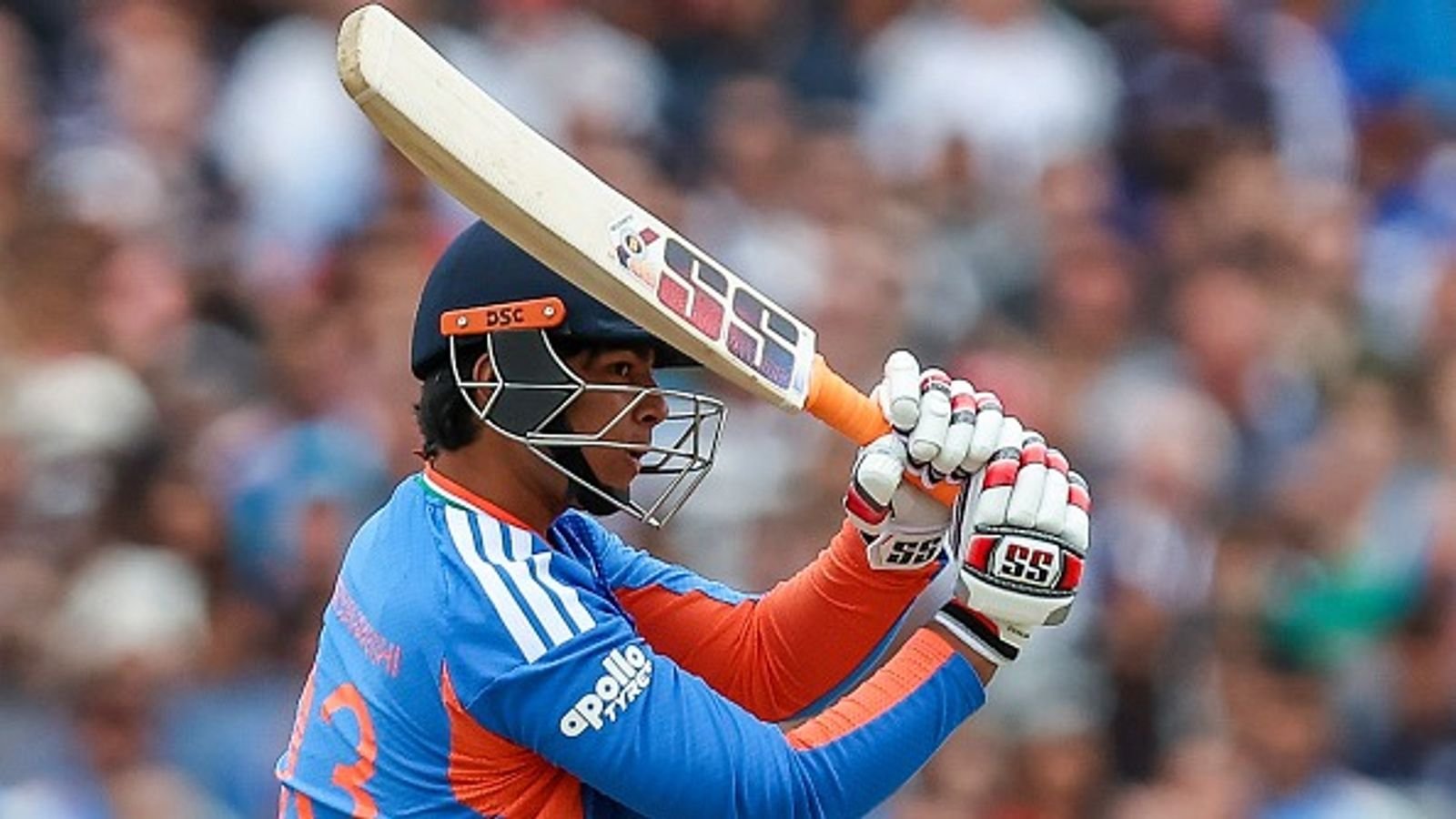
Indian cricket witnessed a landmark moment when teenage sensation Vaibhav Sooryavanshi became the youngest player ever to represent the country at the international level. At just 15 years and 99 days old, the left-handed batting prodigy stepped onto the field for the second T20I against England and immediately became the center of attention across the cricketing world.
For a brief but exciting period, the youngster justified every bit of the anticipation surrounding his debut. Fearlessly taking on England’s pace attack, he displayed remarkable confidence, composure, and attacking intent. However, just as fans began imagining a fairytale innings, his stay at the crease ended abruptly.
Legendary Indian cricketer Sunil Gavaskar later identified what he believed was the decisive tactical error behind the dismissal. According to the former captain, the issue was not talent, temperament, or technique. Instead, it was a momentary lapse in shot selection that allowed England to seize control.
The incident offers a fascinating insight into modern T20 cricket, the challenges facing young prodigies, and the fine margins that separate success from disappointment at the highest level.
Vaibhav Sooryavanshi Creates History on India Debut
Before analyzing the dismissal itself, it is important to understand the significance of the occasion.
Making an international debut is a dream for any cricketer. Doing so at the age of 15 places a player in exceptionally rare company.
By earning his India cap against England, Sooryavanshi surpassed a long-standing record and became the youngest player ever to represent India in international cricket.
The achievement immediately drew comparisons with some of India’s greatest cricketing talents who debuted as teenagers and later became global superstars.
While records attract headlines, they also bring immense pressure. Young athletes often face expectations that would challenge even experienced professionals.
Yet Sooryavanshi appeared remarkably calm from the moment he walked to the crease.
The Fearless Approach That Impressed Cricket Fans
One of the most striking aspects of Sooryavanshi’s debut was his complete lack of hesitation.
Facing England’s pace attack in challenging conditions, the teenager showed no signs of being overwhelmed by the occasion.
Instead, he played with the confidence that has become a defining feature of modern T20 batting.
His innings included:
- A stunning six against Jofra Archer
- A powerful maximum against Josh Tongue
- Positive footwork and intent
- Fearless stroke play
- Quick scoring at a healthy strike rate
In just 10 deliveries, Sooryavanshi scored 14 runs and demonstrated why selectors were willing to place their trust in a player so young.
More importantly, he showed that he belongs on the international stage.
The Tactical Battle That Changed the Innings
T20 cricket is often described as a contest of execution, but equally important is the tactical battle between captains, bowlers, and batters.
Recognizing the youngster’s aggressive intent, England captain Harry Brook searched for a way to disrupt his rhythm.
The solution came through a change in pace and bowling style.
Instead of continuing with outright pace, England introduced spin and variation. The move immediately altered the dynamics of the contest.
Will Jacks delivered a ball that tempted the young batter into attack while simultaneously drawing him away from his comfort zone.
What followed became the turning point of the innings.
How England Planned Vaibhav Sooryavanshi’s Dismissal
The dismissal was not merely the result of an individual mistake. It was also evidence of intelligent planning by England.
Elite teams constantly study opponents and identify potential vulnerabilities.
Against a young player eager to continue attacking, England created a situation designed to encourage risk.
The sequence unfolded quickly:
- England switched to spin.
- The ball was delivered wider outside off stump.
- The pace was reduced.
- The batter advanced down the pitch.
- The ball turned away after pitching.
- The wicketkeeper completed a straightforward stumping.
The dismissal highlighted how international cricket punishes even the smallest miscalculations.
At this level, bowlers and captains are constantly searching for opportunities to exploit decision-making errors.
Sunil Gavaskar’s Analysis: Why the Shot Selection Was Wrong
Sunil Gavaskar’s assessment focused on a crucial technical and tactical detail.
According to the batting legend, the shot Sooryavanshi attempted was not naturally aligned with his strengths.
Rather than criticizing the youngster’s aggression, Gavaskar questioned the specific choice of stroke.
“That is not his shot. His shot is the cover drive.”
This observation reveals an important principle in batting: successful players build innings around their strongest scoring areas.
Even aggressive batters generally prefer certain zones and strokes that maximize control while minimizing risk.
Gavaskar’s argument was that Sooryavanshi moved away from his natural game at a critical moment.
Why Shot Selection Matters More Than Ever in T20 Cricket
Modern T20 cricket often celebrates fearless batting, but successful hitters are rarely reckless.
The best T20 players combine aggression with calculated decision-making.
Shot selection has become one of the most valuable skills in contemporary cricket because:
- Bowlers use advanced data analysis
- Field placements are highly strategic
- Variations in pace are increasingly common
- Margins for error are extremely small
- Captains constantly adapt tactics
The difference between a match-winning innings and an early dismissal frequently comes down to selecting the right shot for the specific delivery.
Sooryavanshi’s dismissal serves as a reminder that attacking intent must be paired with tactical awareness.
What Made the Cover Drive a Better Option?
Gavaskar’s emphasis on the cover drive is significant.
The cover drive is often considered one of cricket’s most technically sound attacking shots. It allows batters to score through timing and placement rather than relying solely on power.
For many left-handers, the shot is a natural scoring option against deliveries outside off stump.
By contrast, attempting a cut shot after advancing down the wicket against spin introduces multiple risks:
| Cover Drive | Cut Shot While Advancing |
|---|---|
| Better balance | Reduced balance |
| More control | Higher risk |
| Natural scoring area | Requires adjustment |
| Safer against spin | Vulnerable to turn |
| Lower dismissal probability | Greater dismissal risk |
The comparison helps explain why Gavaskar viewed the dismissal as primarily a tactical error rather than a technical deficiency.
The Positive Signs Hidden Within the Dismissal
Although the innings ended disappointingly, there were several encouraging takeaways.
Young players often reveal their potential through how they approach pressure situations.
Sooryavanshi demonstrated:
- Self-confidence
- Fearlessness against elite bowlers
- Quick decision-making
- Positive intent
- Natural attacking instincts
These qualities cannot easily be taught.
Shot selection, however, can be refined through experience and coaching.
That distinction is important because it suggests the teenager’s biggest learning opportunity is also one of the easiest aspects of his game to improve over time.
The Challenge of Managing Expectations
One of the biggest dangers facing young sporting prodigies is excessive expectation.
India’s cricket ecosystem is among the most passionate in the world. Every performance is analyzed, debated, and scrutinized in extraordinary detail.
While enthusiasm is understandable, development rarely follows a perfectly linear path.
Even the greatest players in cricket history experienced setbacks early in their careers.
The key is learning from those moments rather than becoming defined by them.
Sooryavanshi’s debut should be viewed through that lens.
What India Can Learn From This Innings
For Indian cricket, the debut provided valuable information beyond the scorecard.
The team management now knows that the youngster possesses the temperament required for international cricket.
That may ultimately be more important than the runs he scored.
Many talented players struggle when exposed to elite opposition for the first time.
Sooryavanshi appeared comfortable from the outset, suggesting he has the mental qualities needed to succeed at the highest level.
The next stage involves helping him convert promising starts into substantial contributions.
A Unique Insight: Why Early Mistakes Often Create Future Champions
One overlooked aspect of sporting development is that valuable lessons frequently emerge from failure rather than success.
Had Sooryavanshi scored a quick fifty without encountering significant challenges, certain weaknesses might have remained hidden.
Instead, he received an early lesson about tactical adaptability, shot selection, and how international teams construct dismissal plans.
Many great batters develop precisely because early setbacks force them to expand their understanding of the game.
Viewed from that perspective, this dismissal may ultimately prove beneficial to his long-term growth.
What Comes Next for Vaibhav Sooryavanshi?
The focus now shifts toward development rather than immediate results.
India appears to have identified a player with extraordinary potential, but nurturing that talent will require patience and careful management.
Future opportunities will likely provide further chances to showcase his abilities.
The most encouraging aspect of the debut was not the sixes, the record, or even the excitement surrounding his selection.
It was the fact that he looked comfortable competing against international bowlers despite being significantly younger than almost everyone on the field.
That confidence could become the foundation for a remarkable career.
Conclusion
Vaibhav Sooryavanshi’s historic India debut may have lasted only 10 balls, but it provided a fascinating glimpse into the future of Indian cricket. The teenager displayed courage, skill, and confidence against one of the world’s strongest bowling attacks before a tactical mistake brought his innings to an end.
Sunil Gavaskar’s analysis highlighted an important lesson about shot selection and playing to one’s strengths. While the dismissal prevented a dream debut from becoming a memorable match-winning performance, it should not overshadow the promise that Sooryavanshi displayed.
International cricket is ultimately a game of continuous learning. For a player who has already rewritten record books at the age of 15, this early setback may become one of the most valuable learning experiences of his journey. If his debut is any indication, Indian cricket fans have every reason to believe that far bigger innings lie ahead.
For breaking news and live news updates, like us on Facebook or follow us on Twitter and Instagram. Read more on Latest Sports on thefoxdaily.com.






COMMENTS 0