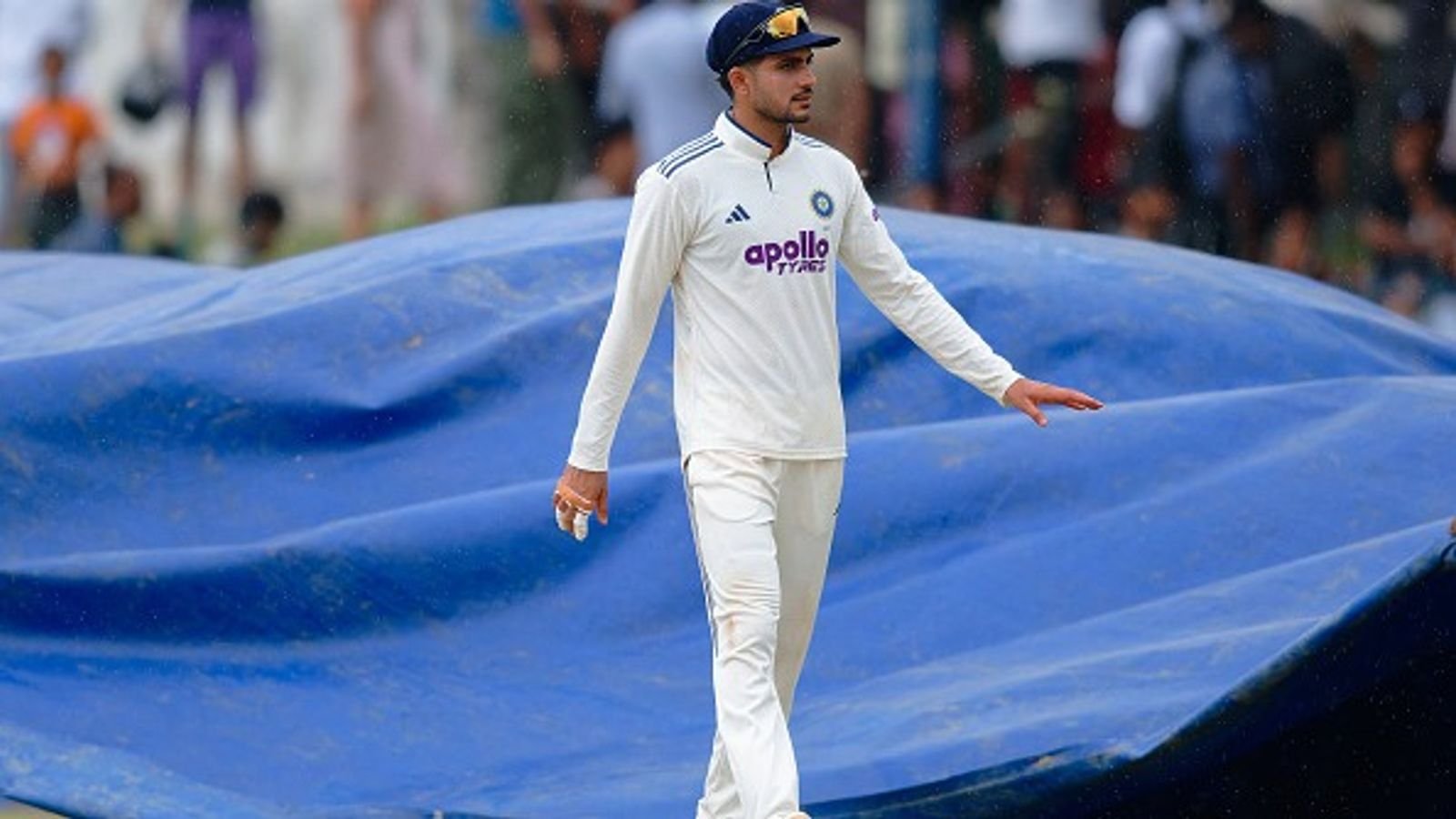
Shubman Gill’s reaction to India’s WTC final chances has provided a positive message after the frustrating draw against Sri Lanka in the second Test in Colombo. India were in a commanding position after taking a 213-run first-innings lead, but Sonal Dinusha’s unbeaten 133 helped Sri Lanka survive the final day and secure a draw.
India eventually won the two-Test series 1-0, but the missed opportunity in Colombo has complicated their path towards the World Test Championship 2025-27 final. Instead of collecting the maximum points from another Test victory, India had to settle for the points available for a draw.
Despite the setback, Gill is refusing to look too far ahead or abandon India’s ambitions. The India captain believes the team still has enough matches remaining to make a strong comeback in the WTC standings.
India have seven Tests left in their current WTC campaign: two away Tests against New Zealand in November followed by a five-Test home series against Australia in early 2027. Those matches are now central to India’s hopes of reaching the final.
What Shubman Gill Said About India’s WTC Final Hopes
Gill admitted that the upcoming series against New Zealand will be important, but he stressed that India will continue believing as long as qualification remains mathematically possible.
“If we have a good New Zealand series, and as long as we have a chance, we’ll keep believing. Hopefully we’ll make it to the WTC final.”
The statement reflects India’s current position. The Colombo draw has made the qualification race harder, but India have not been eliminated from contention.
For Gill, the immediate focus is therefore not on calculating every possible combination of results but on making sure India perform strongly in the remaining matches.
Why the Colombo Draw Was Costly for India
India had established an excellent position in the second Test. They declared their first innings at 503/9 before dismissing Sri Lanka for 290.
That gave India a substantial 213-run first-innings lead. With plenty of time still available, Gill decided to enforce the follow-on and ask Sri Lanka to bat again.
The decision was designed to give India another opportunity to take ten wickets and complete a 2-0 series victory.
Instead, Sri Lanka produced a remarkable defensive effort. Dinusha became the central figure in the resistance, remaining unbeaten on 133 as the hosts finished their second innings on 429/9.
The result was a draw, meaning India could not convert their commanding position into a win.
Gill Defends the Follow-On Decision
The decision to enforce the follow-on naturally attracted attention after Sri Lanka successfully survived.
With a large lead already secured, India had two broad options: enforce the follow-on and immediately attack with the ball, or bat again and try to create an even larger target before bowling Sri Lanka out for a second time.
Gill defended the decision to make Sri Lanka bat again. He pointed towards the possibility of weather interruptions and the importance of using the available time to put pressure on the hosts.
That explanation highlights an important part of Test captaincy: decisions are made according to the conditions and information available at the time, rather than the eventual result.
The follow-on itself was not enough to explain the draw. Sri Lanka still had to survive a long period of pressure, and Dinusha’s exceptional innings ultimately made the difference.
Sonal Dinusha’s 133 Changed the Match
Sonal Dinusha’s unbeaten 133 was the defining performance of the Colombo Test.
After scoring a century in Sri Lanka’s first innings, the left-handed batter produced another hundred in the second innings. His ability to remain at the crease for such a long period frustrated India’s bowlers and gave the rest of the batting order confidence.
Dinusha’s innings also changed the tempo of the match. India needed wickets quickly, while Sri Lanka only needed to keep batting. Every partnership increased the pressure on the visitors.
Eventually, Sri Lanka reached 429/9 and secured the draw.
From India’s perspective, the performance is a reminder that even a huge first-innings advantage does not guarantee victory in Test cricket. One determined batter, combined with enough support from the lower order, can completely change the outcome.
India’s WTC Final Qualification Scenario
India’s qualification hopes now depend heavily on the remaining seven Tests.
| Upcoming Opponent | Tests | Location | Importance |
|---|---|---|---|
| New Zealand | 2 | Away | Crucial opportunity to collect points overseas |
| Australia | 5 | Home | Major series that could reshape the WTC race |
| Total | 7 | Mixed | India’s remaining WTC campaign |
The two-Test New Zealand series will be particularly important because it comes before the much larger Australia assignment. A strong result there would give India momentum and reduce the pressure surrounding the five-Test home series.
A poor result, on the other hand, could leave India needing an exceptional performance against Australia.
New Zealand Series Could Be the First Turning Point
India’s next WTC assignment is an away series against New Zealand. The conditions are expected to provide a different challenge from the subcontinental environment India have just experienced in Sri Lanka.
That makes adaptability particularly important.
India’s batting unit will need to cope with conditions that can offer assistance to seam bowling, while the bowling attack will need to maintain pressure over long periods. With only two Tests in the series, every session can carry considerable value.
For Gill, starting the final seven-Test stretch strongly would be the ideal response to the Colombo disappointment.
Why Australia Series Could Decide India’s Fate
Following New Zealand, India will host Australia in a five-Test series.
Australia currently sit among the leading teams in the WTC standings, making the series significant for both sides. India will have an opportunity to take points directly from one of their major qualification rivals.
A strong home performance against Australia could therefore have a greater impact than simply adding points to India’s total.
Every Indian victory would improve their own position while simultaneously preventing Australia from collecting those points. That makes the series potentially decisive in the wider WTC race.
How Many Tests Does India Need to Win?
India’s situation means that simply avoiding defeat is unlikely to be enough. The team needs a substantial number of victories from the remaining seven matches.
The qualification scenario outlined after the Sri Lanka draw indicates that winning six of the remaining seven Tests could take India to approximately 64.81% points percentage, while winning all seven could raise that figure to around 70.37%.
| Possible Result in Remaining 7 Tests | Projected Points | Projected Points Percentage |
|---|---|---|
| Six wins | 140 | 64.81% |
| Seven wins | 152 | 70.37% |
These figures should be treated as qualification scenarios rather than guarantees. India’s final position will also depend on the results of other contenders in the WTC standings.
India’s Biggest Challenge Is No Longer Just Winning
The most interesting lesson from Colombo is that India’s problem is not necessarily their ability to dominate Test matches. They have already shown that they can put opponents under enormous pressure.
The bigger challenge is converting dominance into victories.
India had a 213-run lead in Colombo but could not take the final wicket. In a WTC campaign, that difference is crucial because a draw can leave a team with significantly fewer points than a win.
This makes match management increasingly important for Gill and the team management. Bowling changes, declaration timing, workload management and the decision to attack or defend can all influence the final points return.
Gill’s Positive Approach Could Matter
Gill’s comments after the draw suggest that India are choosing to focus on the opportunities still available rather than dwelling on what was lost.
That mentality could become important during the final phase of the WTC cycle. The pressure will increase if India drop points in New Zealand, but the team cannot afford to allow one difficult result to influence the next match.
The captain’s message is therefore straightforward: stay in the race, keep improving and make the most of every opportunity.
India Still Have a Realistic Route to the WTC Final
Although the Colombo draw was disappointing, India remain mathematically alive in the WTC final race.
The remaining seven Tests provide a substantial number of opportunities to improve their points percentage. The key will be winning consistently, particularly against high-ranked opponents.
The New Zealand series offers the first chance to rebuild momentum, while the five-Test Australia series provides the largest opportunity to make a decisive move in the standings.
India will also need results elsewhere to fall in their favour. Because WTC qualification is based on points percentage, the performances of other contenders can change the equation even if India put together a strong run.
What Happens Next for Shubman Gill and India?
Gill now has a clear challenge ahead. The 1-0 series victory over Sri Lanka provides some positives, but the Colombo draw has ensured that India’s WTC campaign cannot afford another prolonged run of missed opportunities.
The next major assignment in New Zealand will test India’s ability to win away from home. After that, Australia will arrive for a five-Test series that could ultimately determine India’s position in the final qualification race.
The biggest takeaway from Gill’s comments is that India still believe. The captain has not treated the Colombo draw as the end of the road but as a setback that must be followed by stronger performances.
Conclusion: Gill’s Belief Matches India’s Remaining Opportunity
Shubman Gill remains optimistic about India’s WTC final chances despite the disappointing draw against Sri Lanka in Colombo. India missed the opportunity to complete a 2-0 series sweep after Sonal Dinusha’s unbeaten 133 helped the hosts survive.
However, India still have seven Tests remaining in the WTC 2025-27 cycle. Two will come against New Zealand away from home, followed by five Tests against Australia on home soil.
The road is difficult, but it is not closed. India need a near-flawless finish, and their results must be supported by favourable outcomes elsewhere in the WTC standings.
Gill’s message is therefore simple and timely: as long as India have a mathematical chance, they will continue believing in their ability to reach the WTC final.
For breaking news and live news updates, like us on Facebook or follow us on Twitter and Instagram. Read more on Latest Cricket on thefoxdaily.com.






COMMENTS 0