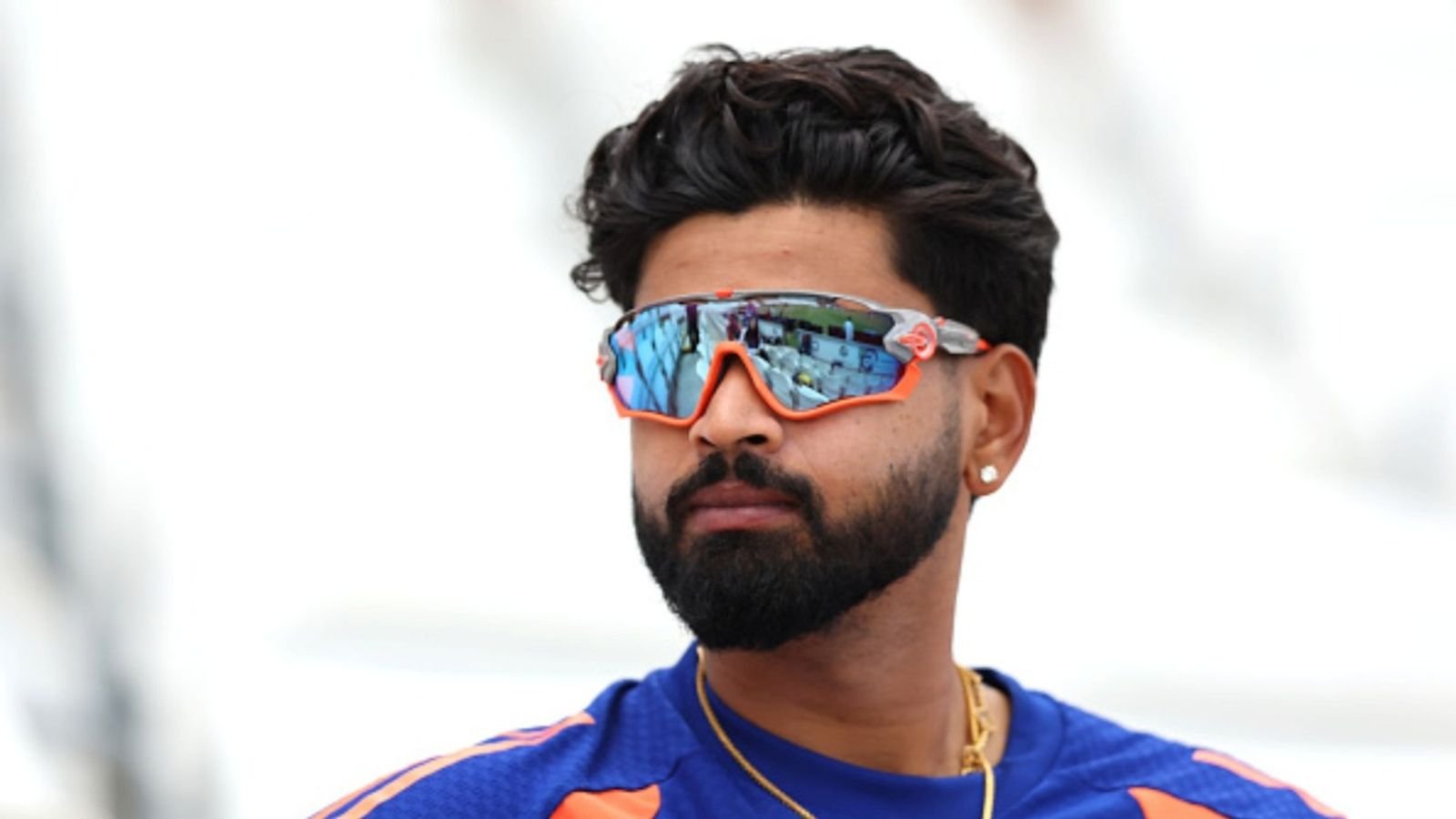
Shreyas Iyer‘s Belfast stadium comments have added fresh perspective to India’s disappointing 2-0 T20I series defeat against Ireland. Rather than using the conditions as an excuse, the newly appointed India captain explained how the unique characteristics of the Belfast venue created tactical challenges that his side was not accustomed to facing.
Speaking ahead of the opening T20I against England in Durham, Iyer admitted that the atmosphere in England immediately felt different, with traditional stadium settings, larger crowds and more familiar playing conditions offering India an opportunity to reset after an underwhelming start to his captaincy.
As India begin a crucial five-match series against one of the world’s strongest T20 sides, the focus now shifts from explaining what went wrong in Ireland to proving that the setback was merely a temporary stumble rather than the beginning of a larger problem.
Why Shreyas Iyer Felt Belfast Was Unlike a Traditional Cricket Stadium
Iyer described the Belfast venue as significantly different from the international grounds where India usually compete. According to him, the uneven outfield and unusual boundary dimensions created challenges that affected both batting and field placements.
Unlike conventional international stadiums, where captains often rely on familiar fielding patterns and predictable angles, the Belfast ground demanded constant tactical adjustments. The squarer boundaries made defending singles and doubles more difficult while also forcing captains to rethink their field settings.
For a team accustomed to playing in larger international venues, adapting within a short two-match series proved difficult.
How Ground Dimensions Can Influence T20 Cricket
Although T20 cricket is often associated with power-hitting, venue characteristics frequently determine how matches unfold.
Ground size, outfield speed, boundary angles and pitch conditions all influence batting strategies and bowling plans.
In Belfast, Ireland appeared better prepared to exploit those conditions. Their bowlers used the surface intelligently, while the fielding unit adapted quickly to the unusual dimensions.
India, by contrast, struggled to adjust consistently across both matches.
| Aspect | Belfast Conditions | Durham Conditions |
|---|---|---|
| Ground Layout | Unusual square dimensions | Traditional international stadium |
| Outfield | Uneven in places | Flatter and more consistent |
| Captaincy | Frequent field adjustments | More familiar field settings |
| Atmosphere | Limited stadium feel | Large crowd and established venue |
| Playing Experience | Less familiar for India | Conditions experienced by many Indian players |
India’s Batting Failed to Adapt
India entered the Ireland series carrying the confidence of their recent T20 World Cup triumph, but the batting unit failed to replicate that form. Several batters who had excelled on batting-friendly IPL surfaces struggled to adjust to slower pitches, larger playing areas and disciplined Irish bowling.
Ireland consistently denied easy boundaries, forcing India’s batters into uncomfortable scoring patterns. The visitors rarely established partnerships capable of controlling either match.
The defeat served as a reminder that successful T20 cricket depends as much on adaptability as attacking stroke play.
Iyer Calls the Ireland Defeat ‘Depressing’
The new India captain did not attempt to hide his disappointment after losing his first assignment in charge.
He openly described the series as depressing, acknowledging that Ireland outperformed India in multiple aspects of the game. Rather than searching for excuses, he praised the opposition for making better use of local conditions and executing their plans more effectively.
Such honesty reflects an important leadership trait, especially during the early stages of a captaincy tenure.
Why Durham Offers India a Fresh Opportunity
According to Iyer, England immediately feels more familiar from a cricketing perspective.
Established international venues, larger crowds and traditional ground dimensions create an environment Indian players have experienced on previous tours and in ICC tournaments.
That familiarity could help India play with greater freedom after struggling to settle in Ireland.
However, England also present a significantly tougher challenge, with a deeper batting lineup and experienced bowling attack capable of exploiting home conditions.
Can Shreyas Iyer Silence Questions About His Own Form?
While tactical discussions dominate headlines, Iyer’s personal batting form remains equally important.
The skipper managed only modest scores during the Ireland series, extending a lean run in white-ball cricket. Despite those struggles, he insisted that he is batting well in practice and remains confident about producing runs during the England series.
Captains are often judged as much by their individual performances as their leadership, making the upcoming matches particularly significant for Iyer.
The Vaibhav Sooryavanshi Selection Debate Continues
Another major talking point ahead of the series opener is whether teenage sensation Vaibhav sooryavanshi will finally make his international debut.
Iyer chose not to reveal India’s playing XI, maintaining that the management would not disclose team combinations before the match.
His comments reinforced the team’s commitment to backing established players while carefully managing the introduction of emerging talent.
What India Must Improve Against England
- Build stronger opening partnerships.
- Rotate strike more effectively during the middle overs.
- Adapt faster to changing pitch conditions.
- Improve tactical flexibility in the field.
- Convert promising starts into match-winning innings.
England’s balanced squad will punish mistakes far more consistently than Ireland, making rapid improvement essential.
Why This Series Matters Beyond Immediate Results
The five-match contest represents the first major examination of India’s new T20 leadership group after their World Cup success.
It offers an opportunity to evaluate emerging players, establish batting combinations and refine tactical approaches ahead of future ICC events.
For Iyer personally, it is also a chance to demonstrate that one disappointing series does not define his captaincy.
Conclusion
Shreyas Iyer’s assessment of the Belfast venue provides useful context behind India’s struggles in Ireland, but he has made it clear that the team is not dwelling on the past. With familiar conditions awaiting in Durham and a high-profile series against England beginning, India now have the perfect opportunity to reset their campaign.
Success, however, will depend less on the stadium atmosphere and more on how quickly the batting unit rediscovers its rhythm, how effectively the bowlers adapt to English conditions and whether Iyer can lead both tactically and with the bat. The England series promises to reveal whether Ireland was merely an isolated setback or an early warning sign for India’s new T20 era.
For breaking news and live news updates, like us on Facebook or follow us on Twitter and Instagram. Read more on Latest Sports on thefoxdaily.com.






COMMENTS 0