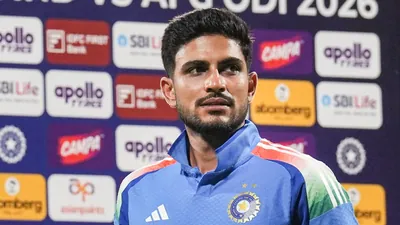
Cricketers are often admired for their performances on the field, but occasionally their influence extends beyond sport. That was the case when India’s Test and ODI captain Shubman Gill shared a message addressing ongoing student protests and concerns surrounding educational opportunities.
Rather than entering political debates, Gill focused on a theme that resonates across generations: the importance of education and the need to support young people as they pursue their dreams.
His statement arrived at a time when student demonstrations have become a major national discussion point. Thousands of students, parents, educators, and citizens have been debating issues related to educational fairness, examination systems, accountability, and future opportunities.
Against this backdrop, Gill’s message stood out because of its emphasis on empathy, peaceful expression, and the collective responsibility of protecting student aspirations.
The remarks also reflect a broader trend in which prominent athletes are increasingly using their platforms to discuss issues that directly affect young people.
What Shubman Gill Said About the Student Protests
Gill’s message focused on the aspirations of India’s youth and the role education plays in shaping the country’s future.
He expressed respect for students who are choosing peaceful means to voice their concerns and highlighted the importance of ensuring that young people continue to have opportunities to learn, grow, and contribute to society.
The central themes of his statement included:
- Respect for peaceful expression.
- Support for educational opportunities.
- Compassion toward students.
- Mutual respect in public discourse.
- Recognition of education’s national importance.
- Focus on India’s future generations.
While concise, the message resonated because it addressed concerns that affect millions of students and families across the country.
Why Gill’s Comments Have Attracted Attention
As one of the most recognizable faces in Indian cricket and the current leader of India’s Test and ODI teams, Gill occupies a unique position in public life.
His influence extends well beyond cricket stadiums. Young fans often view him as a role model, making his opinions on issues affecting students particularly noteworthy.
The timing of his statement also contributed to its impact.
Student protests have generated widespread discussion about educational systems, academic pressure, examinations, and institutional accountability. In such an environment, any message from a respected public figure naturally attracts attention.
What made Gill’s remarks different was the absence of confrontation. Instead of focusing on divisions, he emphasized understanding and dialogue.
Education and Opportunity: The Core of Gill’s Message
At the heart of Gill’s statement was a simple but powerful idea: every young person deserves the opportunity to learn and pursue their ambitions.
Education has long been regarded as one of the strongest drivers of personal and national progress. It creates pathways to employment, innovation, leadership, and social mobility.
For many families, educational success represents more than academic achievement—it symbolizes hope for a better future.
This is why concerns surrounding examinations, admissions, and educational opportunities often generate such strong public reactions.
When students feel their future may be affected by circumstances beyond their control, anxiety and frustration can grow rapidly.
Gill’s remarks acknowledged the importance of protecting that sense of hope.
Why Student Voices Matter in Modern Democracies
Throughout history, students have played an important role in social and educational discussions.
Universities and educational institutions often serve as spaces where new ideas emerge and public issues are debated.
When students raise concerns about matters that directly affect their futures, those discussions frequently attract national attention.
However, the effectiveness of such conversations often depends on maintaining constructive dialogue.
Gill’s emphasis on peaceful participation reflects this principle.
Respectful engagement allows concerns to be heard while preserving opportunities for meaningful solutions.
The Pressure Facing Today’s Students
Modern students face challenges that previous generations could scarcely imagine.
Competition for educational opportunities has intensified significantly, while expectations continue to rise.
Many students must balance:
- Academic performance.
- Competitive examinations.
- Career uncertainty.
- Financial pressures.
- Family expectations.
- Mental health concerns.
These pressures make confidence in educational systems particularly important.
When students believe their hard work will be rewarded fairly, motivation tends to increase. When that belief is weakened, uncertainty can emerge.
This reality helps explain why issues related to educational fairness often resonate so strongly.
How Gill’s Journey Reflects the Importance of Opportunity
Gill’s own career illustrates the value of opportunity and support.
From youth cricket to international stardom, his rise was built on talent, hard work, mentorship, and access to competitive pathways.
His journey highlights an important lesson: success often depends not only on ability but also on having opportunities to develop that ability.
Countless young people across India possess talent and ambition. The challenge for society is ensuring that those qualities can flourish through fair and accessible systems.
That broader idea appears closely connected to the message Gill sought to convey.
The Growing Role of Athletes in Social Conversations
Sports figures today occupy a different role than they did decades ago.
Through social media and global visibility, athletes can communicate directly with millions of people.
As a result, many now use their platforms to discuss issues extending beyond sport.
This does not necessarily mean advocating specific policies. Often, it involves highlighting values such as fairness, opportunity, inclusion, and respect.
Gill’s statement fits within that broader trend.
Rather than offering technical solutions, he focused on principles that many people can support regardless of their personal views.
Why Compassion Matters During Difficult Public Debates
One of the most notable aspects of Gill’s message was his emphasis on compassion.
Public debates can quickly become polarized, especially when emotions run high.
Compassion encourages people to consider the experiences and concerns of others, even when disagreements exist.
For students facing uncertainty, empathy can be particularly important.
Feeling heard and understood often contributes to healthier dialogue and more constructive problem-solving.
Gill’s call for compassion therefore reflects a broader recognition that lasting solutions usually emerge through understanding rather than confrontation.
The Importance of Mutual Respect
Alongside compassion, Gill highlighted mutual respect.
Respect plays a critical role in any discussion involving education, policy, or public concerns.
Without respect, conversations can become dominated by conflict rather than solutions.
Mutual respect helps ensure that different viewpoints can be considered thoughtfully.
In educational debates, this principle becomes especially important because multiple stakeholders are involved, including students, parents, teachers, administrators, and policymakers.
Each group brings unique perspectives and experiences to the discussion.
How Education Shapes National Progress
Education influences nearly every aspect of a country’s development.
| Area | Impact of Strong Education Systems |
|---|---|
| Economy | Creates skilled workers and innovators |
| Technology | Encourages research and development |
| Healthcare | Produces trained professionals |
| Society | Supports social mobility and opportunity |
| Leadership | Develops future decision-makers |
Because education affects so many dimensions of national growth, debates about educational systems naturally attract widespread interest.
Gill’s statement can therefore be viewed as part of a larger conversation about how India can continue investing in its future generations.
Irfan Pathan’s Message Adds to the Discussion
Gill was not the only cricket personality to address concerns surrounding students.
Former India all-rounder Irfan Pathan also emphasized the importance of protecting student aspirations.
His comments focused on the sacrifices made by students and families in pursuit of educational success.
The convergence of views from multiple cricketers highlights a common theme: regardless of differing perspectives, there is broad recognition of the importance of safeguarding opportunities for young people.
Such messages demonstrate how sports personalities can help keep attention focused on the human impact of larger public issues.
Comparing Sports and Education: Shared Principles of Success
There are striking similarities between academic achievement and sporting excellence.
- Both require discipline.
- Both reward consistent effort.
- Both involve competition.
- Both demand resilience after setbacks.
- Both depend on fair systems and rules.
Athletes understand that success is meaningful only when competitions are conducted fairly. Similarly, students benefit most when educational opportunities are transparent and trustworthy.
This parallel may explain why athletes often feel compelled to speak about issues affecting education.
The Psychological Importance of Hope
Hope is one of the most powerful motivators in human development.
Students invest years of effort because they believe those efforts can lead to better opportunities.
That belief encourages perseverance through challenges, setbacks, and periods of uncertainty.
When public figures like Gill emphasize the importance of protecting aspirations, they are ultimately defending the role hope plays in personal growth.
Educational systems function most effectively when students remain confident that their work has value and purpose.
What Young People Can Learn From Gill’s Perspective
Beyond the immediate context of the protests, Gill’s message offers several lessons for students.
- Believe in the value of education.
- Express concerns responsibly and respectfully.
- Remain focused on long-term goals.
- Support constructive dialogue.
- Recognize the importance of empathy.
These principles are applicable not only during periods of public debate but throughout academic and professional life.
Future Outlook: Keeping Students at the Center of the Conversation
Discussions surrounding educational reforms and student concerns are likely to continue in the months ahead.
Regardless of specific outcomes, one principle remains essential: students should remain at the center of the conversation.
Policies, reforms, and institutional decisions ultimately exist to serve learners and help them achieve their potential.
Ensuring that young people feel supported, respected, and motivated will remain a critical objective for educators, administrators, families, and policymakers alike.
Gill’s statement reinforces this idea by focusing not on conflict but on the future.
Conclusion
Shubman Gill’s message on the ongoing student protests has resonated because it emphasizes values that extend beyond any single issue. By calling for compassion, mutual respect, and greater opportunities for young people, the India captain highlighted the central role education plays in shaping individual lives and the nation’s future.
His remarks also underscore the importance of listening to student voices while maintaining constructive dialogue. As discussions surrounding education continue, the themes raised by Gill—opportunity, empathy, fairness, and hope—are likely to remain central to the national conversation.
For a generation striving to learn, dream, and build a better future, those values may ultimately prove just as important as any policy change. The challenge moving forward will be ensuring that India’s young people continue to believe their aspirations are worth pursuing and that the systems designed to support them remain worthy of their trust.
For breaking news and live news updates, like us on Facebook or follow us on Twitter and Instagram. Read more on Latest Sports on thefoxdaily.com.






COMMENTS 0