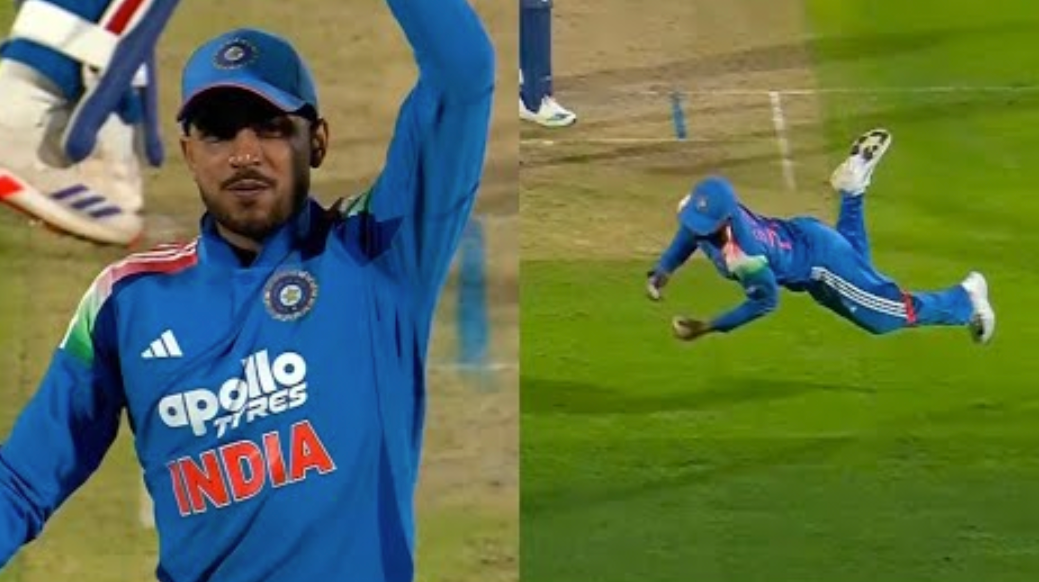
Cricket matches are often remembered for explosive centuries, match-winning spells, and dramatic finishes. Yet sometimes a single fielding effort steals the spotlight from everything else happening on the field. That was exactly the case during the first ODI between India and Afghanistan in Dharamsala on June 13, 2026, when Indian captain Shubman Gill produced a breathtaking one-handed catch that immediately became one of the most talked-about moments of the year.
The spectacular grab not only dismissed Afghanistan’s Allah Ghazanfar but also showcased the growing importance of elite fielding in modern cricket. In an era where every run matters and every opportunity can change a game, Gill’s athletic effort demonstrated why world-class fielding has become a crucial component of success at the international level.
While Afghanistan’s innings featured record-breaking batting and several momentum-shifting moments, it was Gill’s stunning reflex catch that left fans, experts, and former players debating whether they had just witnessed one of the greatest slip catches ever taken by an Indian cricketer in One-Day International cricket.
A Moment of Magic in Dharamsala
The catch came during a crucial stage of the match when Afghanistan looked capable of posting a challenging total. India needed wickets to halt the visitors’ momentum, and the breakthrough arrived thanks to a combination of intelligent bowling and extraordinary fielding.
Harsh Dubey, making an early impression in international cricket, delivered a slower ball outside the off stump. Allah Ghazanfar attempted an aggressive shot after backing away, hoping to continue Afghanistan’s attacking approach.
Instead, the batter produced a thick top edge that flew rapidly toward the slip region.
What happened next stunned everyone inside the stadium.
Gill reacted instantly, launching himself full stretch to his left. With barely enough time to position himself, he extended one hand and somehow managed to hold onto the ball while diving through the air. Even as he landed awkwardly on the ground, he maintained complete control and ensured the catch remained secure.
The dismissal immediately energized India while drawing applause from spectators, teammates, commentators, and even opposition players.
Why the Catch Was So Difficult
Slip catches are among the toughest chances in cricket because fielders have only fractions of a second to react. Unlike boundary catches, where players can often judge the trajectory over several seconds, slip fielders must rely on anticipation, reflexes, and instinct.
Several factors made Gill’s effort particularly challenging:
- The ball changed direction sharply after taking the edge.
- The chance arrived at high speed.
- The catch required movement to the fielder’s weaker side.
- Gill had to dive at full stretch.
- The ball was collected with only one hand.
- Balance had to be maintained during landing.
Executing all these elements successfully in a single motion is what separates an ordinary catch from a truly memorable one.
The Evolution of Indian Fielding Standards
There was a time when Indian cricket was primarily associated with batting excellence and spin bowling mastery. Fielding, while important, was rarely considered a defining strength of the national team.
Over the past two decades, however, Indian cricket has undergone a remarkable transformation. Improved fitness standards, specialized coaching, and greater emphasis on athleticism have produced a generation of players capable of competing with the world’s best fielding units.
Players such as Yuvraj Singh, Suresh Raina, Ravindra Jadeja, Virat Kohli, Hardik Pandya, and now Shubman Gill have helped redefine expectations around Indian fielding.
Gill’s catch is another example of how modern Indian cricketers are expected to contribute in every department rather than relying solely on batting or bowling performances.
Shubman Gill’s Growth as a Complete Cricketer
For several years, Gill has been recognized as one of India’s most technically gifted batters. His elegant strokeplay, composure under pressure, and ability to score across formats have established him among the leading players of his generation.
However, his development extends beyond batting.
As captain and senior player, Gill has increasingly demonstrated leadership qualities, tactical awareness, and exceptional athleticism. The catch against Afghanistan highlighted another dimension of his game—his ability to influence matches through fielding brilliance.
Modern cricket rewards versatility, and Gill’s all-round contribution strengthens his value to the Indian team.
Rahmanullah Gurbaz’s Record-Breaking Knock Nearly Stole the Show
Before Gill’s stunning catch captured headlines, Afghanistan opener Rahmanullah Gurbaz had produced a sensational batting display.
Gurbaz attacked from the very beginning, taking on both pace and spin with confidence. His aggressive approach put India under pressure and transformed the momentum of the innings.
The Afghan star reached his century in just 48 deliveries, setting multiple records in the process.
| Achievement | Significance |
|---|---|
| Fastest ODI century by an Afghanistan batter | New national record |
| Fastest century in an India vs Afghanistan ODI | Historic bilateral milestone |
| Second Afghan batter to score an ODI hundred against India | Joined an exclusive list |
His innings showcased Afghanistan’s growing strength in international cricket and reinforced the team’s reputation as a fearless white-ball side.
How India Fought Back Into the Match
Despite Afghanistan’s explosive start, India refused to lose control of the contest.
The bowling unit adjusted its plans, varied pace effectively, and attacked the stumps more consistently during the latter stages of the innings. Crucially, the fielders backed up the bowlers with exceptional energy and commitment.
Gill’s catch became symbolic of India’s fightback. Rather than allowing Afghanistan to build partnerships freely, the hosts created pressure through wickets and disciplined fielding.
As the innings progressed, Afghanistan lost momentum and struggled to maintain the scoring rate established during Gurbaz’s assault.
The result was a total of 194 runs in 24.5 overs in the rain-affected 25-over contest—competitive but significantly lower than what once appeared possible.
Could This Be India’s Greatest ODI Catch?
The question naturally emerged almost immediately after the catch was completed: where does this effort rank among India’s greatest ODI catches?
Comparing catches across generations is always subjective. Different match situations, playing conditions, athletic standards, and camera angles make direct comparisons difficult.
However, several factors strengthen Gill’s case:
- Extraordinary reaction time.
- Full-stretch dive.
- One-handed completion.
- High-pressure international match.
- Slip position difficulty.
- Perfect control during landing.
Whether it ultimately earns the title of India’s greatest ODI catch will remain a matter of opinion, but it undoubtedly belongs in the conversation.
What This Moment Says About Modern Cricket
Cricket has evolved dramatically in recent years. The difference between victory and defeat is often measured by a single run, a single wicket, or a single moment of brilliance.
Fielding standards have risen to unprecedented levels, forcing players to become complete athletes rather than specialists focused on only one discipline.
Today’s elite cricketers spend countless hours working on reaction drills, agility exercises, catching techniques, and fitness programs designed to maximize performance.
Gill’s catch serves as a reminder that extraordinary fielding can be just as impactful as a century or a five-wicket haul.
The Bigger Picture for India Ahead
Beyond the highlight reel value, moments like these provide important signals about team culture. Great teams are often defined by their willingness to compete for every run and every opportunity.
India’s aggressive approach in the field reflects a broader commitment to excellence across all aspects of the game. Such standards become increasingly important in major tournaments, where small moments frequently decide championships.
If India continues combining elite batting, disciplined bowling, and world-class fielding, it will remain among the strongest contenders in international cricket.
Conclusion
Shubman Gill’s sensational one-handed catch against Afghanistan was more than just a spectacular highlight. It represented the evolution of Indian cricket, the importance of athletic fielding, and the impact a single moment can have on a match.
While Rahmanullah Gurbaz’s record-breaking century showcased Afghanistan’s growing strength, Gill’s brilliance in the slips provided one of the defining images of the contest. The catch combined reflexes, anticipation, courage, and flawless execution in a way rarely seen even at the highest level.
Whether history ultimately remembers it as India’s greatest ODI catch or simply one of the finest ever taken, there is little doubt that cricket fans witnessed something special in Dharamsala. Years from now, when discussions turn to unforgettable fielding moments, Shubman Gill’s stunning one-handed grab will almost certainly remain part of the conversation.
For breaking news and live news updates, like us on Facebook or follow us on Twitter and Instagram. Read more on Latest Sports on thefoxdaily.com.






COMMENTS 0