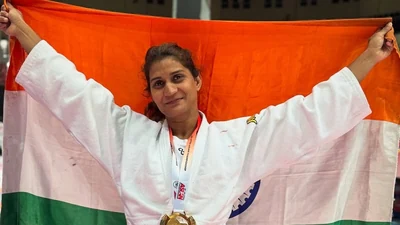
India’s Suchika Tariyal missed the women’s traditional 60kg final after a drawn semifinal was decided by a weight tiebreaker, but her bronze marks the country’s first Asian Games MMA medal.
Suchika Tariyal came agonisingly close to reaching the women’s traditional 60kg MMA final at the 2026 Asian Games before an unusual tiebreaker ended her campaign in the semifinals.
The Indian fighter battled Singapore’s Tiffany Teo Hui Hoon through a tightly contested bout that remained level after regulation time. With neither athlete able to establish a decisive advantage, the contest moved into a one-minute overtime period.
Teo was ultimately declared the winner after the judges remained level and the existing competition rules required the lower body weight to be used as the tiebreaker. Teo weighed around 58.5kg, while Tariyal was approximately 59.2kg.
The decision left Tariyal disappointed, particularly because she believed her performance in the bout was enough to take her into the final. India challenged the original decision, but the result remained unchanged after the arbitration process.
Despite the semifinal defeat, Tariyal has secured a historic bronze medal for India. It is the country’s first-ever medal in mixed martial arts at the Asian Games.
How the Suchika Tariyal vs Tiffany Teo Semifinal Was Decided
The semifinal was closely fought from start to finish. Teo had the stronger opening period, but Tariyal responded impressively in the second, keeping the contest competitive and preventing her Singaporean opponent from building a decisive lead.
Neither fighter was able to separate herself sufficiently by the end of regulation time. In the final moments, Teo launched an attack, but Tariyal managed to take her opponent down just before the buzzer.
With the contest still level, the bout entered a one-minute overtime period. Both athletes knew that the additional round could determine who would advance to the final.
Tariyal believed she had done enough to win the contest. Teo also celebrated when the final buzzer sounded, reflecting just how difficult it was to separate the two fighters based purely on their performances.
The eventual decision did not come from a clear difference in the judges’ assessment. Instead, the existing rules required another tiebreaking method to determine the winner.
Weight Tiebreaker Gives Teo the Advantage
After the arbitration process, six judges assessed the contest, but the overall result remained level. Under the existing Asian Mixed Martial Arts Association rules, the fighters’ weights were then used as the deciding factor.
Teo was approximately 58.5kg, while Tariyal was around 59.2kg. The difference was roughly 700 grams, but that small margin ultimately determined which fighter progressed to the final.
Tariyal had successfully made the required weight limit of under 60kg. However, because Teo was lighter on the day, the tiebreaker went in the Singaporean fighter’s favour.
The unusual nature of the result made the semifinal particularly difficult for Tariyal to accept. From her perspective, she had completed the weigh-in within the permitted limit and then fought the contest on its sporting merits.
The outcome also illustrates how technical competition regulations can become decisive when two athletes remain level after the prescribed judging and overtime procedures.
Why India Challenged the Decision
India decided to challenge the original result following the bout. The arbitration process involved six judges, with India paying a $1,000 fee for the objection.
However, the review did not change the result. The assessment remained tied, leaving the weight-based tiebreaker as the mechanism for deciding the winner.
For Tariyal, the controversy was not simply about the final weight difference. She also raised concerns about how the weigh-in process had been handled before the bout.
She explained that the coaches were not permitted to accompany her inside during the weigh-in. With the fight scheduled soon afterwards, she said she was advised to complete the weigh-in quickly so she could eat, recover and travel to the competition venue.
Tariyal therefore weighed in at approximately 59.2kg, comfortably inside the 60kg limit, but later wondered whether being slightly lighter could have altered the outcome under the tiebreaker rule.
Tariyal Questions the Fairness of the Outcome
Tariyal was visibly disappointed after the semifinal and later expressed strong disagreement with the decision. Her view was that the bout should have been decided by the fighters’ performance rather than the difference in their body weight.
Her frustration was understandable given how close the contest had been. She had fought back after Teo’s stronger opening period and taken the match into overtime, leaving her convinced that she had done enough to progress.
However, the weight tiebreaker was part of the existing rules applied after the judges could not separate the athletes. The result therefore followed the competition procedure even though Tariyal strongly disagreed with its application in her case.
The incident also highlights the importance of understanding tournament-specific regulations in combat sports. When a contest is extremely close, procedures covering judging, overtime, challenges and tiebreakers can have a major impact on the final result.
India’s First Asian Games MMA Medal
While the semifinal defeat ended Tariyal’s hopes of fighting for gold, her bronze medal represents a major moment for Indian mixed martial arts at the Asian Games.
This is India’s first-ever medal in MMA at the continental multi-sport event, giving Tariyal a permanent place in the country’s Asian Games combat-sports history.
The achievement is particularly significant because MMA is a relatively new addition to the Asian Games programme compared with established combat sports such as boxing, wrestling and judo.
Tariyal’s run to the semifinal demonstrates that Indian fighters can compete successfully on the Asian stage in the discipline. Even though she missed out on the final, reaching the medal positions has already delivered a historic result for the country.
A Semifinal That Came Down to Fine Margins
The bout between Tariyal and Teo was decided by extremely small margins. Teo had the better first period, but Tariyal responded in the second and kept the contest level.
The final moments of regulation further demonstrated how little separated the two athletes. Teo attempted to create an advantage before the buzzer, but Tariyal managed to take her down as time expired.
That sequence ensured the contest went into overtime rather than being settled during regulation.
In a one-minute extra period, both fighters were competing under enormous pressure. With the final remaining level, the decision ultimately moved beyond the conventional assessment of who had performed better during the contest.
The eventual weight tiebreaker meant that a difference of approximately 700 grams became more important than the narrow sporting margins visible throughout the bout.
Suchika Tariyal’s Asian Games Campaign
Tariyal’s journey to the medal round has given Indian MMA an important breakthrough. Although the semifinal ended in disappointment, reaching the final four means she has delivered India’s first medal in the discipline at the Asian Games.
Her performance also showed resilience during a contest in which she had to recover from a difficult opening period. Instead of allowing Teo’s early advantage to determine the outcome, Tariyal fought back and forced the match into overtime.
That comeback made the eventual result even more difficult to accept from the Indian fighter’s perspective. A few moments separated her from a possible place in the final, and the final classification depended on a regulation-based tiebreaker rather than a clear winning margin.
The bronze medal nevertheless provides a tangible reward for Tariyal and Indian MMA.
What the Result Means for Indian MMA
Tariyal’s medal could become an important reference point for the growth of MMA in India. A first Asian Games medal gives the sport a historic milestone and provides Indian athletes with a result to build upon in future international competitions.
The significance goes beyond one semifinal result. Tariyal competed through a difficult contest, handled the pressure of overtime and reached the medal positions on a major continental stage.
For Indian MMA, the experience also provides lessons about the importance of competition regulations. Athletes and support teams need to prepare not only for the physical and tactical demands of a fight but also for weigh-ins, judging procedures, challenges and possible tiebreak scenarios.
The circumstances of the semifinal could therefore become part of a broader learning process for Indian fighters competing internationally.
The Weigh-In Debate Adds Another Layer
The 700-gram difference between Tariyal and Teo became central to the outcome because the competition rules used weight as the final tiebreaker. Tariyal’s comments also brought attention to the practical difficulties surrounding weigh-ins when athletes have limited recovery time before competition.
She explained that her bout was scheduled soon after the weigh-in and that the coaching staff wanted her to complete the process quickly so she could eat and recover before travelling to the arena.
From Tariyal’s perspective, there was therefore little incentive to remain below the maximum limit by a larger margin when she had already successfully made the 60kg category.
The situation illustrates how a rule that may rarely decide a contest can become crucial when a semifinal remains completely level after overtime and judging.
Teo Moves Into the Final, Tariyal Takes Bronze
Singapore’s Tiffany Teo Hui Hoon advanced to the final after the tiebreak procedure was applied, while Tariyal settled for bronze.
For Teo, the result represents a place in the Asian Games final after surviving an extremely competitive semifinal. For Tariyal, it means leaving the tournament without the chance to compete for gold but with India’s first-ever MMA medal at the Games.
The contrasting emotions were evident immediately after the bout. Teo celebrated her progression, while Tariyal was visibly upset and broke down in tears following the decision.
Despite the disappointment, the Indian fighter’s achievement remains historic. The result gives India a medal in a discipline where the country had never previously reached the podium at the Asian Games.
Why Tariyal’s Bronze Still Matters
The circumstances of Tariyal’s semifinal defeat may dominate the immediate discussion, but the broader achievement should not be overlooked. She has become the first Indian MMA athlete to win an Asian Games medal.
Her route to bronze involved a close semifinal, a comeback after a difficult opening period, overtime and a formal challenge against the initial decision. That sequence makes the medal one of the more unusual achievements of India’s campaign in the competition.
The result also provides Indian MMA with a historic benchmark. Future athletes will now have a first Asian Games medal to build upon, while Tariyal’s performance demonstrates the level required to reach the podium.
Final Verdict
Suchika Tariyal’s Asian Games campaign ended in disappointment after her traditional 60kg semifinal against Singapore’s Tiffany Teo Hui Hoon remained level through regulation and overtime before the weight tiebreaker decided the winner.
Tariyal weighed around 59.2kg compared with Teo’s approximately 58.5kg, giving the Singaporean fighter the advantage under the existing rules. India’s challenge and arbitration process did not change the result.
Yet the semifinal defeat cannot overshadow the historic achievement. Tariyal has won India’s first-ever Asian Games medal in mixed martial arts, securing a bronze that marks a significant milestone for the sport in the country.
The controversy surrounding the tiebreaker will remain part of the story, but so will Tariyal’s comeback, resilience and place in Indian MMA history. Her bronze medal provides India with its first Asian Games benchmark in the discipline and a foundation for future fighters to build upon.
For breaking news and live news updates, like us on Facebook or follow us on Twitter and Instagram. Read more on Latest Sports on thefoxdaily.com.






COMMENTS 0