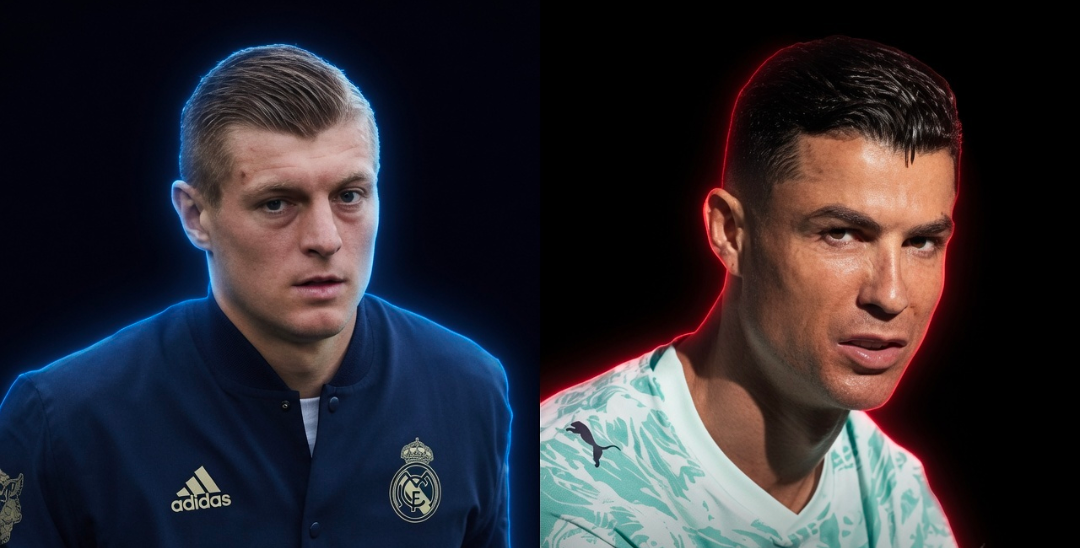
Cristiano Ronaldo‘s underwhelming performance in Portugal’s FIFA World Cup 2026 opener has reignited one of football’s most polarising debates: should the 41-year-old still be starting matches on the biggest stage?
After Portugal’s frustrating 1-1 draw against DR Congo, criticism of Ronaldo intensified. The veteran forward managed just 25 touches, failed to register a shot on target, and extended his goal drought in major international tournaments.
Yet amid growing calls for change, former Real Madrid teammate Toni Kroos offered a strong defence of the five-time Ballon d’Or winner.
“Ronaldo is not just playing because his name is Cristiano Ronaldo; it’s because he’s still their best attacker in the area.”
Kroos’ assessment highlights a crucial distinction often overlooked in conversations about aging footballers: influence is not always measured by touches, distance covered, or defensive actions. Sometimes, a striker’s value lies in occupying defenders, creating space, and maintaining a constant threat inside the penalty area.
Whether that value still outweighs Portugal’s tactical limitations remains the defining question of their World Cup campaign.
Why Roberto Martinez Continues to Trust Ronaldo
Portugal head coach Roberto Martinez has consistently backed his captain despite increasing scrutiny.
His reasoning mirrors Kroos’ argument.
Ronaldo remains one of football’s most instinctive penalty-box finishers. His movement, positioning, and aerial ability continue to command attention from defenders, even if his overall involvement has declined.
Against DR Congo, Ronaldo recorded only five touches inside the opposition penalty area. While that number may appear modest, it demonstrates where Portugal want him to operate.
His role is no longer to initiate attacks but to finish them.
The challenge arises when Portugal struggle to create opportunities consistently.
If the supply line fails, Ronaldo’s influence naturally diminishes.
The Evolution of Cristiano Ronaldo’s Playing Style
Over the course of his career, Ronaldo has undergone one of football’s most remarkable tactical transformations.
He began as a dynamic winger known for explosive pace, stepovers, and relentless dribbling. During his peak years at Real Madrid, he evolved into a complete forward capable of scoring from virtually any position.
Today, at 41, his game revolves around efficiency rather than explosiveness.
Ronaldo now operates almost exclusively in central areas, conserving energy for decisive moments inside the box.
This evolution is not unique.
Many elite strikers adapt their game as physical attributes change with age. The difference is that few players continue competing at the highest level deep into their forties.
That longevity inevitably brings increased scrutiny.
| Cristiano Ronaldo vs DR Congo | Statistic |
|---|---|
| Minutes Played | 90 |
| Touches | 25 |
| Touches in Opposition Box | 5 |
| Shots | 3 |
| Shots on Target | 0 |
| Goals | 0 |
Portugal’s Problem Extends Beyond Ronaldo
Focusing solely on Ronaldo risks overlooking Portugal’s broader tactical issues.
Despite boasting one of the most technically gifted midfields in the tournament, Portugal struggled to translate possession into clear-cut chances.
Bruno Fernandes, Bernardo Silva, Vitinha, and Joao Neves controlled the ball for long periods but rarely disrupted DR Congo’s defensive shape.
Portugal completed hundreds of passes yet managed just seven shots throughout the match.
Meanwhile, DR Congo created more attempts despite enjoying far less possession.
The disconnect between Portugal’s midfield creativity and attacking output suggests a systemic issue rather than an individual failure.
Ronaldo’s reduced mobility is a factor, but the lack of direct running, vertical passing, and attacking unpredictability also contributed significantly to the disappointing result.
Why Goncalo Ramos Is Part of the Conversation
Calls for Ronaldo to be replaced have inevitably led to discussions about Goncalo Ramos.
The Paris Saint-Germain forward offers a different profile: greater mobility, higher pressing intensity, and more involvement in build-up play.
However, Ramos enters the tournament with limited recent playing time at club level.
He featured primarily as a rotational option for Paris Saint-Germain last season, scoring 12 goals despite limited starts.
While his energy could benefit Portugal, he lacks Ronaldo’s experience and proven ability to deliver in high-pressure moments.
For Martinez, the decision is not simply about choosing the better player. It is about identifying the profile that best complements Portugal’s midfield strengths.
Records Continue to Follow Ronaldo
Regardless of current form, Ronaldo continues to redefine football longevity.
Against DR Congo, he became the oldest outfield player to start a FIFA World Cup match at 41 years and 132 days.
He also matched Lionel Messi by becoming one of only two men’s players to appear in six World Cup tournaments.
Ronaldo already holds several international records, including most appearances and most goals in men’s international football.
Should he score during this tournament, he will become the first player in history to find the net in six separate World Cup editions.
Those milestones underscore the extraordinary nature of his career, even as questions about his current effectiveness continue.
The Bigger Question: Reputation or Tactical Fit?
Toni Kroos’ comments reflect a belief shared by many within football: Ronaldo still possesses unique qualities that justify his place in Portugal’s starting lineup.
However, World Cups demand difficult decisions.
International tournaments are won by teams that adapt quickly and make choices based on current realities rather than historical achievements.
The key issue is not whether Ronaldo deserves respect—his legacy is beyond debate.
The real question is whether Portugal can maximise his strengths while minimising the limitations that naturally come with age.
Using him as an impact substitute later in matches remains an option, particularly against teams that defend deep and tire in the closing stages.
For now, though, Martinez appears committed to building his attack around his captain.
Conclusion
Toni Kroos’ defence of Cristiano Ronaldo offers an important reminder that football analysis extends beyond basic statistics.
While Ronaldo’s 25-touch performance against DR Congo raised legitimate concerns, his movement, experience, and penalty-box instincts still carry significant value.
At the same time, Portugal’s struggles exposed deeper tactical issues that cannot be solved by changing one player alone.
As the tournament progresses, Roberto Martinez faces a delicate balancing act: honouring the legacy of one of football’s greatest-ever players while ensuring Portugal remain capable of competing with the world’s best teams.
How he manages that challenge could determine whether Ronaldo’s sixth World Cup becomes a triumphant final chapter or a difficult farewell.
For breaking news and live news updates, like us on Facebook or follow us on Twitter and Instagram. Read more on Latest Sports on thefoxdaily.com.






COMMENTS 0