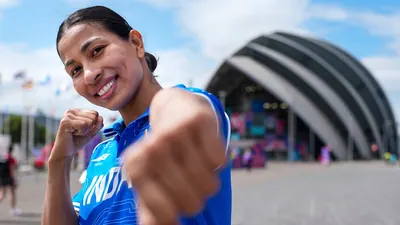
The Commonwealth Games 2026 are set to begin in Glasgow, Scotland, but this edition is unlike any other in recent memory. While the Games have long been viewed as one of India’s most successful international sporting events, the road to Glasgow has been marked by uncertainty, restructuring and significant changes that could reshape the medal race.
India enters the competition with a 125-member contingent, smaller than previous editions and competing in a Commonwealth Games programme that has been dramatically reduced. For the first time in decades, several sports that traditionally contributed heavily to India’s medal tally are absent, creating new opportunities while simultaneously increasing pressure on athletes competing in the remaining disciplines.
The result is a Commonwealth Games that may prove more unpredictable than any edition since the turn of the century.
Why Commonwealth Games 2026 Is Different From Previous Editions
The biggest story surrounding Glasgow 2026 is not a particular athlete or nation—it is the structure of the Games themselves.
Originally awarded to Australia’s Victoria state, the event faced a major setback when organizers withdrew because of rising costs. With limited time available, Glasgow stepped forward as an emergency host, leveraging infrastructure already developed during its successful hosting of the 2014 Commonwealth Games.
However, organizing a major multi-sport event in less than three years required compromises. The solution was a streamlined Games featuring significantly fewer sports, fewer athletes and fewer medal events.
This decision has created what many observers consider the most compact Commonwealth Games programme in more than three decades.
| Category | Birmingham 2022 | Glasgow 2026 |
|---|---|---|
| Total Sports | 20 | 10 |
| Medal Events | 280+ | 215 |
| Indian Contingent | Larger Squad | 125 Athletes |
| Major Indian Medal Sports Removed | None | Wrestling, Badminton, Hockey, Table Tennis, Squash, Cricket |
The reduced format makes every medal opportunity significantly more valuable and increases the importance of efficiency over squad size.
The Sports Missing From Commonwealth Games 2026
Perhaps the most significant factor affecting India is the removal of several sports that have traditionally formed the backbone of its Commonwealth Games success.
Over the last two decades, Indian athletes have dominated wrestling, badminton, table tennis and several other disciplines. These sports regularly delivered a substantial portion of the country’s total medal haul.
For Glasgow 2026, the following major sports are absent:
- Wrestling
- Badminton
- Table Tennis
- Hockey
- Cricket
- Squash
- Beach Volleyball
- Rugby Sevens
- Triathlon
- Diving
The absence of these disciplines fundamentally changes the competitive landscape. Instead of relying on traditional medal factories, India must now find success in a narrower range of sports.
Why India’s Medal Challenge Has Become More Difficult
The numbers reveal the scale of the challenge.
At the previous Commonwealth Games, India secured a significant percentage of its medals from sports that no longer exist in the Glasgow programme. Wrestling alone delivered double-digit medals, while badminton and table tennis consistently contributed podium finishes.
When those events disappear, so do many of the medal opportunities India historically counted upon.
This does not necessarily mean India will perform poorly. Rather, it means the margin for error becomes much smaller. A single unexpected defeat in athletics, boxing or weightlifting could have a greater impact on the final standings than in previous editions.
The New Sports Carrying India’s Medal Hopes
With traditional strengths removed, the responsibility shifts toward athletes competing in athletics, boxing, weightlifting, judo and lawn bowls.
Athletics Becomes India’s Most Important Sport
For perhaps the first time in Commonwealth Games history, athletics could play the central role in India’s medal campaign.
The athletics squad is the largest within the Indian contingent, reflecting both growing depth and increasing international competitiveness.
Indian athletics has evolved significantly over the last decade. Improved coaching systems, sports science integration and international exposure have produced athletes capable of competing consistently at global events.
The sport now carries expectations that once belonged primarily to wrestling and shooting.
Neeraj Chopra Remains the Biggest Attraction
No Indian athlete enters Glasgow with greater attention than Neeraj Chopra.
The Olympic champion has transformed javelin throw into one of India’s most-followed sporting events. Every competition featuring Chopra attracts enormous public interest, and Glasgow will be no different.
However, this edition presents a unique challenge.
Unlike previous tournaments where he often entered as the overwhelming favorite, Chopra faces strong competition from elite international throwers. This creates one of the most anticipated contests of the Games.
His performance may ultimately influence not only India’s medal tally but also the overall narrative of the athletics competition.
Mirabai Chanu’s Pursuit of Sporting History
Weightlifting superstar Mirabai Chanu arrives in Glasgow with an opportunity to achieve a rare milestone.
A third consecutive Commonwealth Games gold medal would further cement her legacy as one of India’s greatest weightlifters.
Beyond medals, Mirabai represents the evolution of Indian sport itself. Her career reflects the growing ability of Indian athletes to sustain excellence across multiple Olympic cycles—a challenge that has historically proven difficult.
Consistency at the elite level is often harder than achieving initial success, which makes her quest particularly significant.
Boxing Could Become India’s Unexpected Difference-Maker
Boxing may emerge as the sport that determines whether India remains among the Commonwealth Games elite.
The country has developed one of the strongest amateur boxing programmes in Asia, producing Olympic medallists and world champions on a regular basis.
Leading the charge is Lovlina Borgohain, whose experience on major international stages makes her one of India’s strongest medal contenders.
Alongside her, a talented group of young boxers gives India the opportunity to generate multiple podium finishes.
In a Games with fewer medal events overall, a successful boxing campaign could significantly influence India’s final ranking.
Lawn Bowls: From Surprise Story to Genuine Medal Hope
Four years ago, lawn bowls was considered one of the least-discussed sports within the Indian sporting ecosystem.
Everything changed after India’s historic breakthrough performance at Birmingham 2022.
That success transformed public awareness of the sport and demonstrated that India could compete effectively in disciplines traditionally dominated by Commonwealth powerhouses.
Now the challenge is different.
Rather than surprising opponents, Indian lawn bowls athletes arrive with expectations. Managing that transition from underdog to contender will be a fascinating storyline throughout the competition.
The Rise of Women’s Leadership in Indian Sport
One of the most notable themes of Commonwealth Games 2026 is the prominent role being played by Indian women athletes.
Mirabai Chanu carrying the national flag and Lovlina Borgohain carrying the King’s Baton symbolize a broader transformation occurring across Indian sport.
Over the last decade, female athletes have become some of India’s most recognizable sporting ambassadors. Their achievements have inspired participation, increased visibility and challenged traditional perceptions regarding women’s sport.
Glasgow provides another platform for that progress to continue.
How Glasgow 2026 Could Influence Future Commonwealth Games
The significance of Glasgow extends beyond medal counts.
Sports administrators around the world will closely observe whether a streamlined Commonwealth Games model can succeed.
Rising costs have become one of the biggest challenges facing major sporting events. If Glasgow demonstrates that a smaller, more focused Games remains commercially and competitively viable, future hosts may adopt similar approaches.
This makes the 2026 edition something of an experiment for the future of multi-sport competitions.
Comparison: India’s Traditional Strengths vs Glasgow 2026 Priorities
| Traditional Medal Sports | Status in Glasgow 2026 | New Priority Sports |
|---|---|---|
| Wrestling | Removed | Athletics |
| Badminton | Removed | Boxing |
| Table Tennis | Removed | Weightlifting |
| Hockey | Removed | Judo |
| Squash | Removed | Lawn Bowls |
This shift illustrates why Glasgow may become one of the most strategically important Commonwealth Games for India in recent history.
Can India Maintain Its Top-Five Streak?
Perhaps the most intriguing question heading into Glasgow is whether India can continue its remarkable run of top-five finishes.
The answer depends on adaptation.
Countries that quickly adjust to the new competitive landscape will gain a substantial advantage. India possesses elite athletes capable of winning medals, but success will require maximizing opportunities in every remaining discipline.
The challenge is undeniably greater than in previous editions, yet it also presents an opportunity to showcase the growing diversity of Indian sport.
What Fans Should Watch During Commonwealth Games 2026
- Neeraj Chopra’s pursuit of another major title.
- Mirabai Chanu’s attempt to create Commonwealth Games history.
- Lovlina Borgohain’s gold medal challenge.
- India’s performance in athletics relay events.
- The evolution of lawn bowls as a genuine medal sport.
- The emergence of new Indian stars in boxing and judo.
Conclusion
The Commonwealth Games 2026 represent far more than another international sporting event. They are a test of adaptability, depth and resilience for athletes and nations alike.
For India, Glasgow offers a unique challenge unlike any faced in recent Commonwealth Games history. The removal of several traditional medal-rich sports has altered expectations and increased pressure on athletes competing in the remaining disciplines. Yet within that challenge lies opportunity.
If India can successfully transition from reliance on traditional strengths to a broader, more diversified medal strategy, Glasgow 2026 may ultimately be remembered as a defining moment in the country’s sporting evolution. Whether through Neeraj Chopra’s javelin brilliance, Mirabai Chanu’s historic pursuit or the rise of new stars across athletics, boxing and judo, India has the talent to remain among the Commonwealth Games’ leading nations.
The road may be tougher than before, but that is precisely what makes this edition so fascinating.
For breaking news and live news updates, like us on Facebook or follow us on Twitter and Instagram. Read more on Latest Sports on thefoxdaily.com.






COMMENTS 0