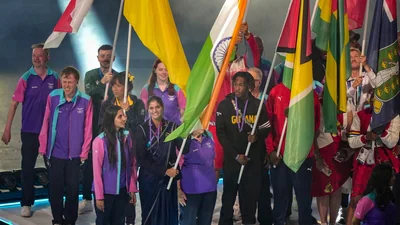
The Commonwealth Games 2026 concluded with India finishing fourth in the overall medal standings after securing 39 medals—13 gold, 17 silver and 9 bronze. On paper, the tally appeared lower than previous editions, especially compared to Birmingham 2022. However, judging Glasgow purely by medal numbers overlooks the extraordinary circumstances surrounding the event.
This edition featured a dramatically reduced sports programme, removing several disciplines that have historically been India’s biggest medal contributors. Wrestling, badminton, hockey, squash, table tennis and cricket—all sports capable of producing multiple podium finishes—were absent. Despite losing dozens of medal opportunities, India retained its place among the Commonwealth’s elite nations.
Perhaps the biggest lesson from Glasgow was not that India won fewer medals. Instead, it was that Indian sport is becoming deeper, more balanced and increasingly capable of succeeding across a wider range of disciplines. That evolution could become India’s greatest advantage as preparations begin for the 2030 Commonwealth Games in Ahmedabad.
Why India’s Glasgow Campaign Cannot Be Measured by Medal Numbers Alone
Comparing Glasgow with previous Commonwealth Games without considering the reduced competition schedule creates an incomplete picture.
The 2026 Games were one of the smallest editions in Commonwealth Games history. Several medal-rich sports disappeared from the programme, significantly reducing the number of events available for India.
In earlier editions, India regularly relied on wrestling, shooting, badminton, table tennis and hockey to produce a substantial percentage of its overall medals. Their absence fundamentally changed expectations.
Instead of focusing solely on total medals, Glasgow should be evaluated through performance efficiency, athlete development and competitive depth.
| Performance Indicator | Birmingham 2022 | Glasgow 2026 |
|---|---|---|
| Total Athletes | 210 | 122 |
| Total Medals | 61 | 39 |
| Gold Medals | 22 | 13 |
| Overall Ranking | 4th | 4th |
| Medal Conversion Rate | Approximately 29% | Approximately 31% |
The improved medal conversion rate illustrates that India remained highly efficient despite sending a significantly smaller contingent.
A Smaller Team Produced Bigger Statements
One of Glasgow’s strongest indicators of progress was the quality rather than quantity of performances.
Nearly one-third of India’s athletes returned home with medals, highlighting improved preparation and a stronger high-performance system.
This trend is important because elite sporting nations rarely depend solely on larger delegations. Instead, they maximize efficiency by sending athletes capable of genuine podium contention.
India’s Glasgow campaign suggested that talent identification and athlete development are gradually moving in that direction.
Athletics Continues to Rewrite India’s Commonwealth Story
Athletics once again emerged as one of India’s biggest success stories.
Traditionally considered one of the toughest international sports due to intense global competition, athletics has steadily become an area where Indian athletes consistently challenge for medals.
India secured ten medals from athletics despite fielding a smaller squad than in Birmingham, reflecting increased competitiveness rather than expanded participation.
More importantly, several performances represented historic milestones rather than isolated successes.
Gulveer Singh Signals a New Era for Indian Distance Running
Distance running has long been dominated by East African athletes at global competitions.
For decades, Indian runners found it difficult to consistently compete for podium finishes over long distances.
Gulveer Singh’s medal-winning performances changed that narrative by becoming the first Indian athlete to win two athletics medals in a single Commonwealth Games edition.
His achievements suggest that India’s endurance programme is beginning to produce athletes capable of competing at a much higher international standard.
If properly nurtured, Gulveer’s success could inspire increased investment in distance running infrastructure, coaching and sports science.
Neeraj Chopra’s Silver Carries Greater Meaning Than Another Gold
While Neeraj Chopra narrowly missed another Commonwealth Games gold medal, his silver may ultimately prove equally valuable.
His sustained excellence has transformed Indian javelin from a one-athlete success story into a discipline with genuine depth.
The emergence of another Indian medal-winning javelin thrower alongside Chopra demonstrates how inspirational champions can reshape an entire sporting ecosystem.
Instead of relying on one global star, India now appears capable of consistently producing international-level throwers.
Tejaswin Shankar Demonstrates the Value of Multi-Event Excellence
Competing successfully across multiple athletics disciplines requires extraordinary physical preparation and technical skill.
Tejaswin Shankar’s medal-winning performance despite injury highlighted not only individual resilience but also the growing professionalism of India’s elite athlete support systems.
His achievement also broadened India’s medal profile within athletics by succeeding in one of the sport’s most demanding events.
Indian Boxing Reaches Historic Heights
Glasgow will likely be remembered as one of the greatest boxing tournaments in India’s Commonwealth Games history.
Indian boxers dominated across weight divisions, collecting seven gold medals and three silvers while establishing themselves as the standout boxing nation of the competition.
Young athletes justified increasing investments made in grassroots boxing academies, international exposure and scientific training methods.
The campaign also reinforced India’s growing strength in women’s boxing, where consistency at major tournaments has become increasingly common.
The Asian Games Will Be the Ultimate Test
Although Glasgow showcased India’s boxing progress, evaluating performances requires proper competitive context.
Several of Asia’s strongest boxing nations did not feature in the Commonwealth Games programme.
The upcoming Asian Games will therefore provide a much clearer benchmark against world-class opposition.
Success there would confirm that Glasgow represented genuine progress rather than favourable tournament circumstances.
Judo Produced the Biggest Surprise of the Games
Every major sporting event produces an unexpected breakthrough, and in Glasgow that honour belonged to Indian judo.
Winning the country’s first Commonwealth Games gold medals in judo marked a historic achievement for a sport that has often struggled with administrative challenges and inconsistent development.
Breakthrough performances from emerging athletes demonstrated that India’s sporting success is beginning to spread into disciplines previously considered outside its traditional strengths.
This diversification is one of the healthiest long-term indicators for Indian sport.
Para Athletes Continue Raising the Standard
One of the most encouraging stories from Glasgow came through India’s para athletes.
The para contingent delivered an outstanding performance by collecting multiple medals across athletics, reflecting years of gradual investment in coaching, infrastructure and athlete development.
More importantly, para athletes increasingly demonstrated that they deserve recognition not as inspirational stories alone but as elite competitors capable of consistently performing on international stages.
Their achievements represent one of the fastest-growing success areas within Indian sport.
Governance Still Limits India’s Sporting Potential
While athletes impressed throughout Glasgow, several administrative shortcomings once again prevented India from maximizing its medal opportunities.
Doping-related suspensions reduced squad sizes in some sports before competition even began. Documentation issues affected participation in para events, while equipment shortages and logistical challenges highlighted persistent governance gaps.
These problems are particularly frustrating because they are largely avoidable.
Elite athletes invest years preparing for major competitions. Administrative failures should never become the deciding factor in their opportunities to compete.
Success Remains Concentrated in a Few Sports
Another important takeaway from Glasgow is that India still relies heavily on a relatively small group of disciplines.
Boxing, athletics, judo, weightlifting and para athletics accounted for the overwhelming majority of medals.
Other sports continue facing significant developmental challenges.
- Swimming remains far behind world-leading nations.
- Track cycling requires improved infrastructure.
- Gymnastics continues developing consistency.
- Team sports need broader international competitiveness.
- Emerging disciplines require stronger grassroots programmes.
Building medal depth across additional sports should become one of India’s highest priorities before 2030.
Why Athlete Development Matters More Than Medal Totals
One overlooked lesson from Glasgow is that sustainable sporting success depends on pipeline development rather than isolated champions.
Countries dominating global sport consistently produce multiple athletes capable of replacing retiring stars without significant performance decline.
India now appears closer to building that model.
The emergence of younger medal winners across boxing, athletics and judo suggests that succession planning is beginning to work.
Ahmedabad 2030 Could Become a Defining Sporting Moment
Hosting the Commonwealth Games provides far more than home advantage.
It creates opportunities for governments, sports federations and private stakeholders to accelerate investment in facilities, coaching, sports science and grassroots participation.
If sports like table tennis, hockey and cricket return to the Games programme, India’s medal ceiling could increase substantially.
However, infrastructure alone will not guarantee success.
Administrative efficiency, transparent governance and athlete-first policies will ultimately determine whether India can fully capitalize on hosting the Games.
| Strengths Heading into Ahmedabad 2030 | Areas Needing Improvement |
|---|---|
| Emerging athlete pipeline | Sports governance |
| Improved athletics programme | Anti-doping compliance |
| World-class boxing talent | Infrastructure in developing sports |
| Growing para sports success | Administrative efficiency |
| Home advantage | Broader medal diversification |
Key Insight: Glasgow Was About Progress, Not Perfection
The biggest success of India’s Commonwealth Games campaign was not finishing fourth—it was proving that future medal hopes no longer depend on only a handful of established champions. Glasgow revealed an expanding generation of athletes capable of competing consistently across multiple disciplines, offering perhaps the strongest foundation India has ever carried into a home Commonwealth Games.
Looking Beyond 2030
The lessons learned from Glasgow extend well beyond the next Commonwealth Games.
Many athletes who impressed in Scotland are expected to become central figures in India’s preparations for the Asian Games, World Championships and future Olympic cycles.
Continued investment in sports science, athlete welfare, coaching education and grassroots talent identification could transform today’s Commonwealth successes into sustained global competitiveness.
The next four years therefore represent not simply preparation for Ahmedabad, but an opportunity to reshape Indian sport for the next decade.
Conclusion
India’s 39-medal performance at the Commonwealth Games 2026 should not be viewed as a decline but as evidence of a sporting system gradually becoming stronger and more resilient. Despite a reduced Games programme and fewer medal opportunities, Indian athletes maintained a top-four finish while producing breakthrough performances across athletics, boxing, judo and para sports.
At the same time, Glasgow exposed challenges that still require urgent attention, including governance, infrastructure and administrative efficiency. If those issues are addressed alongside continued athlete development, India will enter the 2030 Commonwealth Games in Ahmedabad with genuine ambitions of delivering one of the greatest performances in its sporting history. Glasgow did not simply end one Commonwealth cycle—it marked the beginning of India’s next major sporting chapter.
For breaking news and live news updates, like us on Facebook or follow us on Twitter and Instagram. Read more on Latest Sports on thefoxdaily.com.






COMMENTS 0