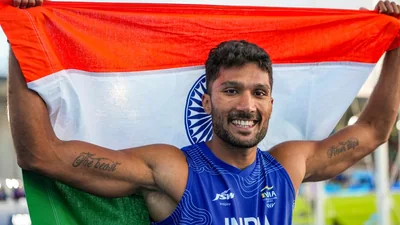
The Commonwealth Games 2026 produced countless memorable performances for India, but few stories captured the spirit of elite sport quite like Tejaswin Shankar‘s bronze medal in the men’s decathlon. Entering the Games as one of India’s strongest medal hopes in the high jump, Shankar’s campaign appeared to be over after a knee injury forced him to withdraw from his favorite event. Instead of leaving Glasgow disappointed, the 27-year-old rewrote his story by battling through pain and uncertainty to secure a remarkable bronze medal in one of athletics’ most demanding competitions.
His achievement was about far more than adding another medal to India’s tally. It showcased mental strength, adaptability, leadership and the ability to overcome adversity—qualities that define champions beyond statistics and podium finishes.
From Medal Favorite to Injury Setback
Tejaswin Shankar arrived in Glasgow carrying high expectations after establishing himself as one of India’s premier field athletes. Having won bronze in the high jump at the 2022 Commonwealth Games, he was widely considered a strong contender for another podium finish.
However, his campaign took a dramatic turn when he injured his knee during the high jump competition. The injury forced him to withdraw after his opening attempt, leaving fans and experts uncertain whether he would even be able to compete again during the Games.
For most athletes, such a setback would have marked the end of their Commonwealth Games journey. Instead, Shankar chose to focus on the decathlon, one of the toughest events in athletics.
What Makes the Decathlon One of Athletics’ Toughest Events?
The men’s decathlon is often described as the ultimate test of an athlete’s versatility. Competitors must perform across ten different disciplines over two days, demanding speed, strength, endurance, technique and mental toughness.
| Day | Events | Skills Tested |
|---|---|---|
| Day 1 | 100m, Long Jump, Shot Put, High Jump, 400m | Speed, explosive power, technique and endurance |
| Day 2 | 110m Hurdles, Discus Throw, Pole Vault, Javelin Throw, 1500m | Agility, strength, coordination, stamina and mental resilience |
Unlike specialists who prepare for a single discipline, decathletes must remain competitive across every event. Recovering from an injury while competing in such a physically demanding contest makes Shankar’s bronze medal even more remarkable.
“I Didn’t Want to Leave Glasgow Empty-Handed”
Following his bronze medal performance, Tejaswin Shankar summed up his mindset in a simple yet powerful statement.
“Dil Maange More. I just want more. I didn’t want to leave Glasgow empty-handed.”
His words reflected an athlete who refused to let disappointment define his Commonwealth Games campaign. Instead of focusing on what he had lost, he concentrated on what was still possible.
Shankar also credited fellow Indian long jumper Murali Sreeshankar for offering valuable advice after the injury setback, encouraging him to focus on one event at a time rather than becoming overwhelmed by circumstances.
That approach allowed him to reset mentally and produce a medal-winning performance despite entering the competition under difficult conditions.
The Leadership Moment That Won Hearts
While the bronze medal earned headlines, one of Tejaswin Shankar’s biggest contributions came away from the podium.
After withdrawing from the high jump competition, he chose to remain with teammate Sarvesh Kushare instead of leaving the venue disappointed. During the event, Shankar observed Kushare’s approach and suggested a crucial adjustment to his run-up.
The advice proved decisive.
Kushare later revealed that changing his run-up based on Shankar’s recommendation helped him regain rhythm and continue his medal challenge, eventually winning the silver medal for India.
This episode highlighted a quality rarely reflected in medal tables—leadership. Elite athletes often compete against rivals, but great teams are built when experienced competitors help those around them succeed.
Why This Bronze Medal Carries Greater Significance
Bronze medals are often judged purely by their position on the podium, but context matters in elite sport.
- He competed despite suffering a knee injury.
- He recovered mentally after withdrawing from his strongest event.
- He delivered across ten demanding disciplines.
- He inspired a teammate to win another medal for India.
- He added another Commonwealth Games medal to his international career.
Viewed together, these achievements make Shankar’s Glasgow campaign one of India’s most inspiring stories of the Games.
Prime Minister Narendra Modi Congratulates Tejaswin Shankar
Prime Minister Narendra Modi praised Shankar’s resilience following his bronze medal performance, congratulating him for producing an outstanding all-round display in one of athletics’ toughest events.
The Prime Minister acknowledged that Indian athletes continue to make the nation proud through performances built on determination and excellence, while wishing Shankar continued success in future international competitions.
Such recognition reflects the growing importance of athletics within India’s sporting landscape and highlights the increasing visibility of multi-event athletes.
India’s Athletics Revolution Continues
Over the past decade, Indian athletics has evolved significantly. The country is no longer dependent on isolated individual success but is producing competitive athletes across multiple disciplines, including javelin throw, long jump, race walking, high jump and combined events.
Tejaswin Shankar represents this new generation of athletes capable of competing consistently against world-class opposition.
His ability to transition from a high jump specialist to an international decathlon medalist also reflects the increasing sophistication of India’s coaching systems and athlete development programs.
India’s Medal Tally Continues to Improve
Shankar’s bronze further strengthened India’s campaign at the 2026 Commonwealth Games.
| Category | Total |
|---|---|
| Gold | 5 |
| Silver | 12 |
| Bronze | 6 |
| Total Medals | 23 |
| Overall Position | 10th |
The medal tally demonstrates India’s growing competitiveness across athletics, judo, weightlifting and several other disciplines.
Lessons Young Athletes Can Learn from Tejaswin Shankar
Shankar’s journey in Glasgow offers valuable lessons for aspiring athletes beyond the sporting arena.
- Setbacks are temporary: An injury does not always end an opportunity.
- Mental strength matters: Staying focused after disappointment can change outcomes.
- Teamwork creates success: Helping teammates strengthens the entire team.
- Adaptability is essential: Champions adjust instead of giving up.
- Consistency builds greatness: Every competition provides another chance to improve.
These lessons extend beyond athletics and resonate with students, professionals and anyone facing setbacks in their own journey.
Looking Ahead to the Asian Games and Beyond
Following his bronze medal, Tejaswin Shankar made it clear that his ambitions remain much higher. His immediate focus will shift toward recovering fully from his knee injury while preparing for future international competitions, including the Asian Games.
If he returns to full fitness, Shankar could once again challenge for medals in both individual field events and combined competitions, further strengthening India’s presence in global athletics.
His Glasgow performance has also reinforced confidence that Indian athletes can remain competitive across multiple disciplines as preparations continue for upcoming world championships and Olympic qualification events.
Conclusion
Tejaswin Shankar’s bronze medal at the Commonwealth Games 2026 will be remembered as much for the journey as the result. After suffering a heartbreaking injury in the high jump, he refused to let disappointment define his campaign. Instead, he embraced the challenge of the decathlon, fought through adversity and returned home with another international medal.
His leadership in helping teammate Sarvesh Kushare secure silver added another remarkable chapter to his Glasgow story, proving that true champions elevate not only themselves but those around them.
As India continues to establish itself as a rising force in global athletics, Tejaswin Shankar’s resilience, sportsmanship and determination stand as a powerful reminder that greatness is measured not only by victories but by the courage to keep competing when the odds appear impossible.
For breaking news and live news updates, like us on Facebook or follow us on Twitter and Instagram. Read more on Latest Sports on thefoxdaily.com.





COMMENTS 0