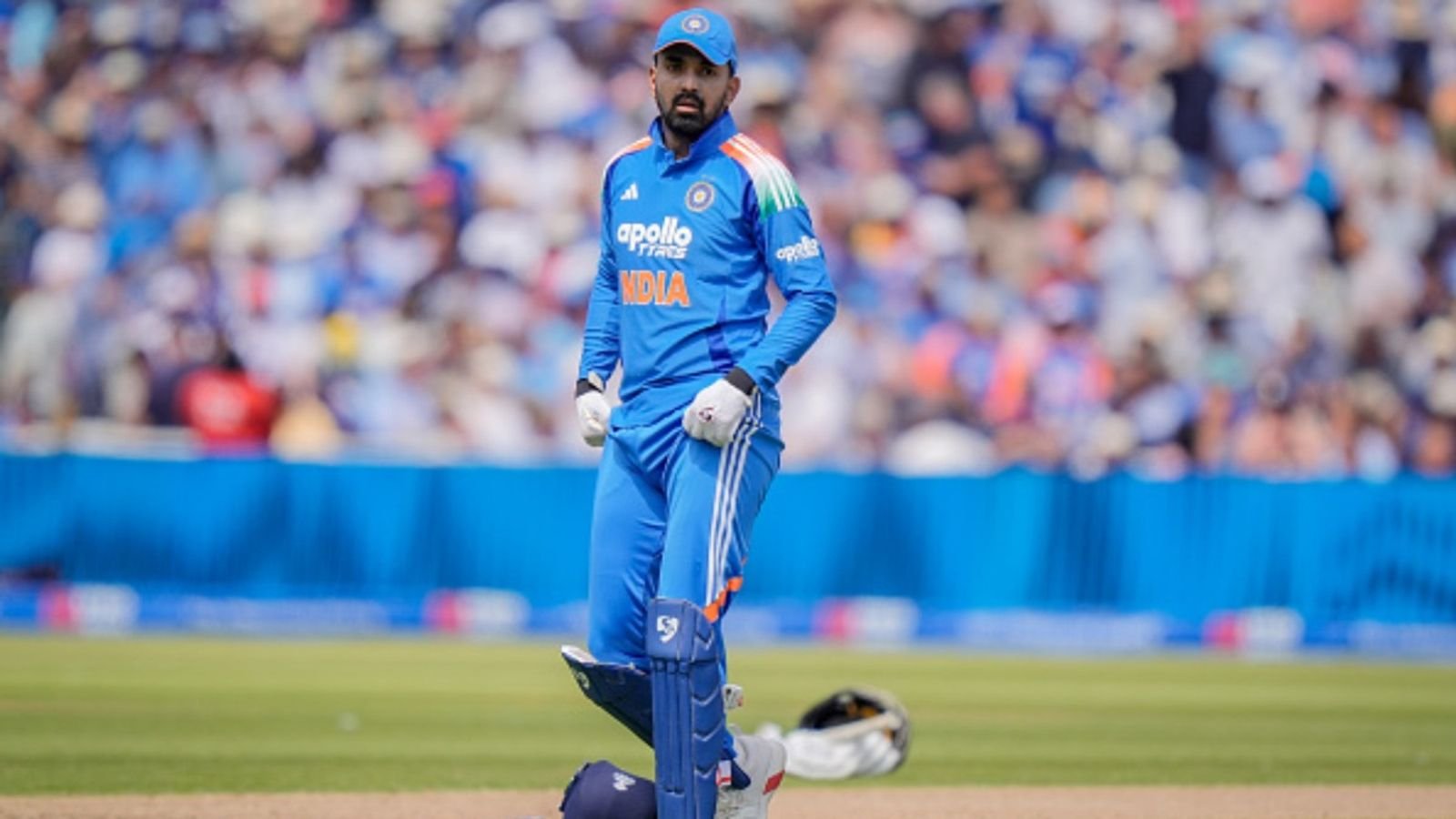
India’s second ODI against England was expected to revolve around whether the visitors could seal the series after their impressive victory in the opener. Instead, one of the biggest talking points emerged even before the first ball was bowled when captain Shubman Gill confirmed that KL Rahul had been ruled out due to illness.
The late withdrawal forced India into an unexpected change, with Ishan Kishan drafted into the playing XI. While injuries and illnesses are common during long international tours, Rahul’s absence attracted particular attention because of his role in India’s ODI setup and the increasing competition for places in the middle order.
On the surface, the situation appears straightforward. Rahul was unwell, unavailable for selection, and India replaced him with another wicketkeeper-batter. However, the bigger story lies in what this change means for India’s squad dynamics, selection strategy, and the growing battle for places ahead of future global tournaments.
Why KL Rahul Was Ruled Out of the Second ODI
At the toss, Shubman Gill confirmed that Rahul was unavailable because of illness, making the change a purely medical decision rather than a tactical one.
India therefore had little choice but to alter a winning combination despite beginning the series strongly.
Unlike injuries that may require extended recovery periods, illnesses often create short-term absences. At this stage, there is no indication that Rahul faces a lengthy spell on the sidelines.
However, international cricket moves quickly, and even a single missed match can create opportunities for competitors waiting on the fringes of the squad.
Why Ishan Kishan Was the Natural Replacement
Ishan Kishan’s inclusion was hardly surprising.
As a left-handed wicketkeeper-batter with significant international experience, he offers India a like-for-like replacement in terms of squad balance while bringing a slightly different batting approach.
Where Rahul is often associated with composure, adaptability, and innings-building, Kishan is known for aggressive strokeplay and a willingness to attack from the outset.
This contrast makes India’s batting lineup more dynamic but also introduces different tactical considerations.
| Player | Batting Style | Primary Strength | Role in ODI Setup |
|---|---|---|---|
| KL Rahul | Right-handed | Stability and flexibility | Middle-order anchor |
| Ishan Kishan | Left-handed | Aggressive scoring | Attacking wicketkeeper-batter |
The change therefore impacts more than just personnel. It slightly alters the overall batting profile of the Indian side.
KL Rahul’s Importance to India’s ODI Team
Rahul’s value to India extends beyond statistics.
Over the past several years, he has evolved into one of the team’s most versatile players, capable of batting at multiple positions while also contributing as a wicketkeeper.
This flexibility gives team management valuable options when constructing lineups for different conditions.
Few players can seamlessly move between opening, middle-order responsibilities, and wicketkeeping duties while maintaining consistency.
That adaptability has made Rahul one of India’s most trusted ODI performers.
Even when he is not producing big scores, his presence often provides stability in pressure situations.
Did Rahul’s First ODI Performance Influence the Selection?
The short answer is no.
Rahul managed only one run in the opening ODI against England, but captain Shubman Gill’s explanation confirmed that illness was the sole reason for his absence.
International teams rarely make major selection decisions based on a single innings, particularly when dealing with experienced players who have established records.
While Rahul would undoubtedly have wanted a bigger contribution in the first match, his place in the squad was not under immediate threat because of that performance.
The forced absence simply created circumstances that allowed another player to step in.
The Opportunity Facing Ishan Kishan
For Ishan Kishan, this match represented more than a replacement appearance.
It was an opportunity to remind selectors of his capabilities in the 50-over format.
Competition for places in India’s batting lineup remains fierce. With established stars occupying several positions, opportunities can be limited for players outside the first-choice XI.
Whenever a vacancy emerges, performances become magnified.
A strong showing can strengthen a player’s case for future selection, while a missed opportunity can make it difficult to regain momentum.
Kishan therefore entered the match carrying significant personal stakes despite the temporary nature of Rahul’s absence.
India’s Middle-Order Competition Is Becoming Increasingly Intense
One of the defining features of India’s current ODI squad is the depth available to the selectors.
Several players are capable of occupying similar positions, creating healthy competition throughout the batting order.
This depth is a positive challenge for team management.
However, it also means every performance carries additional significance.
| Position | Competing Players |
|---|---|
| Top Order | Rohit Sharma, Shubman Gill, Virat Kohli |
| Middle Order | KL Rahul, Shreyas Iyer, Ishan Kishan |
| All-Round Roles | Washington Sundar, Axar Patel, Shivam Dube |
| Wicketkeeper Role | KL Rahul, Ishan Kishan |
The battle for middle-order and wicketkeeping positions may become one of India’s most fascinating selection discussions over the coming years.
Shubman Gill’s Fitness Boost Was Equally Important
While much of the attention focused on Rahul’s absence, India also received encouraging news before the match.
Captain Shubman Gill was declared fit despite concerns following the first ODI.
His availability provided continuity at the top of the order and ensured India did not face multiple disruptions simultaneously.
In modern international cricket, captaincy stability often plays a major role in maintaining team momentum during bilateral series.
Gill’s presence therefore helped offset the disruption caused by Rahul’s unavailability.
What India Learned From the First ODI Victory
India entered the second ODI with confidence after securing a convincing six-wicket victory in the series opener.
The win demonstrated several encouraging signs.
- Strong top-order contributions.
- Effective bowling execution.
- Improved balance between bat and ball.
- Ability to chase under pressure.
- Positive contributions from all-rounders.
Because the team had performed well collectively, management had little reason to make voluntary changes.
Rahul’s illness therefore became the only factor disrupting the winning combination.
How England Viewed the Match
England entered the second ODI needing a response after losing the opener.
Winning the toss and choosing to field reflected their belief that early conditions would favor seam bowling.
For England, Rahul’s absence represented an opportunity to test a slightly altered Indian batting lineup.
Even small changes can influence the balance of a side, particularly when replacing experienced international players.
England’s bowlers would have recognized that Kishan’s aggressive style creates both opportunities and risks.
Could This Impact India’s Long-Term ODI Planning?
Although Rahul’s absence appears temporary, situations like this often provide useful information for selectors.
Modern international teams constantly evaluate depth and succession planning.
When backup players receive opportunities, management gains valuable insight into how the squad might function under different circumstances.
India’s long-term ODI strategy will depend on maintaining strong competition across all positions.
Matches like this help identify which players are ready to step into bigger roles when required.
The Evolution of India’s Wicketkeeper-Batter Role
The wicketkeeper position in Indian cricket has evolved significantly over the past two decades.
Teams no longer select keepers primarily for their glove work. Modern wicketkeepers are expected to contribute significantly with the bat and often function as specialist batters who also keep wickets.
Rahul and Kishan represent two different interpretations of that role.
Rahul provides adaptability and control, while Kishan offers explosiveness and attacking intent.
Both skill sets have value depending on conditions, opposition, and match situations.
This flexibility gives India multiple strategic options moving forward.
Why Squad Depth Could Be India’s Biggest Strength
One positive takeaway from Rahul’s absence is the quality of India’s replacement options.
Many international teams struggle when key players become unavailable.
India, by contrast, can call upon experienced alternatives capable of performing at the highest level.
This depth becomes particularly important during long tours, packed schedules, and major tournaments where player management is essential.
The ability to replace established stars without significantly weakening the side is a hallmark of successful cricket teams.
What Happens Next for KL Rahul?
Assuming his illness is short-lived, Rahul is expected to return to selection consideration once fully recovered.
His experience, versatility, and proven record remain valuable assets for India.
However, modern cricket is intensely competitive.
Every opportunity taken by a replacement strengthens competition and increases pressure across the squad.
That competition ultimately benefits the team by driving higher standards and ensuring players cannot rely solely on reputation.
Conclusion: A Temporary Absence With Bigger Implications
KL Rahul’s absence from the second ODI against England was officially the result of illness, making India’s team change a straightforward necessity rather than a tactical decision.
Yet the situation highlights several broader themes shaping Indian cricket today: the importance of squad depth, the competition for middle-order positions, and the growing significance of adaptable wicketkeeper-batters in modern ODI cricket.
For Rahul, the focus will be on recovery and returning to action as soon as possible. For Ishan Kishan, the match presented a valuable opportunity to strengthen his credentials. And for India, it served as another reminder that strong teams are defined not only by their stars but also by the quality of players ready to step in when circumstances demand it.
As the ODI series against England continues, the immediate concern remains securing victory. But the longer-term significance of this selection change may only become clear in the months ahead.
For breaking news and live news updates, like us on Facebook or follow us on Twitter and Instagram. Read more on Latest Sports on thefoxdaily.com.






COMMENTS 0