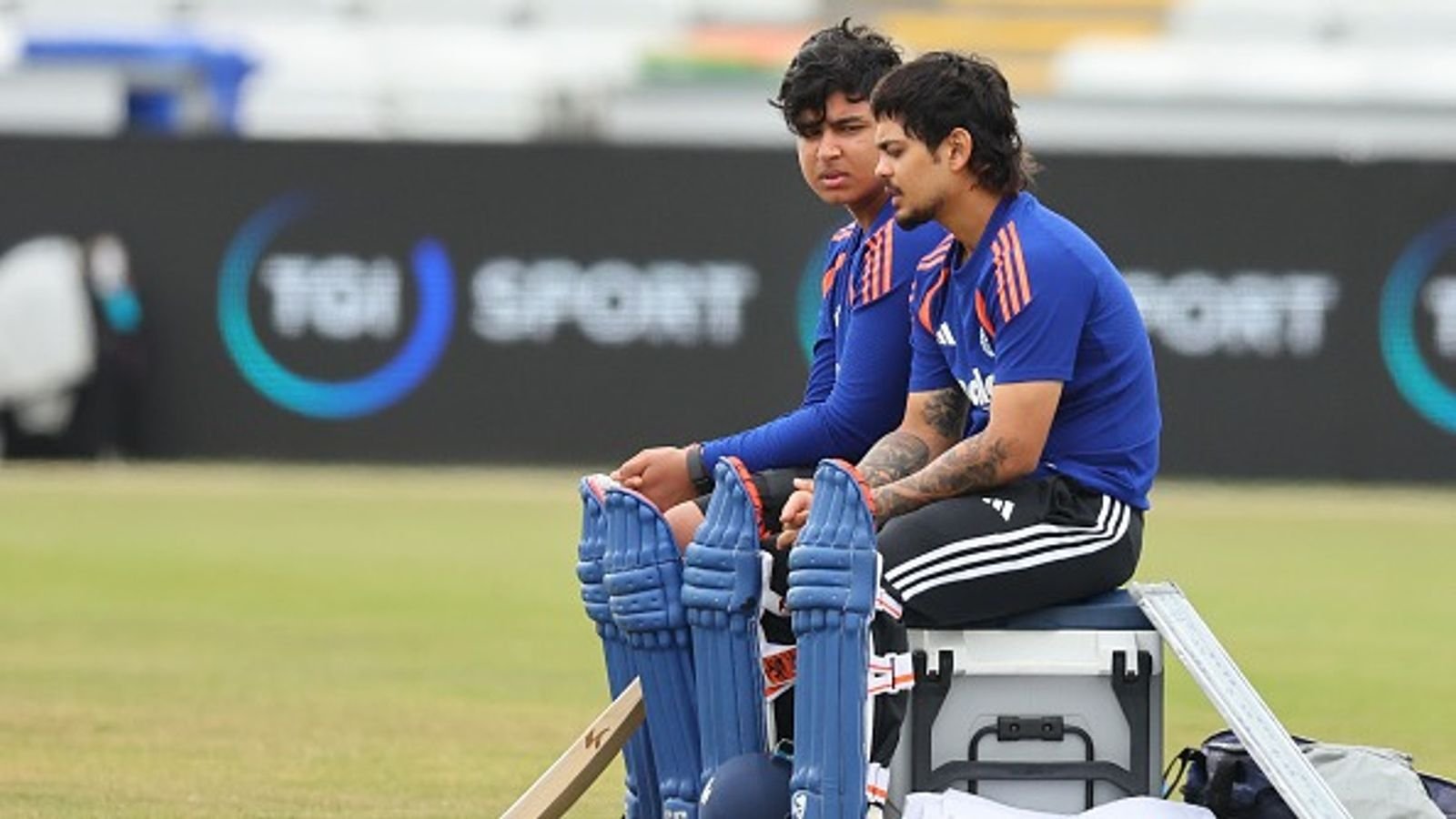
Ishan Kishan injury concerns briefly overshadowed India’s preparations for the opening T20I against Afghanistan after the wicketkeeper-batter experienced discomfort in his back during a net session. The incident came just two days before the first match of the three-game series in Delhi, creating an anxious moment for the Indian team management.
Kishan was nearing the end of his batting practice when he attempted to evade a short delivery from net bowler Navdeep Saini. During the movement, he appeared to tweak his back and immediately showed discomfort. India’s physiotherapists came onto the field to assess him, and his batting session was brought to an early conclusion.
The initial concern was understandable given Kishan’s importance to India’s current T20I plans. However, the incident did not appear to result in a major setback. The left-hander was able to leave the practice area on his own, and his relaxed demeanour afterward provided some reassurance.
What happened to Ishan Kishan during India’s nets?
Kishan had already spent around 45 minutes batting when the incident occurred. He was facing Saini in the nets and tried to get underneath a short-pitched delivery rather than play the ball.
The awkward movement appeared to cause discomfort in his back. The batter immediately attracted the attention of the support staff, with India’s physiotherapists moving quickly to check on him.
After the assessment, Kishan did not continue his batting session. He later rested near the boundary alongside teammates, using an ice box as part of the immediate recovery process.
There was nevertheless no indication from the incident alone that Kishan had suffered a serious injury. He was reportedly able to walk away from the nets without assistance and appeared comfortable enough to interact with Saini afterward.
That sequence is encouraging, but it does not automatically confirm his availability for Sunday’s match. The team medical staff will ultimately determine whether he is fit to play.
Why Kishan’s fitness matters so much to India
The timing of the setback makes it particularly important. India begin their three-match T20I series against Afghanistan on September 13, with all three matches scheduled in Delhi.
Kishan has also arrived at the national camp after a highly productive period of cricket. He recently captained East Zone to the Duleep Trophy title and was one of the standout performers in the final.
His form has therefore made him an important part of India’s batting conversation. Losing him immediately before the Afghanistan opener would force the team management to reconsider its combination, particularly because the squad contains several players capable of filling different batting roles.
The bigger picture is even more significant because India also have the Asian Games coming up. Managing player workloads and avoiding unnecessary risks will be an important consideration for the team management over the coming weeks.
Kishan enters Afghanistan series in excellent form
The injury scare comes at a time when Kishan’s confidence should be high.
His performance in the Duleep Trophy final was a major highlight. The left-hander produced a career-best 270 in East Zone’s first innings before adding another 80 in the second innings. His combined score of 350 runs across the two innings played a central role in East Zone’s title-winning campaign.
That performance was particularly significant because Kishan had been working to strengthen his case for a sustained return to India’s setup.
His domestic performances have provided the kind of evidence selectors want from a player attempting to establish himself again at international level. The Afghanistan T20Is represented another opportunity to convert that form into consistent performances for India.
India’s batting options give the team some flexibility
India do have several alternatives if Kishan is not cleared to play the first T20I.
The squad includes Sanju Samson as another wicketkeeper-batter, while young Vaibhav Sooryavanshi is also part of the group. Abhishek Sharma and other top-order options give captain Shreyas Iyer additional flexibility when deciding the opening combination.
| Player | Role in the squad |
|---|---|
| Shreyas Iyer | Captain and middle-order batter |
| Abhishek Sharma | Top-order batter |
| Vaibhav Sooryavanshi | Young batting option |
| Sanju Samson | Wicketkeeper-batter |
| Ishan Kishan | Wicketkeeper-batter |
| Tilak Varma | Vice-captain and middle-order batter |
| Shivam Dube | Batting all-rounder |
The selection puzzle could become particularly interesting if Kishan is fit. India would then have multiple options for the opening positions and wicketkeeping responsibilities.
Vaibhav Sooryavanshi adds another selection question
The training session also offered an indication of the competition for places at the top of India’s batting order.
While Kishan shared net space with Shreyas Iyer, Vaibhav Sooryavanshi was batting alongside Sanju Samson. That does not confirm the combinations India will use in the match, but it highlights the depth available to the management.
Sooryavanshi’s inclusion adds an exciting young option to the squad, while Samson brings substantial experience in T20 cricket. Kishan’s recent form makes the competition even more interesting.
If Kishan is declared fit, the selectors will have to decide not only who opens but also which wicketkeeper combination best suits the conditions and balance of the XI.
India vs Afghanistan 1st T20I: Match details
- Match: India vs Afghanistan, 1st T20I
- Date: September 13, 2026
- Venue: Arun Jaitley Stadium, Delhi
- Start time: 7:00 PM IST
- India captain: Shreyas Iyer
- Afghanistan captain: Ibrahim Zadran
- Series: Three T20Is
The first match will also mark the beginning of a busy period for several members of the Indian squad. With the Asian Games ahead, the team will need to balance winning the series with keeping key players physically ready for the larger schedule.
India’s updated T20I squad against Afghanistan
India’s squad for the Afghanistan T20I series contains a mixture of established international players, experienced T20 performers and exciting young talent.
- Shreyas Iyer (captain)
- Abhishek Sharma
- Vaibhav Sooryavanshi
- Sanju Samson (wicketkeeper)
- Ishan Kishan (wicketkeeper)
- Tilak Varma (vice-captain)
- Shivam Dube
- Nitish Kumar Reddy
- Axar Patel
- Washington Sundar
- Varun Chakaravarthy
- Ravi Bishnoi
- Jasprit Bumrah
- Arshdeep Singh
- Yash Thakur
The medical update will determine Kishan’s next step
At this stage, the most important development is not speculation about the severity of the problem but the medical assessment that follows the incident.
A back issue can range from temporary discomfort to a problem requiring more recovery time, and the available information does not establish a definitive diagnosis. India’s medical and support staff will therefore have to assess Kishan before the team finalises its playing XI.
The decision will also involve risk management. With three T20Is against Afghanistan followed by the Asian Games, India have little reason to rush a player into action if the medical team believes additional recovery is necessary.
On the other hand, if Kishan clears the fitness assessment and experiences no lingering discomfort, his recent form could make him a strong candidate for the opening match.
Kishan’s return makes this more than a routine T20I series
For Kishan personally, the Afghanistan series represents another stage in his effort to establish himself as a regular member of India’s limited-overs setup.
His Duleep Trophy performances have strengthened his momentum. A successful T20I campaign would provide another opportunity to demonstrate that his domestic form can translate into international cricket.
That is why even a minor fitness issue attracts attention. Kishan has built considerable momentum, and the last thing India would want is for a preventable setback to interrupt it.
At the same time, the incident demonstrates why modern international teams place so much emphasis on fitness monitoring. Training sessions are designed to prepare players for match situations, but even routine movements can occasionally produce discomfort.
What India could do if Kishan misses the opener
If Kishan is not cleared, India have enough depth to construct a competitive XI without him. Sanju Samson could take the wicketkeeping role, while the management could use another combination at the top of the order.
Abhishek Sharma is an obvious option for an attacking opening role, while Sooryavanshi provides another possibility depending on how adventurous the management wants to be.
The absence of Kishan would therefore not leave India without options. It would, however, remove a batter who is currently carrying strong momentum after his outstanding domestic performances.
It could also alter the balance of the middle order, particularly if the team prefers to retain a specific combination of left- and right-handed batters.
Why India should avoid rushing the decision
The temptation to play a key batter in an opening match can be strong, especially when the player is in excellent form. But India’s schedule provides a reason to take a cautious approach.
The Afghanistan series consists of three matches, meaning there will be opportunities to use Kishan later if he requires additional recovery. India also have the Asian Games ahead, making player availability over the entire schedule more important than winning a single match at any cost.
If the medical team is satisfied that Kishan has no significant issue, there is little reason for unnecessary concern. If discomfort remains, allowing him time to recover would be the more sensible option.
Final Verdict
Ishan Kishan’s back issue has given India a brief scare just two days before the first T20I against Afghanistan, but the initial signs are relatively reassuring. He was able to walk away from the nets and appeared relaxed after receiving attention from the support staff.
Still, the incident should not be dismissed completely until India’s medical team completes its assessment. Kishan’s availability for the September 13 opener will depend on his fitness and how he responds after the training-session setback.
His absence would be a significant blow because he enters the series with considerable momentum following a superb Duleep Trophy campaign. At the same time, India have Sanju Samson, Abhishek Sharma, Vaibhav Sooryavanshi and other batting options capable of helping the team adapt.
The immediate priority, therefore, is clear: assess Kishan properly, avoid rushing him back if discomfort persists, and make the final selection only after the medical team is satisfied. For a player returning to the international spotlight in strong form, the bigger objective is ensuring that one awkward moment in the nets does not become a larger fitness problem.
For breaking news and live news updates, like us on Facebook or follow us on Twitter and Instagram. Read more on Latest Cricket on thefoxdaily.com.






COMMENTS 0