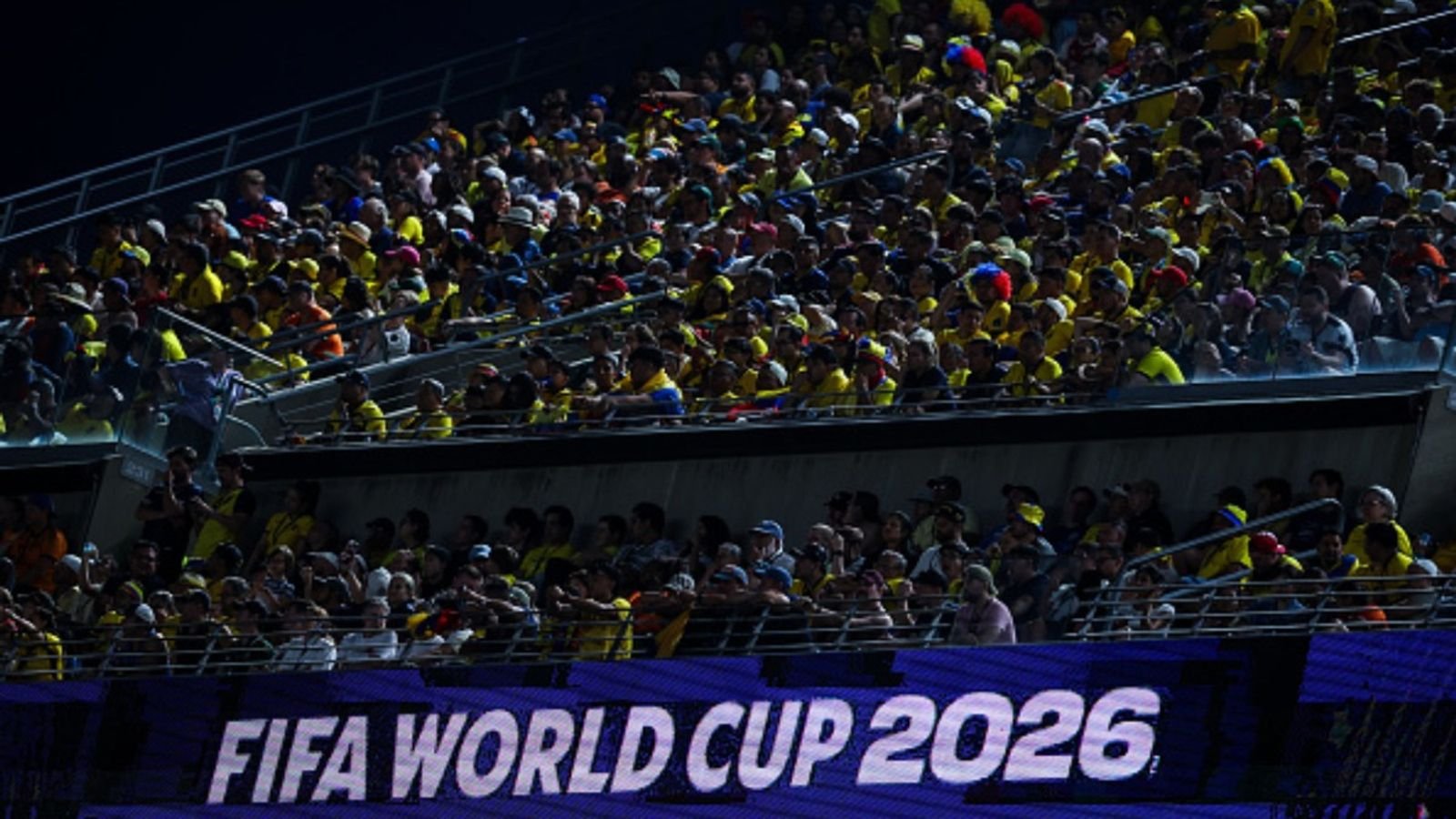
The FIFA World Cup 2026 has delivered thrilling Football on the pitch, but a fresh controversy away from the action is now attracting global attention. Japan supporters could find themselves under scrutiny after a controversial symbol appeared in the stands during their World Cup group-stage clash against Tunisia.
The incident has sparked renewed debate about FIFA’s strict tournament regulations, particularly those concerning political, offensive, and historically sensitive displays. As complaints begin to emerge, football’s governing body could soon face another challenging decision regarding the balance between fan expression and maintaining a neutral sporting environment.
With the World Cup bringing together supporters from every corner of the globe, FIFA has consistently emphasized the importance of creating an inclusive atmosphere free from political and divisive symbolism. The latest controversy highlights how difficult that objective can be in practice.
What Triggered the World Cup 2026 Controversy?
The debate centers on the appearance of the Rising Sun flag during Japan’s match against Tunisia.
While some Japanese supporters view the symbol as part of their national and cultural heritage, critics argue that it carries deeply painful historical associations linked to Imperial Japan’s military expansion during the first half of the twentieth century.
Because of these historical connections, the flag remains controversial across several Asian countries, particularly among communities whose nations experienced Japanese occupation and colonial rule.
The sighting of the symbol during a FIFA World Cup match quickly generated criticism online and prompted calls for the governing body to investigate the incident.
Why the Rising Sun Flag Remains a Sensitive Issue
The controversy surrounding the flag extends far beyond football.
For decades, the symbol has been the subject of international debate due to differing interpretations of its meaning and historical significance.
Supporters often argue that the design predates modern conflicts and continues to be used in certain cultural and maritime contexts within Japan.
Critics, however, contend that the flag cannot be separated from its wartime associations and the suffering experienced across parts of Asia during that era.
This difference in perspective has repeatedly led to disputes at international sporting events, diplomatic forums, and public gatherings.
FIFA’s Strict Rules on Political and Controversial Symbols
Before the FIFA World Cup 2026 began, tournament organizers issued clear guidelines regarding items that could be brought into stadiums.
Among the prohibited categories were:
- Political banners and messages.
- Discriminatory symbols or displays.
- Offensive material targeting specific groups.
- Items considered provocative or divisive.
- Content capable of disrupting public order inside venues.
The regulations were introduced as part of FIFA’s broader effort to ensure that the World Cup remains focused on sport rather than political disputes.
Organizers also worked closely with stadium security teams to identify and remove prohibited items before matches.
How FIFA Has Handled Similar Cases in the Past
The current controversy is not the first time FIFA has faced challenges involving politically sensitive symbols.
Previous World Cups and international tournaments have seen governing bodies intervene when banners, flags, or messages were deemed inconsistent with competition regulations.
In many cases, stadium security personnel have acted before matches begin, preventing controversial items from entering venues altogether.
Reports surrounding the latest incident have highlighted that similar attempts to display the Rising Sun flag during the FIFA World Cup 2022 were reportedly stopped before reaching the stands.
The fact that the symbol appeared during a match in 2026 has therefore raised questions about how it bypassed existing screening procedures.
Official Complaint Increases Pressure on FIFA
The controversy escalated further after an official complaint was reportedly submitted to FIFA.
The complaint came from Seong-Deok Seo, a professor at Sungshin Women’s University, who argued that symbols carrying historical controversy should not be permitted at an event designed to unite supporters from diverse cultures and backgrounds.
The complaint also reportedly called on FIFA to strengthen monitoring efforts and prevent similar incidents from occurring during the remainder of the tournament.
As public discussion continues to grow, FIFA may face increasing pressure to provide clarification regarding its position.
Could Japan Fans Face Punishment?
At this stage, no disciplinary action has been announced.
However, FIFA typically reviews incidents involving potential violations of tournament regulations before determining whether further measures are necessary.
| Possible FIFA Responses | Potential Outcome |
|---|---|
| Formal Review | Investigation into circumstances of the incident |
| No Further Action | If regulations are deemed not to have been breached |
| Enhanced Monitoring | Stricter stadium screening procedures |
| Disciplinary Measures | If tournament rules are found to have been violated |
Any decision would likely depend on FIFA’s interpretation of its own regulations and the specific circumstances surrounding the display.
The Challenge of Managing a Global Sporting Event
The incident highlights one of the most complex challenges facing modern sports organizations.
The FIFA World Cup attracts fans from virtually every culture, political background, and historical experience. Symbols that may appear harmless to one group can carry profound emotional significance for another.
As a result, governing bodies often find themselves navigating difficult questions about where to draw the line between cultural expression and potentially divisive symbolism.
The challenge becomes even greater in a tournament as globally visible as the World Cup.
Why This Issue Matters Beyond Football
Although the controversy emerged inside a football stadium, the broader discussion extends well beyond sport.
Major international events increasingly serve as platforms where historical memory, cultural identity, and global politics intersect.
The reactions to the Rising Sun flag demonstrate how historical events continue to influence public perceptions decades later.
For international organizations such as FIFA, these situations require careful handling to avoid escalating tensions while maintaining consistency in rule enforcement.
Social Media Amplifies Every World Cup Controversy
The speed at which the incident spread online reflects the changing nature of global sporting events.
In previous decades, such an episode might have remained a localized issue. Today, images and videos can reach millions of viewers within minutes.
Social media platforms have transformed how controversies develop, allowing supporters, critics, journalists, and public figures to weigh in almost instantly.
This rapid dissemination often increases pressure on governing bodies to respond quickly and transparently.
What FIFA Must Consider Moving Forward
As the tournament progresses, FIFA will likely focus on several key questions:
- Whether tournament regulations were violated.
- How the symbol entered the stadium.
- Whether existing security procedures require adjustment.
- How future incidents can be prevented.
- How to balance cultural expression with tournament neutrality.
The answers to these questions could influence not only the remainder of World Cup 2026 but also future FIFA tournaments.
Conclusion
The controversy involving Japan supporters and the Rising Sun flag has once again highlighted the complex challenges FIFA faces in managing the world’s biggest sporting event.
While no disciplinary action has been announced, the incident has reignited global debate about the role of historically sensitive symbols in international sport. With an official complaint reportedly submitted and public scrutiny intensifying, FIFA may soon be required to clarify its position.
Beyond the immediate controversy, the episode serves as a reminder that the FIFA World Cup is more than a football tournament. It is a global gathering where history, culture, identity, and sport often intersect. How FIFA responds could set an important precedent for future international competitions.
For breaking news and live news updates, like us on Facebook or follow us on Twitter and Instagram. Read more on Latest Sports on thefoxdaily.com.





COMMENTS 0