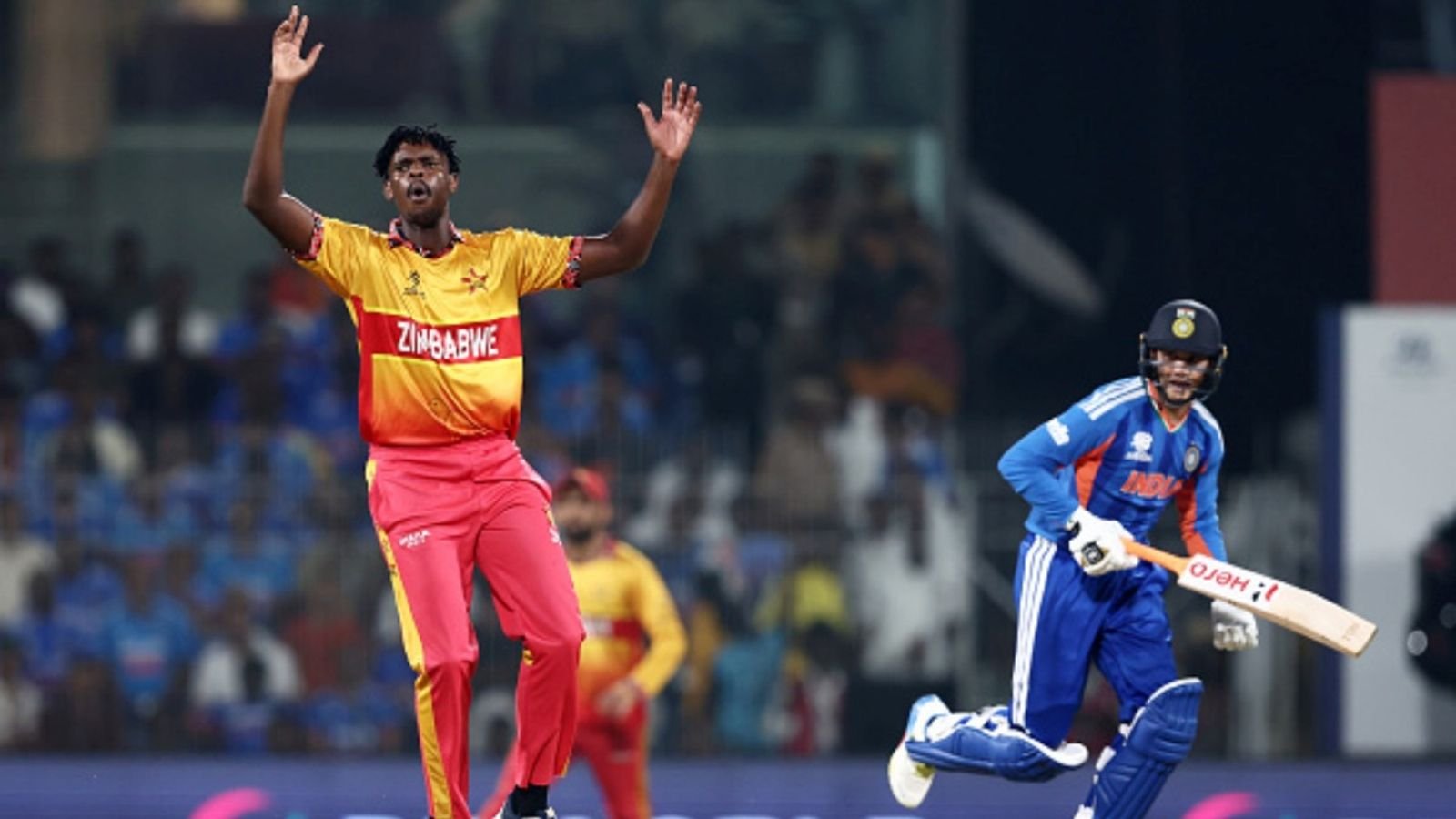
Zimbabwe have announced their 15-member T20I squad for the tri-series against South Africa and Namibia, with Richard Ngarava ruled out because of a lower-back injury. The tournament is scheduled to begin on August 28 in Windhoek, with Zimbabwe beginning their campaign against South Africa on August 29.
Ngarava’s absence is a major development for Zimbabwe. The pacer is the country’s Test and ODI captain and an important part of their bowling attack. However, he is not currently fit enough to participate, meaning Sikandar Raza will lead Zimbabwe in the T20I competition.
Zimbabwe have also received a boost through the return of veteran spinner Graeme Cremer. The 39-year-old has recovered from a left-arm injury and returns to the T20I setup after last featuring at the 2026 T20 World Cup.
Richard Ngarava ruled out of the tri-series
Richard Ngarava will miss Zimbabwe’s campaign as he continues his recovery from a lower-back injury. His absence removes one of the team’s experienced fast-bowling options from a tournament that will feature South Africa and Namibia.
Although Ngarava will not participate in the T20I series, his wider international future remains important for Zimbabwe. He is expected to be monitored ahead of the ODI series against Australia in September, provided he makes a satisfactory recovery.
The decision also highlights the importance of Zimbabwe managing Ngarava’s fitness carefully. With multiple formats on the international calendar, rushing an injured fast bowler back could create a greater problem later in the season.
Tanaka Chivanga adds to Zimbabwe’s injury concerns
Ngarava is not the only Zimbabwe fast bowler missing from the squad. Tanaka Chivanga has also been ruled out after undergoing surgery for an Achilles tendon injury.
The loss of two pace bowlers means Zimbabwe enter the competition without two established pace options. Blessing Muzarabani and Brad Evans are among the experienced options available, while other members of the squad could also be required to contribute with the ball.
In T20 cricket, bowling depth is particularly important because every over can have a major impact on the result. Zimbabwe’s challenge will be to find the right combination between specialist bowlers and all-rounders.
Graeme Cremer makes a significant return
Zimbabwe have received a major boost with the return of Graeme Cremer. The experienced spinner has recovered from his left-arm injury and has been selected for the T20I squad for the first time since the 2026 T20 World Cup.
Cremer’s international journey has already been unusual. He returned to Zimbabwe’s T20I setup after a seven-year absence before appearing at the T20 World Cup. His latest comeback adds another chapter to a career built around experience and spin bowling.
At 39, Cremer is the oldest player in the squad and could have an important role beyond his bowling figures. His knowledge of international cricket can help Zimbabwe’s younger players deal with pressure during the tri-series.
Why Cremer’s experience could matter
The return of Cremer is more than a nostalgic selection. Zimbabwe are entering a tournament in which every match can influence qualification for the final, making tactical experience valuable.
Spin bowlers can play an important role in controlling the middle overs of T20 matches. Cremer’s experience could complement Zimbabwe’s younger bowling options and give captain Sikandar Raza another tactical option.
Brendan Taylor misses out on T20I selection
Another major selection decision is the omission of Brendan Taylor. The experienced batter has been left out of Zimbabwe’s T20I squad after not getting game time in the team’s T20I assignments against Bangladesh and India this year.
Taylor remains involved in Test cricket and featured in Zimbabwe’s most recent one-off Test against Bangladesh in June. His continued presence in the Test setup shows that his international career has not simply ended, but his current role in T20 cricket appears to be different.
The decision gives Zimbabwe an opportunity to look at younger batting options in the shortest format.
Kundai Matigimu could make his T20I debut
One of the players who could benefit from the squad changes is Kundai Matigimu. He has been included in the 15-member squad and is yet to make his T20I debut.
Matigimu has already appeared in Test cricket and has played 11 T20 matches, taking 11 wickets. The tri-series could provide him with an opportunity to convert domestic experience into an international T20 role.
A debut against strong opposition would be a significant test, but it could also give Zimbabwe valuable information about Matigimu’s potential at international level.
Sikandar Raza takes charge of the T20I side
Sikandar Raza will lead Zimbabwe during the tri-series. The all-rounder remains one of the most influential players in the country’s white-ball setup and provides experience in both batting and bowling.
Raza’s leadership will be especially important because Zimbabwe have lost Ngarava and Chivanga from their bowling options. He will need to identify the right combination quickly and ensure that the team does not become overly dependent on a small group of players.
Zimbabwe’s full T20I squad
| Player | Role |
|---|---|
| Sikandar Raza | Captain and all-rounder |
| Brian Bennett | All-rounder |
| Ryan Burl | All-rounder |
| Graeme Cremer | Spinner |
| Ben Curran | Batter |
| Brad Evans | All-rounder |
| Innocent Kaia | Batter |
| Wessly Madhevere | All-rounder |
| Tadiwanashe Marumani | Wicketkeeper-batter |
| Wellington Masakadza | Spinner |
| Kundai Matigimu | Bowler |
| Blessing Muzarabani | Fast bowler |
| Dion Myers | All-rounder |
| Newman Nyamhuri | Bowler |
| Tafadzwa Tsiga | Wicketkeeper-batter |
When does the Zimbabwe tri-series begin?
The tri-series involving Zimbabwe, South Africa and Namibia is scheduled to begin on August 28 in Windhoek. Zimbabwe’s first match is scheduled for August 29 against South Africa.
The competition will use a round-robin format, with the top two teams qualifying for the final scheduled for September 6.
South Africa also arrive without a key player
Zimbabwe will not be the only team dealing with selection changes. South Africa have named a second-string team for the tournament, with Bjorn Fortuin leading the side.
South Africa’s young all-rounder Jason Smith has also been ruled out after suffering an adductor muscle strain, and Cricket South Africa have opted not to name a replacement.
Namibia could provide another challenge
Namibia will also be looking to make an impact in the tri-series. The side has already demonstrated that it can compete with stronger opposition in T20 cricket.
Namibia defeated South Africa in their only T20I meeting last year, winning by four wickets in a last-ball thriller. They have also won two T20I series against Zimbabwe, including a three-match series away from home last year.
That record means Zimbabwe cannot afford to treat Namibia as an easier opponent. In a short round-robin tournament, an unexpected defeat can significantly change the qualification picture.
What the squad means for Zimbabwe
Zimbabwe’s selection presents a mixture of setbacks and opportunities. Ngarava and Chivanga’s injuries weaken the pace department, while Taylor’s omission reduces experience in the batting group.
However, Cremer’s return gives the team valuable experience, and Matigimu’s potential debut could help strengthen Zimbabwe’s future depth.
The biggest question will be whether Zimbabwe can maintain bowling discipline without two experienced fast bowlers. If the attack adapts well and Raza’s senior players deliver consistently, Zimbabwe have enough quality to challenge both South Africa and Namibia.
Conclusion
Zimbabwe’s T20I tri-series squad reflects a team balancing immediate competition with long-term development. Richard Ngarava’s lower-back injury and Tanaka Chivanga’s Achilles problem are significant setbacks, but the return of Graeme Cremer provides experience at an important moment.
With Sikandar Raza leading the side, Kundai Matigimu potentially making his T20I debut and several younger players competing for greater responsibility, the tri-series could prove valuable beyond the results.
The tournament begins on August 28, and Zimbabwe’s ability to adapt to their depleted pace-bowling resources could determine whether they reach the September 6 final.
For breaking news and live news updates, like us on Facebook or follow us on Twitter and Instagram. Read more on Latest Cricket on thefoxdaily.com.






COMMENTS 0