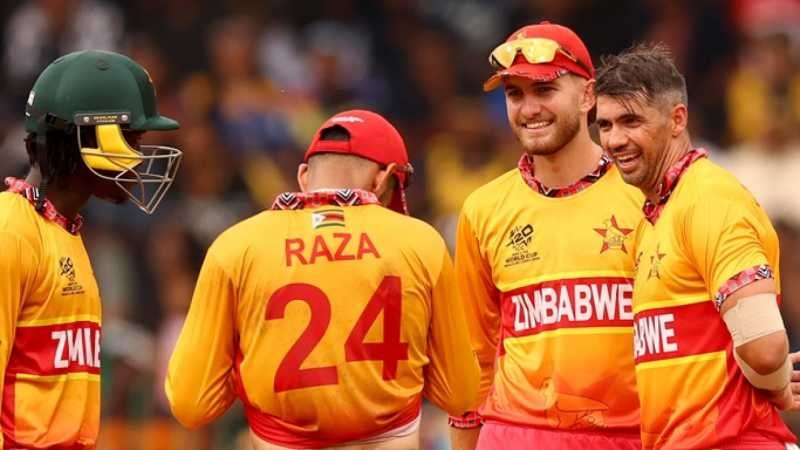
Zimbabwe have brought veteran spinner Graeme Cremer back into their T20I squad for the upcoming tri-series against Namibia and South Africa, while fast bowlers Richard Ngarava and Tanaka Chivanga have been ruled out as they continue their respective injury recoveries.
The 15-member Zimbabwe squad will be led by allrounder Sikandar Raza, with the tournament scheduled to begin on August 28 in Windhoek. The double round-robin competition will see Zimbabwe, Namibia and South Africa face each other twice before the top two teams meet in the final on September 6.
Cremer’s return is one of the biggest talking points in the squad announcement. The 39-year-old has recovered from a left-arm injury and returns to Zimbabwe’s T20I setup for the first time since the 2026 T20 World Cup in February.
His comeback is particularly notable because Cremer had previously spent seven years away from international cricket before returning for the T20 World Cup. His latest recall gives Zimbabwe another experienced spin option as they prepare for a demanding tournament in Namibia.
Graeme Cremer returns after recovering from injury
Graeme Cremer has earned his place back in Zimbabwe’s T20I squad after recovering from a left-arm injury. His return adds experience to a side that will face two strong opponents in South Africa and Namibia.
Cremer’s international career has already included a long break before his return to the T20I side in 2026. He had not played for Zimbabwe for seven years when he was selected for the T20 World Cup in February.
His comeback at that tournament represented a significant moment in Zimbabwean cricket. However, an injury subsequently prevented him from continuing his T20I involvement.
Now fully recovered, Cremer has another opportunity to contribute in the shortest format. His experience could become especially valuable in a tournament where Zimbabwe will need to manage different match situations across four group games.
Richard Ngarava misses out with a lower-back injury
Zimbabwe will be without Richard Ngarava, who continues to recover from a lower-back injury.
Ngarava is an important figure in Zimbabwe Cricket and currently serves as the country’s Test and ODI captain. His absence therefore affects both the team’s bowling resources and its wider leadership structure, although Sikandar Raza will captain the T20I side.
Zimbabwe will continue monitoring Ngarava’s recovery because his next major assignment is expected to be the ODI series against Australia in September, provided he is fit.
That makes the tri-series an important period for Zimbabwe’s bowling group. The team will need its available fast bowlers to handle the workload while Ngarava works towards his return.
Tanaka Chivanga also ruled out after surgery
Fast bowler Tanaka Chivanga has also been left out after undergoing surgery for an Achilles tendon injury.
An Achilles injury can be particularly challenging for a fast bowler because of the physical demands involved in generating pace and repeatedly landing and pushing off during a spell.
Zimbabwe therefore have to manage their fast-bowling resources carefully during the tri-series. With Ngarava and Chivanga unavailable, other members of the squad will have greater responsibility during the tournament.
The absence of two specialist fast bowlers could also make Cremer’s return more important from a balance perspective. Greater reliance on spin can help Zimbabwe manage workloads while giving the captain another tactical option.
Brendan Taylor left out of the T20I squad
Zimbabwe have also omitted Brendan Taylor from the T20I squad after he did not receive any playing time during the team’s T20I series against Bangladesh and India earlier this year.
Taylor’s last T20I appearance came against Oman during the T20 World Cup. Although he is not included in the current T20I group, he remains part of Zimbabwe’s Test plans.
He played in Zimbabwe’s most recent Test, a one-off match against Bangladesh in June, showing that his exclusion is specific to the T20I setup rather than a complete departure from international cricket.
The distinction reflects the different demands of the three formats. A player can remain valuable in Test cricket while falling outside a team’s preferred T20 combination.
Sikandar Raza continues as Zimbabwe’s T20I captain
Sikandar Raza will lead Zimbabwe during the tri-series, continuing his role as the team’s T20I captain.
Raza’s all-round ability gives Zimbabwe an important tactical advantage because he can influence matches with both bat and ball. His leadership will also be particularly important while the team manages injuries to senior fast bowlers.
Unlike a single bilateral series, a tri-series requires teams to adapt repeatedly. Zimbabwe will face both Namibia and South Africa twice before the final, meaning the captain and coaching staff will need to adjust their tactics according to opposition, conditions and results.
How the Windhoek format could shape the tournament
The tournament begins on August 28 in Windhoek and uses a double round-robin format. Each team will play the other two sides twice.
The top two teams will then qualify for the final on September 6.
This structure gives teams some room to recover from an early defeat. A single loss will not eliminate Zimbabwe, but consistent performances will be important because each result directly affects their chances of reaching the final.
| Tournament Detail | Information |
|---|---|
| Format | T20I tri-series |
| Teams | Zimbabwe, Namibia and South Africa |
| Start date | August 28, 2026 |
| Venue | Windhoek |
| Group format | Double round-robin |
| Final | September 6, 2026 |
| Zimbabwe captain | Sikandar Raza |
Zimbabwe’s squad combines experience and younger options
Zimbabwe’s 15-member squad contains a mixture of established international players and younger talent.
Alongside Raza and Cremer, the squad includes Brian Bennett, Ryan Burl, Ben Curran, Brad Evans, Innocent Kaia, Wessly Madhevere and Tadiwanashe Marumani.
Wellington Masakadza, Kundai Matigimu, Blessing Muzarabani, Dion Myers, Newman Nyamhuri and Tafadzwa Tsiga complete the squad.
The combination gives Zimbabwe several different options. Experienced players can provide stability in pressure situations, while younger players have an opportunity to establish themselves in a competitive international environment.
Why Cremer’s experience could be valuable
The most obvious benefit of Cremer’s return is experience. At 39, he brings considerably more international exposure than many members of Zimbabwe’s current squad.
His role is not necessarily limited to taking wickets. Experienced spinners can help control the scoring rate, build pressure through consecutive overs and force batters to take risks against unfamiliar bowling options.
In T20 cricket, where every over carries considerable importance, a bowler who can restrict boundaries can be just as valuable as one who produces frequent wickets.
Cremer’s challenge will be maintaining effectiveness after returning from injury and proving that his experience can translate into consistent performances against South Africa and Namibia.
Injuries create an opportunity for Zimbabwe’s younger bowlers
Ngarava and Chivanga’s absence is undoubtedly a setback, but it also creates opportunities for other Zimbabwean bowlers.
Players such as Blessing Muzarabani and Newman Nyamhuri could face greater responsibility during the competition. The increased workload can provide valuable experience ahead of Zimbabwe’s future international assignments.
Domestic and emerging players often need exactly this type of opportunity to establish themselves. A strong performance during a tournament against quality opposition can change the depth chart quickly.
Zimbabwe’s upcoming international schedule
The tri-series is only one part of Zimbabwe’s upcoming international calendar. The team is expected to play an ODI series against Australia in September, with Ngarava potentially returning if his recovery progresses as hoped.
Zimbabwe are also expected to travel to the UAE in November for two Tests and three ODIs against Afghanistan.
That makes injury management especially important. Zimbabwe cannot afford to focus solely on the immediate tri-series when several international assignments are scheduled in the months ahead.
For players returning from injury, the priority should therefore be building fitness and match readiness rather than rushing back for a single tournament.
What Zimbabwe need to get right in the tri-series
Zimbabwe’s first challenge will be managing their bowling resources without Ngarava and Chivanga. Their attack needs to remain effective while avoiding excessive workloads for individual players.
The second challenge is consistency. In a six-match league stage, one excellent performance followed by several poor games will not be enough to guarantee a place in the final.
The third challenge is adapting to opposition. South Africa bring a strong level of international experience, while Namibia have developed into a competitive associate side with significant T20 exposure.
Zimbabwe therefore need a flexible game plan rather than relying on one style throughout the tournament.
Prediction: Zimbabwe have a realistic route to the final
Zimbabwe’s chances will depend heavily on how well they compensate for their fast-bowling absences. Their squad has enough experience and all-round ability to compete, but the absence of Ngarava and Chivanga removes two important pace options.
Cremer’s return could help balance the attack, particularly if the conditions favour spin. Raza’s leadership and all-round contribution will also be central to Zimbabwe’s chances.
The double round-robin format works in Zimbabwe’s favour because it gives them two opportunities to face each opponent. A strong start could put them in contention, while even an early setback would leave enough matches to recover.
Conclusion
Zimbabwe have selected an experienced but carefully balanced squad for their T20I tri-series against South Africa and Namibia. Graeme Cremer’s return is the headline development after the veteran spinner recovered from his left-arm injury.
However, the absence of Richard Ngarava and Tanaka Chivanga presents a major bowling challenge. Ngarava continues his recovery from a lower-back injury, while Chivanga is recovering after Achilles tendon surgery.
Brendan Taylor’s omission is another notable selection decision, although he remains part of Zimbabwe’s Test plans. With Sikandar Raza leading a 15-member squad, Zimbabwe will begin the tournament in Windhoek on August 28.
The competition offers Zimbabwe an opportunity to test their depth, develop younger players and build momentum ahead of a busy international schedule. If their bowling attack adapts successfully to the absence of two injured fast bowlers, Cremer’s experience could prove to be one of the team’s most valuable assets.
For breaking news and live news updates, like us on Facebook or follow us on Twitter and Instagram. Read more on Latest Cricket on thefoxdaily.com.






COMMENTS 0