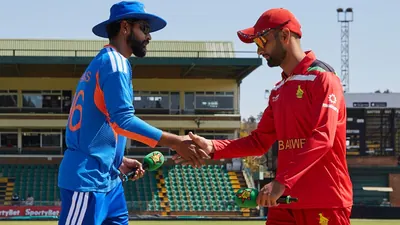
India’s emphatic victory over Zimbabwe in the opening T20I of the series was defined by two major talking points: a pitch that heavily favored fast bowlers early in the game and a stunning innings from teenage sensation Vaibhav Sooryavanshi.
While India celebrated a comfortable seven-wicket win, Zimbabwe captain Sikandar Raza left the match frustrated by what he believed was an uneven contest shaped significantly by conditions at the Harare Sports Club. According to Raza, the combination of a moisture-laden surface and losing the toss created a difficult challenge for the hosts, who struggled to build momentum with the bat before eventually posting a below-par total.
The result has once again highlighted a recurring discussion in international cricket: how much influence should pitch conditions have on the outcome of a match, and when does home advantage begin to affect competitive balance?
India Begin Zimbabwe T20I Series in Dominant Fashion
Coming into the series, India were viewed as favorites, but Zimbabwe hoped familiar home conditions could help narrow the gap between the two sides. Instead, the visitors produced a near-perfect performance.
After winning the toss, India opted to bowl first, a decision that immediately paid dividends. The pitch offered movement, seam assistance, and uneven bounce during the opening overs, making stroke-making extremely difficult for Zimbabwe’s batters.
The pressure was evident from the very first ball of the match when returning speedster Mayank Yadav struck instantly, providing India with the ideal start.
Zimbabwe never fully recovered from that early setback and managed only 125/7 in their allotted overs, a total that looked insufficient even before India’s chase began.
Why Sikandar Raza Was Unhappy With the Harare Pitch
Following the defeat, Sikandar Raza openly questioned the quality and behavior of the surface.
His primary concern was not merely that the pitch assisted bowlers, but that it remained difficult for batting significantly longer than expected. The Zimbabwe captain believed the moisture present during the morning session continued to influence play well into the innings.
According to Raza’s assessment, Zimbabwe faced challenging conditions while batting first, whereas the surface became noticeably easier once India began their chase.
This difference, he suggested, amplified the importance of the toss and reduced the margin for error for the team batting first.
How Pitch Conditions Influenced the Match
Cricket matches are often shaped by conditions, but certain surfaces can create dramatic differences between innings.
Several factors appeared to affect batting during Zimbabwe’s innings:
- Moisture beneath the surface creating seam movement.
- Extra bounce generated by the new ball.
- Difficulty timing aggressive shots.
- Limited boundary-scoring opportunities.
- Persistent lateral movement off the pitch.
As the game progressed, the surface appeared to settle, reducing assistance for bowlers and making stroke-play more predictable.
That transition played a major role in how differently the two innings unfolded.
Vaibhav Sooryavanshi Announces Himself on the International Stage
While discussion centered around the pitch, the biggest positive for India was undoubtedly the performance of Vaibhav Sooryavanshi.
The teenage batting prodigy entered the series carrying significant expectations after a remarkable rise through domestic and franchise cricket. However, his initial appearances for India had not fully reflected the talent that generated so much excitement.
Against Zimbabwe, he finally delivered the innings many had been waiting for.
His explosive 50 from just 19 deliveries transformed the chase into a one-sided contest and showcased the fearless batting style that has made him one of cricket’s most exciting young prospects.
Rather than allowing pressure to build, Sooryavanshi attacked from the outset, forcing Zimbabwe’s bowlers onto the defensive and ensuring the modest target never became challenging.
Why Sooryavanshi’s Knock Matters Beyond One Match
Every cricket generation produces a handful of players capable of capturing attention before they reach adulthood.
What separates future stars from talented youngsters is their ability to perform when opportunities arrive at the highest level.
Sooryavanshi’s innings offered several encouraging signs:
- Confidence against international bowlers.
- Ability to handle expectations.
- Positive intent under pressure.
- Excellent shot selection despite aggressive batting.
- Maturity beyond his years.
While one innings does not define a career, performances like this accelerate development and strengthen a player’s position within the national setup.
Mayank Yadav’s Return Adds New Dimension to India’s Attack
Another major storyline from the match was the return of Mayank Yadav.
Injuries had interrupted the fast bowler’s progress during a crucial stage of his career, creating uncertainty about when he would return to international cricket.
His impact was immediate.
Taking a wicket with the very first delivery of the match instantly shifted momentum toward India and reminded observers why he is regarded as one of the fastest and most exciting bowlers in the country.
Beyond the wicket itself, his pace consistently challenged Zimbabwe’s batters and helped maintain pressure throughout the innings.
Zimbabwe’s Batting Struggles Continue
For Zimbabwe, the defeat exposed ongoing concerns about batting consistency against elite opposition.
The team has shown encouraging signs in recent months, including a notable ODI series victory against Bangladesh, but adapting to changing conditions remains a challenge.
Several batters got starts without converting them into substantial contributions, preventing Zimbabwe from building partnerships capable of changing the game’s direction.
In modern T20 cricket, totals around 125 are rarely sufficient unless bowlers receive extraordinary assistance from conditions.
Once India began positively, the contest effectively slipped away from the hosts.
Comparing the Bangladesh ODI Series and India’s T20I
One of Raza’s most interesting observations involved comparisons with Zimbabwe’s recent ODI series against Bangladesh.
While both contests were played in Harare, he believed the behavior of the pitch differed significantly.
| Series | Pitch Characteristics | Impact on Batting |
|---|---|---|
| Bangladesh ODI Series | Moisture remained consistently throughout innings | Difficult conditions for both teams |
| India T20I | Moisture reduced during match progression | Easier batting conditions later in game |
This distinction is important because captains generally accept difficult conditions when both teams experience them equally. Problems arise when conditions improve dramatically between innings.
The Toss Debate Returns to International Cricket
Few topics generate more discussion in cricket than the influence of the toss.
Ideally, teams should feel capable of winning regardless of whether they bat or bowl first. However, certain pitches create advantages that can significantly alter strategy.
Raza’s comments suggest he believes the toss became disproportionately important in this match.
When conditions evolve rapidly, captains who lose the toss often feel they begin at an immediate disadvantage.
This issue has been debated across formats for decades and remains one of cricket’s most challenging balancing acts.
What Zimbabwe Must Improve Before the Second T20I
Regardless of pitch conditions, Zimbabwe will understand that improvements are necessary before the next match.
Key focus areas include:
- Stronger starts in the powerplay.
- More aggressive boundary scoring.
- Building longer batting partnerships.
- Handling high-quality pace bowling.
- Applying pressure during India’s chase.
The encouraging aspect for the hosts is that T20 cricket allows teams to recover quickly from disappointing performances.
A single strong display can completely alter the narrative of a series.
India’s Growing Depth Continues to Impress
One of the biggest reasons India remain among the strongest teams in world cricket is their remarkable depth.
Even when resting senior stars or experimenting with combinations, the team continues producing match-winners.
Young talents like Sooryavanshi, alongside emerging bowlers such as Mayank Yadav, demonstrate how effectively India’s development system continues to generate international-ready players.
This depth provides selectors with valuable flexibility ahead of major tournaments while maintaining strong performances across bilateral series.
What the Result Means for the Series
The opening match has given India an early advantage, but the series remains far from decided.
Zimbabwe will hope improved batting conditions in the second T20I create a more even contest, while India will aim to maintain momentum and continue evaluating emerging talent.
For neutral fans, the most intriguing question is whether Harare’s surface behaves differently in the next match. If batting becomes easier, it could provide a clearer picture of the gap between the two teams.
The Bigger Picture: Balancing Home Conditions and Fair Competition
Raza’s criticism also raises broader questions about pitch preparation in international cricket.
Home teams naturally prepare surfaces that suit their strengths, but governing bodies increasingly emphasize producing pitches that encourage balanced competition between bat and ball.
The best cricket surfaces create opportunities for both disciplines rather than overwhelmingly favoring one side.
As cricket continues expanding globally, maintaining that balance will remain an important objective for venues and administrators alike.
Conclusion
India’s seven-wicket victory over Zimbabwe in the first T20I was shaped by outstanding performances from Vaibhav Sooryavanshi and Mayank Yadav, but the post-match discussion centered largely on the Harare pitch. Zimbabwe captain Sikandar Raza argued that conditions and the toss significantly influenced the contest, particularly during the opening innings when moisture made batting extremely challenging.
While pitch debates are unlikely to disappear, Zimbabwe’s focus will now shift toward responding in the second T20I. India, meanwhile, will be encouraged by the emergence of another exciting young star and the successful return of one of their most promising fast bowlers.
With questions surrounding conditions, team adjustments, and the continued rise of India’s next generation, the remainder of the series promises plenty of intrigue despite the one-sided nature of the opening encounter.
For breaking news and live news updates, like us on Facebook or follow us on Twitter and Instagram. Read more on Latest Sports on thefoxdaily.com.






COMMENTS 0