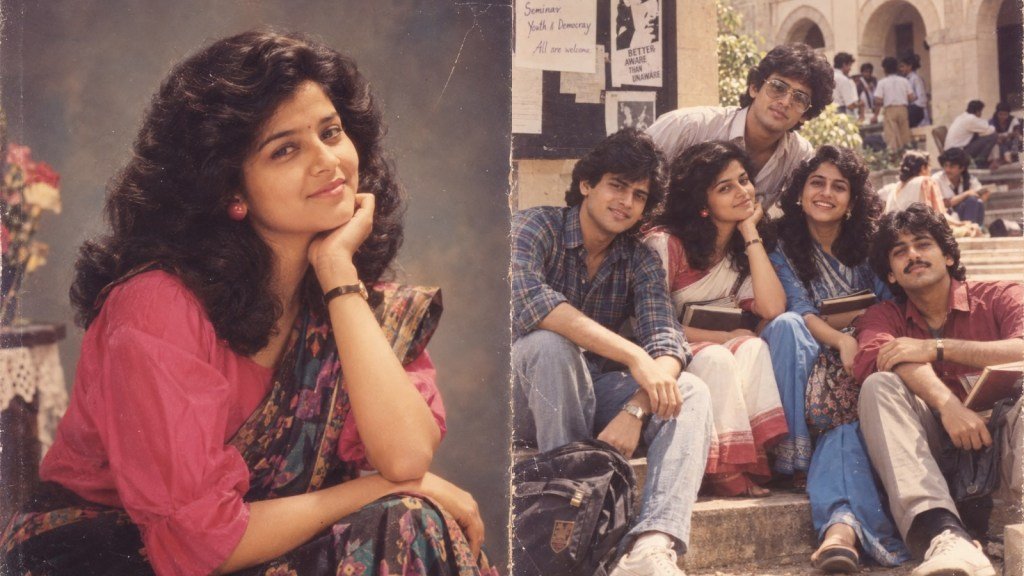
1980s AI Photo Trend: 5 ChatGPT Prompts to Turn Photos Into Authentic 80s Images
1980s AI Photo Trend: 5 ChatGPT Prompts to Turn Your Photos Into Authentic 80s Images
From family-album portraits and college snapshots to wedding photos and Bollywood posters, these ChatGPT prompts can give modern pictures an authentic 1980s-inspired look
The 1980s AI photo trend is bringing retro Photography back to social media, allowing people to transform ordinary modern pictures into images inspired by one of the most visually distinctive decades. Instead of relying on vintage filters alone, AI image tools can recreate period-specific hairstyles, clothing, backgrounds, lighting, colours and analogue photography characteristics while keeping the person recognisable.
The appeal of the trend is easy to understand. The 1980s had a visual identity that was difficult to miss: big hairstyles, colourful clothing, distinctive studio portraits, analogue film grain, slightly faded prints and photographs that often carried the imperfections of older cameras and printing processes.
With ChatGPT, users can experiment with those characteristics simply by uploading a suitable photograph and describing the period, setting and photographic style they want. A carefully written prompt can produce very different results from the same source image.
One prompt might make the picture look like an old family-album photograph, while another can turn it into a college snapshot, wedding portrait or colourful Bollywood-inspired poster. The key is to describe not only the decade but also the visual context in which the photograph should appear.
Why the 1980s AI photo trend looks different from a simple retro filter
A conventional vintage filter generally changes characteristics such as colour, contrast, brightness or grain. That can make a photograph look older, but it does not necessarily make the scene feel as though it actually belongs to the 1980s.
Generative AI can approach the transformation differently. Depending on the image model and prompt, it can modify elements such as clothing, hairstyle, accessories, Environment and lighting while attempting to preserve the subject’s identity.
That distinction is important. An authentic-looking retro image is not simply a modern photograph covered with a brown or faded overlay. The surrounding details need to support the same era.
For example, an 1980s college photograph may benefit from period-inspired clothing, campus architecture, analogue film characteristics and candid composition. A studio portrait may need a simple backdrop, controlled lighting and styling associated with the decade.
The prompts below are designed around those differences.
1. 1980s classic studio portrait
The classic studio portrait is one of the simplest ways to recreate the visual character of the decade. Studio photography gives the AI a clear framework: a controlled background, portrait lighting and clothing and hairstyle appropriate to the period.
This approach works particularly well when the original photograph has a clear view of the person’s face.
ChatGPT prompt:
“Transform my uploaded photo into a classic 1980s studio portrait. Keep my facial features, identity, and natural expression recognisable. Give me an authentic 1980s hairstyle and outfit, with a simple studio backdrop and soft portrait lighting. Make the image look like it was photographed on an analogue film Camera in the 1980s, with subtle film grain, slightly muted colours, and natural imperfections. Avoid making it look like a modern digital photograph.”
The final instruction is especially useful because modern AI-generated images can otherwise look extremely clean and digitally polished. Asking for analogue characteristics, subtle grain and natural imperfections encourages a more period-specific photographic appearance.
2. Turn your photo into a warm 1980s family album picture
Not every memorable photograph from the 1980s was a carefully posed studio portrait. Family albums were filled with everyday photographs taken at home, during celebrations or on ordinary occasions.
If you want the result to feel personal rather than professionally photographed, a family-album prompt can be more effective.
The goal here is not perfection. Slightly faded colours, natural lighting and mild grain can help recreate the feeling of a photograph that has spent decades inside a physical album.
ChatGPT prompt:
“Turn my uploaded photo into a warm 1980s family album photograph. Keep my face and identity unchanged while giving me period-appropriate clothing, hairstyle, and styling. Place me in a simple home setting with the feel of an ordinary family photograph from the decade. Use analogue film texture, slightly faded colours, natural lighting, mild grain and the imperfect quality of an old printed photograph.”
This style can be particularly effective for photographs involving parents, grandparents, siblings or family celebrations because the visual treatment is designed to resemble an everyday personal photograph rather than a commercial photoshoot.
3. Recreate an 1980s college student photograph
Another popular direction for the 1980s AI photo trend is imagining what someone might have looked like as a college student several decades ago.
This transformation gives the AI more than just a clothing instruction. It establishes a location, age-era styling and photographic mood. A campus environment, period-inspired architecture and candid framing can make the result feel more believable.
ChatGPT prompt:
“Transform my uploaded photo into an authentic 1980s college photograph. Keep my identity and facial features intact. Give me a hairstyle, outfit, and accessories inspired by college Fashion of the 1980s. Place me in a vintage college campus setting with period-appropriate architecture and details. Make the photograph feel candid and nostalgic, with analogue film grain, natural lighting and the slightly soft appearance of an old printed photograph.”
For a more convincing result, the uploaded photograph should ideally show the person’s face clearly. The AI can then focus on changing the surrounding visual language while retaining recognizable facial characteristics.
You can also adapt the setting in the prompt if you want a more specific atmosphere, such as a classroom, campus corridor, library, Sports ground or college festival.
4. Give your photo an 1980s wedding album makeover
Wedding photography offers another strong visual reference for the decade. Older wedding albums often have a distinctive combination of formal poses, traditional clothing, studio-style lighting and analogue film characteristics.
The same approach can be used to transform an existing portrait into an imagined 1980s wedding photograph.
ChatGPT prompt:
“Transform my uploaded photo into a nostalgic 1980s wedding photograph. Keep my facial features and identity recognisable. Dress me in authentic wedding clothing and styling inspired by the 1980s, with period-appropriate hair and accessories. Create a traditional wedding setting with vintage decorations and analogue photography. Make it look like a real photograph from an old family album, with natural film grain, soft lighting and slightly faded colours.”
This prompt deliberately combines several elements rather than simply asking for an “old wedding photo.” Clothing, hairstyle, decorations, lighting and film characteristics all contribute to the final effect.
For an Indian wedding-inspired version, the prompt can also be adapted to specify the desired traditional clothing, ceremony setting and decorations while retaining the broader 1980s photographic aesthetic.
5. Turn your photo into a colourful 1980s Bollywood poster
For an Indian twist on the trend, the 1980s Bollywood poster style takes the transformation beyond conventional photography.
Unlike the family-album and studio prompts, this approach is inspired by the illustrated promotional artwork associated with Indian cinema. It can produce a much more dramatic result, with saturated colours, exaggerated composition and a theatrical visual style.
ChatGPT prompt:
“Transform this photo into a colourful 1980s Bollywood film poster. Use hand-painted poster aesthetics, dramatic lighting, saturated reds, yellows, and blues, bold typography-inspired graphic elements, and an exaggerated cinematic composition. Keep the person’s identity and facial features recognisable.”
This prompt works best when the goal is a deliberately stylised result rather than a realistic photograph. The emphasis on hand-painted aesthetics and cinematic composition gives the image a distinctly different character from the analogue family-photo approach.
How to get a more convincing 1980s AI photo
The prompt matters, but the photograph you start with can also affect the result. A clear image with the subject’s face visible gives the AI more information to work with.
It is also useful to be specific about the type of photograph you want. Simply writing “make this look like the 1980s” leaves many decisions open. Adding details about the location, clothing, lighting, camera characteristics and mood gives the model a clearer visual target.
For example, instead of asking for a generic retro image, describe whether it should resemble a family snapshot, school photograph, wedding album, studio portrait or film poster.
- Specify the era: Use “1980s” and describe the visual characteristics you want rather than relying on the decade alone.
- Describe the setting: Mention a home, college campus, studio, wedding venue or cinematic poster composition.
- Include photography details: Analogue film grain, slightly faded colours, soft lighting and natural imperfections can help establish an older photographic look.
- Protect identity: Ask the AI to keep facial features and identity recognisable if preserving the person is important.
- Avoid excessive perfection: A completely sharp, polished digital appearance can undermine the retro effect.
Why analogue imperfections matter
One of the biggest differences between an old photograph and a modern smartphone image is not necessarily the subject. It is the way the image was captured and reproduced.
Analogue photography can introduce grain, softer detail, colour shifts and other imperfections. Printed photographs can also fade over time. Including these characteristics in an AI prompt can make the result feel more convincing than simply changing the colour palette.
That is why several of the prompts above specifically mention film grain, faded colours, soft lighting and the appearance of an old printed photograph.
At the same time, these effects should remain subtle. Excessive grain or heavy damage can make an image look artificially distressed rather than like a genuine photograph from the period.
AI can recreate the mood, not the actual past
There is an important distinction between recreating an era’s visual style and recreating a genuine historical photograph.
An AI-generated image can imitate characteristics associated with 1980s photography, fashion and design, but it is still a newly generated interpretation. It should not be presented as an authentic historical photograph or evidence of an event that never happened.
This becomes particularly important when AI-generated retro images are shared without context. A convincing family-album-style picture can look surprisingly authentic, especially when the image contains familiar people and realistic surroundings.
For personal experimentation and creative projects, however, the Technology offers a simple way to explore how a person, place or imagined memory might have looked decades ago.
Which 1980s prompt should you try first?
The best prompt depends on the kind of result you want. The classic studio portrait is the safest starting point if you want a clean vintage photograph. The family-album prompt is better for a casual and nostalgic appearance, while the college prompt adds a stronger sense of place and period styling.
The wedding prompt works well for formal photographs, particularly when traditional clothing and decorations are part of the desired look. If you want something much more dramatic and distinctly Indian, the 1980s Bollywood poster prompt offers the most stylised result.
The bigger appeal of the trend is that there is no single definition of an “1980s photo.” The decade can be recreated through fashion, analogue photography, family memories, college Culture, weddings or cinema. By changing the setting and visual instructions, the same photograph can become several completely different retro images.
As AI image generation becomes more capable, these decade-based transformations are likely to remain popular because they combine nostalgia with personal creativity. Instead of simply applying a filter, users can now experiment with an entire visual era and the right prompt can make the difference between a generic vintage effect and an image that genuinely feels inspired by the 1980s.
For breaking news and live news updates, like us on Facebook or follow us on Twitter and Instagram. Read more on Latest Technology on thefoxdaily.com.






COMMENTS 0