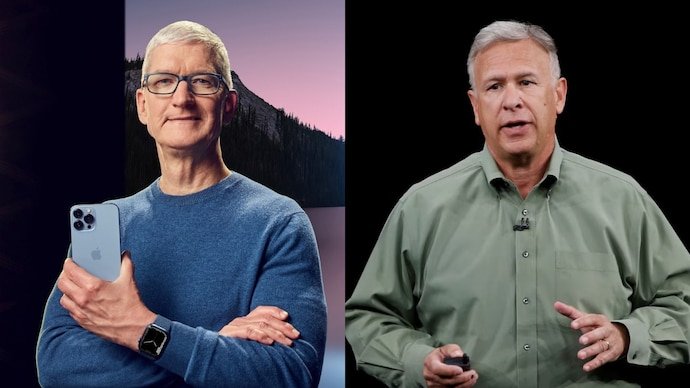
Apple is entering a new leadership era on September 1, with John Ternus taking over as chief executive from Tim Cook. But the change at the top is not the only significant transition underway inside the company.
Phil Schiller, one of Apple’s most recognizable longtime executives, is also stepping back from two of his remaining operational responsibilities: overseeing the App Store and Apple’s product events. Schiller is expected to remain at Apple as an Apple Fellow and work on initiatives that have not been publicly specified.
The move is significant because Schiller has spent decades at the centre of Apple’s product launches, marketing strategy and developer Relationships. He has also remained closely involved with the App Store during a period of intense legal and regulatory scrutiny.
Apple’s decision to redistribute those responsibilities means two highly visible parts of the company will now move to different leadership teams. The App Store is shifting back toward the Services organization led by Eddy Cue, while Apple’s events operation is being handed to Nola Weinstein, who has worked as Schiller’s deputy.
Phil Schiller’s Apple career spans nearly four decades
Schiller’s connection with Apple goes back much further than the current leadership transition. He first joined the company in 1987, left several years later and returned in 1997, around the time Steve Jobs returned to Apple.
Over the following decades, Schiller became one of the company’s most recognizable public-facing executives. He frequently appeared at Apple’s major product launches and was closely associated with the company’s marketing of products ranging from the iPod and iPhone to the iPad and Mac.
His role was not limited to presentations on a stage. Schiller became part of the senior leadership group that helped shape how Apple positioned its products and communicated with customers, developers and the wider Technology industry.
That history makes his latest change different from a routine executive reassignment. Schiller is not leaving Apple, but he is giving up the two major operating responsibilities that remained with him after his previous transition.
Why Phil Schiller is stepping back now
Schiller became an Apple Fellow in 2020 after stepping down as Apple’s senior vice president of Worldwide Marketing. The move reduced his formal management responsibilities while allowing him to remain involved with important parts of the company.
Even after becoming an Apple Fellow, however, Schiller continued overseeing the App Store and Apple’s product events. Those responsibilities kept him connected to some of Apple’s most sensitive and visible activities.
The latest change effectively removes those day-to-day leadership duties while allowing Schiller to remain within the company.
Reports about the move suggest that some Apple employees view it as another step toward Schiller’s eventual retirement. That interpretation remains an assessment rather than a formal announcement from Apple. The company continues to list Schiller as an Apple Fellow, and there has been no indication that he is leaving immediately.
The distinction matters. Schiller’s latest move should be understood as a reduction in operational responsibility rather than a confirmed retirement.
App Store leadership is moving back to Eddy Cue’s Services division
One of the most important changes involves the App Store.
The store has become a strategically important part of Apple’s broader services Business, while also becoming one of the company’s biggest regulatory challenges. Questions over App Store rules, commissions, app distribution and developer access have generated legal disputes and regulatory pressure in multiple markets.
Schiller became a central figure in those issues after taking responsibility for the App Store. His job included dealing with developers and helping oversee changes to App Store policies as Apple confronted lawsuits and regulatory requirements.
Under the new arrangement, responsibility for the App Store is moving to the Services organization led by Eddy Cue.
The change also represents something of a return to an earlier structure. Cue had overseen the App Store before responsibility moved to Schiller and the marketing organization.
Carson Oliver, a veteran of Apple’s App Store organization, is expected to handle the store’s day-to-day operations while reporting through Cue’s organization. The redistribution gives Apple’s Services leadership greater direct involvement in a platform that affects both Apple’s ecosystem and its relationship with developers.
Why the App Store transition matters
The App Store is not simply a software storefront. It is a central gatekeeper for Apple’s mobile ecosystem.
Apple determines the rules under which developers distribute applications, while developers depend on the platform to reach iPhone and iPad users. That makes decisions involving app approvals, payments, commissions and distribution particularly consequential.
Schiller’s tenure overseeing the store coincided with some of the most difficult battles Apple has faced over those rules, including its long-running legal dispute with Epic Games and regulatory changes affecting the App Store in different jurisdictions.
Moving the responsibility into the Services organization could therefore give Eddy Cue and his team a more direct role in one of Apple’s most commercially and legally sensitive businesses.
Apple events are getting a new leader too
Schiller’s second major responsibility, Apple’s product events, is also changing hands.
Apple’s events operation is responsible for the highly controlled launches through which the company introduces major products and software. For years, Schiller was one of the executives most closely associated with Apple’s presentation style and product announcements.
Nola Weinstein is taking over the events function. She has served as Schiller’s deputy in the area since 2023, meaning the transition is not a complete break with the existing team.
Weinstein will report to Kristin Huguet Quayle, Apple’s vice president of communications and public relations.
The timing is notable because Apple’s next major product event is scheduled for September 9, only days after the leadership transition. It will provide an early test of how the events organization operates without Schiller at the helm.
Tim Cook’s departure makes the timing even more significant
Schiller’s move comes on the same day that Tim Cook’s tenure as Apple’s CEO ends.
Apple announced in April that Cook would become executive chairman and that John Ternus would succeed him as CEO on September 1, 2026. The company said the transition was the result of long-term succession planning.
Cook is not leaving Apple. As executive chairman, he will continue supporting certain areas of the company, including engagement with policymakers.
Ternus, meanwhile, moves into the CEO role after leading Apple’s Hardware Engineering organization. Apple has described him as a leader with extensive experience across the company’s major hardware categories.
The simultaneous changes involving Cook and Schiller underline the scale of the generational transition taking place at Apple.
John Ternus inherits an Apple leadership team in transition
The arrival of Ternus does not represent an isolated change at the top. Apple has been reshaping its senior leadership structure through a series of departures, retirements and changes in responsibilities.
Several longtime executives have already left major roles or moved into less operational positions. That broader turnover means Ternus is taking charge while a number of responsibilities are being redistributed across the organization.
For Apple, the challenge is not simply replacing individual executives. It is maintaining continuity while giving a new generation of leaders more direct control over major businesses.
The transition involving Schiller illustrates that approach particularly well. His institutional knowledge remains inside Apple, but operational control is moving to executives who will have direct responsibility for the next phase of the company.
Schiller’s legacy extends beyond product launches
It would be easy to associate Schiller primarily with Apple’s famous product presentations. His influence, however, has been much broader.
He helped shape the marketing and positioning of major Apple products during periods when the company transformed entire consumer technology categories. His work also connected Apple’s product strategy with its relationships with developers and customers.
The App Store became particularly important because it sits at the intersection of Apple’s hardware, software and services businesses. Managing it required balancing Apple’s platform policies with the demands of developers and increasingly aggressive scrutiny from regulators and courts.
That makes Schiller’s departure from the role more consequential than simply changing the person responsible for a product launch calendar.
What changes for Apple under the new structure?
The immediate operational impact is relatively clear. Schiller will no longer lead the App Store or Apple’s product events, while remaining an Apple Fellow.
The App Store moves under Eddy Cue’s Services organization, with Carson Oliver handling day-to-day operations. Apple’s events function moves to Weinstein.
The broader implications are less certain.
One possible effect is greater integration between the App Store and Apple’s wider Services business. Cue’s organization already oversees major services operations, so bringing the store more directly into that structure could make decision-making more centralized.
Another is continuity. Because Oliver and Weinstein are already familiar with their respective operations, Apple is not handing these functions to outsiders unfamiliar with the company’s internal systems.
At the same time, Schiller’s departure from operational leadership removes another veteran who had deep institutional knowledge of Apple’s history and Culture.
What this means for Apple’s next chapter
The most important point is that Schiller is not being replaced by a single new executive who simply inherits his entire portfolio. Apple is splitting his responsibilities between different parts of the organization.
That structure reflects how different those responsibilities have become.
The App Store is increasingly tied to services, developer policy, payments and regulation. Product events, meanwhile, are closely connected to communications, public relations and global launches.
Separating those functions may allow each team to focus more narrowly on its priorities as Apple enters the Ternus era.
For Schiller, the change marks another stage in a long transition away from day-to-day executive management. He remains an Apple Fellow, but the responsibilities that kept him at the centre of two of Apple’s most visible operations are now moving to other leaders.
For Apple, the timing is unmistakable. As Tim Cook moves into the executive chairman role and John Ternus becomes CEO, another veteran of the Steve Jobs and Cook eras is stepping away from the operational spotlight.
The next few months will show whether these leadership changes are primarily about orderly succession or the beginning of a much broader transformation in how Apple is managed. For now, the company appears to be preserving continuity while gradually transferring responsibility to a new generation of leaders.
For breaking news and live news updates, like us on Facebook or follow us on Twitter and Instagram. Read more on Latest Technology on thefoxdaily.com.






COMMENTS 0