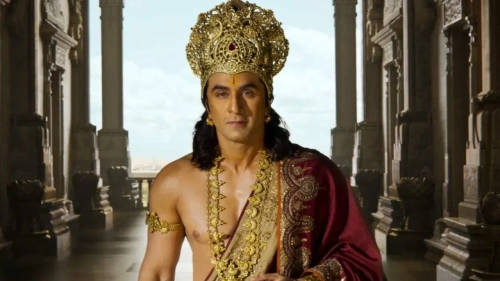
The upcoming magnum opus Ramayana, starring Ranbir Kapoor and Yash, is already making headlines even before its release—and this time, it’s not about casting or production scale. The buzz around the Ramayana music rights deal has intensified, with producer Namit Malhotra reportedly targeting a historic ₹100 crore agreement, potentially making it the biggest music acquisition deal in Indian cinema history.
According to industry developments, multiple top music labels are competing for the rights, with Sony Music currently leading the race with an offer of approximately ₹70 crore. The aggressive bidding signals not just confidence in the film, but also a major shift in how music rights are valued in the modern Entertainment ecosystem.
This article explores the scale, strategy, and implications of this deal—why it matters, what’s driving the valuation, and how it could reshape the Business of film music in India.
The Big Picture: Why the Ramayana Music Rights Deal Matters
Music has always been a critical revenue stream in Indian cinema, but rarely has it reached the scale being discussed for Ramayana. Traditionally, music rights were seen as supplementary income. Today, they are becoming a core financial pillar—especially for large-scale productions.
The ₹100 crore target reflects:
- The film’s massive production scale and pan-India appeal
- Global interest in Indian mythological storytelling
- The growing value of digital streaming platforms
- The long-term monetisation potential of soundtracks
In short, this is not just a music deal—it’s a strategic business move designed to maximise pre-release revenue and reduce financial risk.
What Makes Ramayana a High-Value Music Asset?
1. Mythological Appeal with Emotional Depth
Unlike typical commercial films, Ramayana carries deep cultural and emotional resonance. Its storytelling naturally lends itself to powerful music—devotional tracks, orchestral scores, and emotionally driven compositions.
This increases the potential for:
- Long-term streaming revenue
- Religious and festive usage
- Cross-generational appeal
2. Pan-India and Global Reach
With a cast that appeals to both North and South Indian audiences, the film is positioned as a true pan-India project. Add to that the global diaspora audience, and the music’s reach expands significantly.
3. Multi-Language Releases
Music from the film is expected to be released in multiple languages, multiplying its revenue potential across regions.
4. High Production Value in Music Composition
Big-budget films today invest heavily in background scores and original soundtracks. If executed well, these elements can become standalone hits, driving streaming numbers and brand collaborations.
Current Bidding War: Where Things Stand
The competition for the Ramayana music rights deal is intense, with major labels evaluating both short-term and long-term returns.
| Music Label | Estimated Offer | Status |
|---|---|---|
| Sony Music | ₹70 crore | Leading bidder |
| Other major labels | Undisclosed | In negotiations |
| Target by makers | ₹100 crore | Under discussion |
While ₹70 crore is already a significant number, the producers are reportedly holding out for a higher valuation, banking on the film’s scale and long-term revenue potential.
Breaking Down the Economics of Music Rights Today
To understand why such high numbers are being discussed, it’s important to look at how music monetisation has evolved.
Earlier Model
- Revenue mainly from physical sales (cassettes, CDs)
- Limited lifespan of earnings
Current Model
- Streaming platforms generate continuous revenue
- YouTube views and ad monetisation
- Licensing for reels, ads, and background usage
- Global distribution opportunities
This shift means that a successful album can generate revenue for years, justifying higher upfront investments by music labels.
Comparison: How Ramayana Stacks Up Against Recent Big Deals
| Film | Music Rights Value | Scale |
|---|---|---|
| Big-budget Film A | ₹20–30 crore | Pan-India |
| Blockbuster Film B | ₹40–50 crore | High commercial appeal |
| Ramayana (Target) | Up to ₹100 crore | Mythological epic |
If achieved, the Ramayana music rights deal would redefine industry benchmarks and set a new ceiling for future projects.
The Strategy Behind the ₹100 Crore Target
Namit Malhotra’s approach appears to be rooted in long-term value creation rather than quick monetisation.
Key strategic elements include:
- Staggered revenue streams: Music earnings spread over years
- Brand positioning: Establishing Ramayana as a premium global franchise
- Negotiation leverage: Strong pre-release buzz increases bargaining power
- Risk distribution: Recovering a significant portion of the budget before release
This reflects a broader trend where producers are increasingly treating films as multi-vertical business ventures rather than standalone products.
Why Music Labels Are Willing to Pay Big
From the perspective of music companies, the investment is not without logic.
1. Evergreen Content Potential
Unlike typical film songs that fade quickly, mythological music has a longer shelf life.
2. Streaming Dominance
Platforms like Spotify, YouTube, and regional apps ensure consistent revenue flow.
3. Cultural Relevance
Content tied to mythology often sees spikes during festivals and religious events.
4. Digital Virality
Short-form video platforms amplify reach, turning songs into viral trends.
A Unique Insight: The Rise of “Pre-Release Monetisation”
One of the most important trends highlighted by this deal is the increasing importance of pre-release monetisation.
Producers today are recovering large portions of their budgets through:
- Digital streaming rights
- Satellite rights
- Music rights
- Brand partnerships
In some cases, films enter theatres already profitable or close to breaking even.
This reduces dependency on box office performance alone, making big-budget filmmaking more sustainable.
Potential Risks and Challenges
While the deal looks promising, it is not without risks:
- High expectations: The music must deliver exceptional quality
- Market unpredictability: Audience tastes can shift quickly
- Competition: Other big releases could divide attention
If the soundtrack fails to resonate, it could impact the perceived value of such high deals in the future.
Future Outlook: Will ₹100 Crore Become the New Normal?
The outcome of the Ramayana music rights deal could influence the industry in several ways:
- Set new pricing benchmarks for big films
- Encourage more investment in music production quality
- Increase competition among music labels
- Strengthen the role of music in film marketing
However, such valuations will likely remain limited to:
- Franchise films
- Mythological or historical epics
- Projects with pan-India or global appeal
Conclusion: A Defining Moment for Film Music Economics
The Ramayana music rights deal is shaping up to be a landmark moment in Indian cinema. With a target of ₹100 crore and strong interest from top players like Sony Music, the deal reflects the growing importance of music as a major revenue driver.
More importantly, it signals a shift in how films are financed, marketed, and monetised. No longer just an artistic component, music is now a strategic asset with long-term financial impact.
If the deal reaches its projected value, it won’t just be a win for the makers—it will redefine industry standards and open new possibilities for future cinematic ventures.
As the negotiations unfold, one thing is clear: Ramayana is not just aiming to be a cinematic spectacle—it is positioning itself as a business blueprint for the future of Indian entertainment.
For breaking news and live news updates, like us on Facebook or follow us on Twitter and Instagram. Read more on Latest Entertainment on thefoxdaily.com.






COMMENTS 0