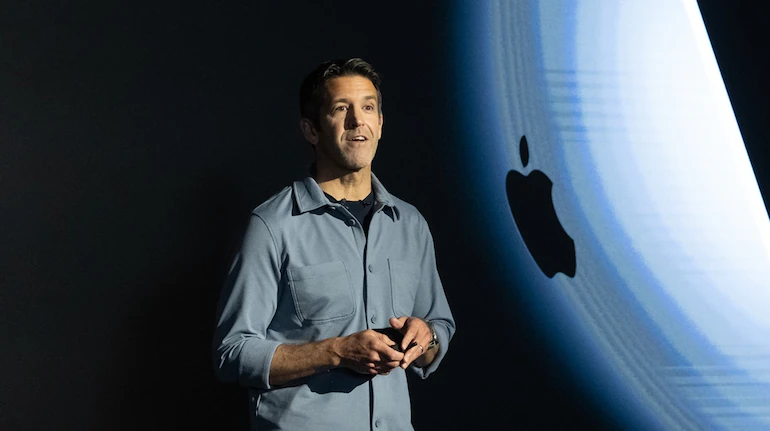
Apple CEO John Ternus has defended the company’s approach to Artificial Intelligence, saying it wants AI to make its products more useful without turning the technology itself into the main attraction. Despite criticism over delays to the promised Siri upgrade, Ternus said he was satisfied with Apple’s progress and did not believe the company needed to introduce features simply to match its competitors.
In an interview with Wired’s Steven Levy, Ternus discussed Apple’s position in the rapidly evolving AI market, the company’s plans for Siri and whether AI assistants could eventually replace traditional applications. His comments offer insight into how Apple intends to integrate AI into its products while maintaining its emphasis on user experience, privacy and product design.
“Everyone has an opinion I really like where we’re at,” Ternus said, responding to questions about Apple’s progress in artificial intelligence.
His remarks come as Apple faces growing pressure to demonstrate that it can compete with companies investing heavily in generative AI and AI-powered assistants. While rivals have introduced increasingly advanced AI features, Apple has continued to emphasise the practical role the technology should play in everyday products.
Apple Wants AI to Improve Products, Not Become the Main Attraction
Ternus indicated that Apple’s AI strategy is centred on making existing products and services more capable rather than introducing artificial intelligence features merely to generate attention. The company wants AI to operate in the background, helping users complete tasks and improving the overall experience without forcing them to think about the technology behind it.
This approach reflects Apple’s broader product philosophy, which places emphasis on how technology works for customers rather than the technical features themselves. From smartphones and computers to software and connected services, the company has traditionally focused on integrating new capabilities into familiar experiences.
For Apple, artificial intelligence is expected to become another part of that process. Rather than presenting AI as a separate destination, the company wants to incorporate it into products in ways that feel natural and useful.
The strategy also suggests that Apple does not intend to compete solely on the number of AI features it can announce. Ternus’s comments indicate that the company would rather prioritise reliability, practical applications and the quality of the user experience.
However, this measured approach has also attracted criticism. As competitors continue to expand their AI offerings, Apple must show that its technology can deliver meaningful improvements rather than simply promising future capabilities.
Why Apple’s Siri Upgrade Has Faced Delays
One of the biggest challenges facing Apple’s AI strategy has been the delayed rollout of its upgraded Siri assistant. The company previously announced a more capable version of Siri, promising features that would allow the assistant to understand personal context, recognise information displayed on a user’s screen and carry out more complicated tasks.
The updated assistant is intended to move beyond conventional voice commands. Instead of responding only to straightforward questions, Siri is being developed to understand what users are doing and provide assistance based on information available across their devices and applications.
These capabilities could allow users to ask questions about information on their screens, retrieve relevant personal details and perform actions across different applications through natural-language instructions.
Apple’s announcements created expectations that Siri would become a more advanced personal assistant. However, delays to the promised improvements raised questions about the company’s ability to deliver its AI ambitions on schedule.
The issue is particularly important because Siri is one of Apple’s most recognisable software products. A more capable assistant could become a central part of the experience across iPhones, iPads and Macs, potentially changing how customers interact with their devices.
Ternus’s comments suggest that Apple remains comfortable with its direction despite the criticism. Nevertheless, the company will ultimately be judged on whether the upgraded assistant can perform the tasks it has promised and provide a noticeably better experience.
How the Updated Siri Is Designed to Work
Apple’s planned Siri improvements focus on making the assistant more aware of personal context and capable of understanding requests that involve multiple steps or applications.
One of the central features is personal context awareness. This is intended to help Siri understand relevant information from a user’s device, making it easier to locate details or respond to requests that depend on personal information.
Another major capability is on-screen awareness. Instead of requiring users to explain everything they are looking at, Siri is designed to recognise information displayed on the screen and use that context to respond to instructions.
The assistant is also expected to perform more actions within and across applications. For example, users could give Siri instructions that involve information from one app and require an action in another, reducing the need to navigate manually between different services.
These improvements are intended to make Siri more useful in everyday situations, particularly when users want to complete tasks without repeatedly opening applications or entering information themselves.
Apple Emphasises Privacy in Its AI Strategy
Privacy remains an important part of Apple’s approach to artificial intelligence. The company says its AI systems use a combination of on-device processing and Private Cloud Compute to handle requests while protecting users’ personal information.
On-device processing allows supported AI tasks to be handled directly on a user’s Apple device. This can reduce the need to send certain personal information to external servers, depending on the feature and request.
For more demanding tasks, Apple’s Private Cloud Compute technology is designed to process information through its cloud infrastructure while maintaining privacy protections. The company has presented the system as a way to provide more advanced AI capabilities without abandoning its established focus on data security.
Apple’s latest foundation models have also been developed through collaboration with Google and use Gemini technology. The partnership highlights how Apple is combining its own software and hardware ecosystem with external AI capabilities as it works to expand its services.
The challenge will be to ensure that these technologies work consistently across different devices and tasks while maintaining the privacy standards Apple has made central to its brand identity.
John Ternus Does Not Believe AI Will Replace Traditional Apps
Another important subject in the interview was whether AI assistants could eventually make traditional applications less relevant. The idea has gained attention as technology companies develop AI agents capable of carrying out tasks that previously required users to open separate apps.
In a future built around AI agents, someone might ask an assistant to book a cab, order food or edit a photograph without manually navigating through the applications associated with those services.
Such a model could change how people interact with smartphones and computers. Instead of selecting an app for every task, users might increasingly rely on conversational instructions to access services and complete activities.
However, Ternus does not believe this shift will eliminate the importance of traditional applications and products. He argued that creating products remains a human activity that people enjoy.
His position suggests that Apple sees AI as a way to improve the tools people already use rather than replace the entire application ecosystem. Dedicated applications may continue to offer experiences, controls and creative possibilities that cannot be fully replicated through a conversational assistant.
For example, an AI assistant might help someone edit a photograph, but users may still want to open a dedicated editing application to make detailed adjustments. Similarly, an assistant could help arrange a food order, while the restaurant or delivery application continues to provide menus, payment options and order tracking.
AI agents could therefore change how users access applications without necessarily making those applications obsolete.
Why Apple’s Approach Matters in the AI Race
Apple’s position is significant because the company controls a large ecosystem of devices, operating systems and services. Its AI strategy is not limited to building a standalone chatbot. Instead, it involves integrating intelligence into the software and hardware that customers already use.
This gives Apple an opportunity to make AI useful across multiple parts of its ecosystem. A more capable Siri could help users interact with applications, retrieve information and complete tasks through a consistent interface.
At the same time, the company faces competition from technology firms that have moved quickly to introduce generative AI tools, advanced chatbots and autonomous agents. These developments have increased expectations about what digital assistants should be able to do.
Apple’s decision to focus on practical integration rather than feature announcements could help differentiate its products if the technology works reliably. However, a cautious strategy also carries risks if customers begin to see the company’s AI capabilities as falling behind those of its competitors.
Apple Now Needs to Deliver on Its AI Promises
Ternus’s confidence indicates that Apple does not intend to abandon its measured approach to artificial intelligence. The company wants AI to become an effective part of its products without requiring customers to change how they use technology entirely.
However, the delayed Siri improvements remain an important test of that strategy. Apple’s promises about personal context, on-screen awareness and actions across applications have raised expectations, and customers will want to see those capabilities working in real-world situations.
The company’s emphasis on privacy and product experience could become an advantage if it delivers AI features that are useful, dependable and easy to understand. Its partnership with Google also provides access to additional AI technology as Apple develops its own ecosystem.
Ultimately, the success of Apple’s strategy will depend less on how frequently it talks about artificial intelligence and more on what customers can actually do with it. Ternus may be comfortable with where the company stands, but the next phase of Siri’s development will be crucial in showing whether Apple’s approach can translate into a meaningful advantage for users.
For breaking news and live news updates, like us on Facebook or follow us on Twitter and Instagram. Read more on Latest Technology on thefoxdaily.com.






COMMENTS 0