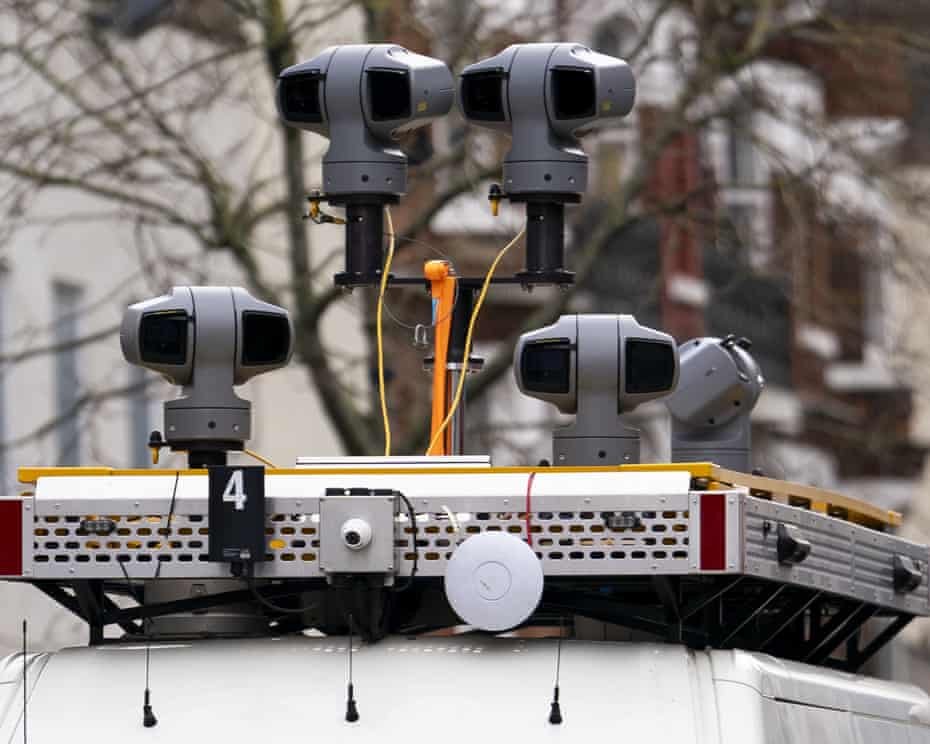
The UK government is preparing to introduce live Facial Recognition (LFR) technology at transport hubs and public events as part of what is being described as the biggest immigration enforcement crackdown in British history. Newly published policy documents reveal plans to use the technology for general immigration enforcement, including cases involving non-criminal immigration offences.
The proposed programme would allow immigration enforcement officers to use facial recognition cameras to identify people suspected of being in the UK unlawfully, locate individuals subject to removal action and investigate broader immigration-related criminality.
The expansion marks a shift from limited trials focused on specific immigration cases towards a wider surveillance programme. It has also raised concerns among Civil Liberties organisations about the potential monitoring of people in public spaces, the accuracy of facial recognition systems and the extent of independent oversight.
How Will Facial Recognition Be Used for Immigration Enforcement?
According to the Home Office policy documents, live facial recognition cameras could be deployed to identify individuals whose faces match photographs held on immigration enforcement watchlists.
The technology is intended to help officials locate people who may be subject to immigration action, including those seeking to re-enter the UK unlawfully. Authorities also plan to use it to identify individuals wanted in connection with immigration-related criminal offences.
However, the proposed scope goes beyond cases involving criminal activity. The documents suggest that people who have overstayed their visas or entered the country without permission could also be included on facial recognition watchlists.
These immigration breaches are generally treated as civil matters rather than criminal offences. Their possible inclusion therefore raises questions about how facial recognition surveillance could be used against people who have not been accused of a criminal offence.
The Home Office argues that the technology could help officials locate undocumented individuals and resolve their immigration cases more efficiently. It also says targeted identification could reduce disruption to the wider public compared with repeated enforcement visits to residential properties or workplaces.
New Policy Documents Reveal Wider Surveillance Plans
The proposed expansion is detailed in two documents: new guidance for immigration enforcement officials published on October 8 and a data protection impact assessment made public later in the month.
The documents outline how facial recognition could become part of routine immigration enforcement operations. They also indicate that the programme has progressed beyond its initial testing stage.
According to the guidance, the project has entered its formal delivery phase. This means the Home Office is moving towards developing the operational arrangements required for wider use, although the department has not confirmed a full national deployment schedule.
The documents also suggest that individuals considered liable to detention under immigration legislation could be placed on watchlists if they have failed to comply with conditions attached to their entry or stay in the UK.
This could significantly broaden the categories of people whose images are used for facial recognition checks. The plans therefore raise questions about how individuals will be selected for watchlists and what safeguards will apply when their faces are scanned in public places.
Transport Hubs and Public Events Could Become Deployment Locations
One of the most significant elements of the proposed programme is the expansion of locations where immigration enforcement officers could operate facial recognition cameras.
Earlier trials focused on a specific transport route involving people travelling from Ireland to the UK. The new guidance, however, indicates that officers could conduct proactive deployments at transport hubs and selected public events.
The documents refer to events expected to increase footfall at a particular location. This could allow enforcement teams to deploy cameras in places where large numbers of people gather, although the Home Office has not identified specific venues or geographical areas.
The potential deployment criteria also include locations described as having heightened community sensitivity. The department declined to clarify what it means by sensitive locations or which types of events could be targeted.
The lack of specific information has added to concerns about how widely the technology could be used and whether members of the public would know when facial recognition surveillance was operating nearby.
Holyhead Port Trials Tested the Technology
The Home Office has already conducted limited trials of live facial recognition for immigration enforcement. Between November last year and February, officials carried out three trials at Holyhead port in north Wales.
These trials had a narrower purpose than the programme now being considered. They focused on identifying people travelling to the UK from Ireland through the Common Travel Area who were subject to deportation orders or had an outstanding warrant relating to an immigration-related criminal offence.
The trials provided an opportunity to test the technology in a specific transport environment. The proposed expansion would potentially move facial recognition into a wider range of public settings and cover additional immigration-related circumstances.
A Home Office spokesperson confirmed that the department was considering further trials by immigration enforcement officers.
The department said it was “actively exploring the potential benefits, implications, and future use of the technology”.
The statement indicates that the government is still assessing how the system could be used, even as the policy documents describe the project as having entered its formal delivery phase.
Immigration Enforcement Budget and Workforce Expansion
The facial recognition plans come as Home Secretary Shabana Mahmood moves to increase the resources available to immigration enforcement.
Mahmood has decided to double the department’s immigration enforcement budget and expand its workforce by 60%. The government intends to use the additional resources to carry out tens of thousands more raids, arrests and deportations.
The investment is part of a broader effort to increase the scale of immigration enforcement operations. Facial recognition could provide officers with another method of identifying and locating individuals targeted for immigration action.
However, the combination of a larger enforcement workforce, increased operational funding and expanded surveillance technology has prompted concerns about the overall scale of the government’s approach.
Under-18s Will Not Be Included on Facial Recognition Watchlists
The new policy document states that people under the age of 18 will not be placed on immigration enforcement facial recognition watchlists.
The restriction comes amid earlier controversy over the Home Office’s use of artificial intelligence to estimate the ages of migrants. Earlier this year, it emerged that the department had continued using an AI-powered facial age estimation tool despite knowing that it had incorrectly identified migrant children as adults.
The earlier controversy has intensified scrutiny of the accuracy and reliability of facial analysis technologies used in immigration decisions.
Although the new guidance excludes under-18s from watchlists, concerns remain about the possibility of identification errors involving adults and the consequences for individuals incorrectly flagged by the system.
Campaigners Warn of Mass Surveillance and Racial Bias
Civil liberties and migrant rights organisations have criticised the proposed expansion, warning that facial recognition could increase surveillance of migrant communities and expose people to identification errors.
Campaigners have described the plans as a major expansion of public surveillance without sufficient transparency or public consultation. They have also highlighted concerns about documented biases in facial recognition systems, particularly the risk of misidentifying people of colour in certain settings.
Griff Ferris, spokesperson for the Joint Council for the Welfare of Immigrants, criticised the proposal and said immigration enforcement already used tactics that harmed migrant communities.
“Immigration enforcement already employ tactics that persecute and terrorise migrant communities, and giving it more power to use a racist mass surveillance tool in public places is frightening,” Ferris said.
His criticism reflects concerns that facial recognition could extend immigration checks beyond traditional enforcement settings and into everyday public spaces where people may have little control over being scanned.
Open Rights Group Questions Lack of Transparency
Sarah Lasoye of the Open Rights Group also raised concerns about the way the Home Office is developing the programme.
She argued that immigration enforcement officials appeared to be expanding the use of controversial facial recognition technology without adequate public scrutiny, transparency or consent.
“Immigration enforcement and police forces are exploiting an absence of national legislation regulating uses of AI technologies, including facial recognition, in the public sector,” Lasoye said.
The criticism centres on the regulatory framework governing the use of artificial intelligence by public authorities. Campaigners argue that clear national rules are necessary to define when facial recognition can be used, how watchlists are created and what protections individuals have against mistakes or misuse.
The proposed use of the technology for civil immigration matters has made these questions particularly significant because the system could potentially affect people who have not committed criminal offences.
Questions Over Independent Oversight and Accountability
The Home Office documents state that the use of live facial recognition by immigration enforcement is subject to external oversight, including scrutiny by the Biometrics and Surveillance Camera Commissioner and the Information Commissioner’s Office.
However, questions have emerged over the extent of that oversight. William Webster, the Biometrics and Surveillance Camera Commissioner, told Liberty Investigates, which first uncovered the policy documents, that he had not been consulted on the policy.
Webster also clarified that the use of live facial recognition for immigration purposes falls outside his remit.
His comments raise questions about which independent bodies are responsible for examining the proposed programme and whether existing regulatory arrangements are sufficient to oversee its expansion.
“The proliferation of LFR into different service contexts does raise important questions about the scope of existing regulatory oversight,” Webster said.
He expressed hope that these issues would be addressed through the forthcoming legislative framework for facial recognition.
What the Facial Recognition Expansion Could Mean for People in the UK
If the proposed programme moves ahead, facial recognition could become a more visible part of immigration enforcement in public spaces across the UK. Transport hubs and selected events could become locations where officers use cameras to identify people whose faces match entries on enforcement watchlists.
The programme could change how immigration authorities locate individuals who have overstayed visas, entered without permission or failed to comply with immigration conditions. The Home Office believes the approach could make enforcement more efficient and reduce the need for repeated visits to homes and workplaces.
At the same time, the plans raise unresolved questions about privacy, data protection, accuracy, discrimination and accountability. The inclusion of people linked to civil immigration breaches also broadens the debate beyond the use of facial recognition in conventional criminal investigations.
The Home Office has confirmed that it is considering further trials and exploring the technology’s potential benefits and implications. However, the department has not provided details of specific deployment locations or clarified what it considers sensitive public events and areas.
The future use of facial recognition for immigration enforcement will therefore depend not only on operational decisions but also on how the government addresses concerns about public surveillance and regulatory oversight.
For breaking news and live news updates, like us on Facebook or follow us on Twitter and Instagram. Read more on Latest Technology on thefoxdaily.com.





COMMENTS 0