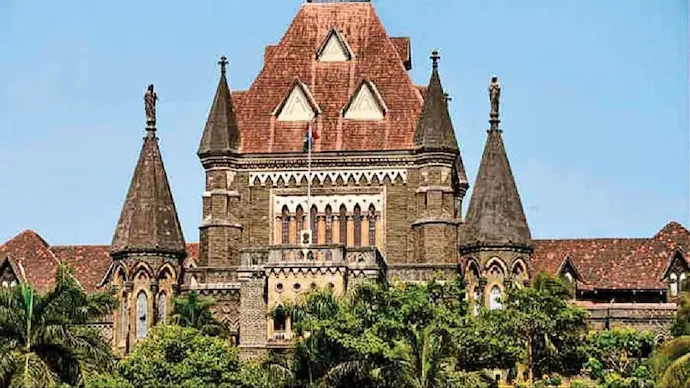
The Bombay High Court has asked the Congress, the All India Trade Union Congress (AITUC) and the People’s Union for Civil Liberties (PUCL) to establish their credentials before it considers their petitions challenging the Maharashtra Special Public Security Act. The court has made clear that it will not hear arguments on the substance of the constitutional challenge until the organisations provide the required documents.
A bench comprising Chief Justice MC Tripathi and Justice Advait Sethna directed the petitioners to submit their registration certificates, details of their current office-bearers, organisational constitutions and resolutions authorising the filing of the petitions by October 22.
The direction followed objections from the Maharashtra government, which questioned whether the organisations had demonstrated that the legislation caused them a specific grievance or legal injury. The state has argued that the petitioners must establish their legal standing before the court can proceed to examine the validity of the Act.
Emphasising the requirement, the bench said: “We want to see the credentials of the petitioners before proceeding to hear the matter on merits. Please furnish all these details and let us be very clear in absence of such details, we will not proceed further.”
The order places a procedural question at the centre of the dispute: before examining whether the Maharashtra Special Public Security Act violates constitutional protections, the court wants to determine whether the organisations challenging it have established the necessary credentials and authority to bring their cases.
Why the court wants the petitioners to establish their credentials
The documents sought by the High Court are intended to establish the formal identity and organisational status of the petitioners, including who currently represents them and whether their authorised bodies approved the legal challenges.
Registration certificates can help establish an organisation’s formal status, while details of office-bearers identify the people responsible for its affairs. Constitutions set out an organisation’s governing structure, and resolutions authorising litigation can demonstrate that the decision to challenge the law was taken through its prescribed procedures.
The Maharashtra government has relied on the question of legal standing to oppose the petitions. Its position is that a constitutional challenge should be based on an identifiable grievance or legal injury rather than a general objection to the legislation.
The state has argued that the court should not entertain a challenge brought merely out of curiosity or as an academic exercise. The petitioners, meanwhile, are seeking judicial scrutiny of a law they contend gives the executive excessive powers over organisations and their property.
The court has not yet ruled on the merits of those arguments. Its latest direction concerns the preliminary issue of the petitioners’ credentials, and the organisations must provide the requested records before substantive arguments can proceed.
AITUC questions the government’s justification for the law
During the hearing, senior advocate Navroz Seervai, appearing for AITUC, challenged the government’s explanation for introducing the legislation. He questioned the apparent difference between the Centre’s position on Naxalism and the Maharashtra government’s justification for the Act.
Seervai argued that while the Centre had claimed Naxalism had been eradicated, the state’s affidavit referred to growing Naxalism as a reason for bringing in the law. He also contended that the legislation was intended to target dissent.
The allegations form part of the broader disagreement over the purpose and likely impact of the Maharashtra Special Public Security Act. The petitioners are concerned that the law could be used against organisations engaged in lawful political, social or civil society activity. The government maintains that the legislation is needed to address unlawful, subversive and extremist activities.
During the proceedings, the bench sought information about the petitioners’ credentials and asked for clarity about the organisations and their objectives in bringing the challenges. Advocate General Milind Sathe, representing the Maharashtra government, told the court that the state had already raised the issue of legal standing in its affidavit.
Seervai responded by referring to AITUC’s historical role in India’s freedom movement. He said he wanted the state government itself to state that it did not know AITUC, invoking the trade union’s contribution to the independence struggle.
The exchange highlighted the competing issues before the court. The petitioners are questioning the law’s scope and its potential effect on dissent, while the government is asking the court to first establish whether the organisations have satisfied the requirements for bringing the legal challenges.
The bench made clear that the arguments on the merits would be taken up only after the petitioners furnished the requested documentation.
Maharashtra cites 64 Maoist front organisations
In its affidavit, the Maharashtra government defended the legislation as a necessary measure to address unlawful, subversive and extremist activities. The state cited Union Home Ministry data to argue that the scale of Maoist-linked organisational activity justified a dedicated public security law.
According to the affidavit, Maharashtra had 64 Maoist front organisations, the highest number among the states listed. The government compared this figure with 29 organisations in Telangana, 19 in Andhra Pradesh, 14 in Jharkhand, 11 in Chhattisgarh and seven in Odisha.
The state also referred to the steps taken by other states to prohibit organisations identified in connection with Maoist activity. According to its affidavit, seven organisations each had been banned in Andhra Pradesh and Telangana, while all the organisations listed in Jharkhand, Chhattisgarh and Odisha had been banned.
Maharashtra argued that its large urban population had made the state a centre for Maoist urban networks. It maintained that, before the new legislation, the state lacked a specific public security law that could be used to ban such organisations.
The figures and comparisons form part of the government’s justification for the Act; they are not, by themselves, a judicial finding that any particular organisation has committed an offence. The court will have to consider the legal issues raised by the petitions if and when it proceeds to hear the substantive challenge.
Government points to 2020 central framework
The state’s affidavit also cited a central framework introduced in 2020 to counter urban Maoist networks. According to the government, the framework focused on measures such as disrupting funding channels and banning front organisations associated with Maoist activity.
The Maharashtra government said central guidelines required states to enact suitable legislation of this kind to qualify for inclusion in the Security Related Expenditure scheme. The scheme provides funding for operations and measures aimed at countering Maoist activity.
By referring to the framework and funding requirements, the state sought to show that the Maharashtra Special Public Security Act was part of a wider effort to address security concerns rather than an unnecessary restriction on civil society.
The government’s argument is that the state needs legal mechanisms to respond to organisations it considers connected with unlawful or extremist activities. The petitioners’ challenge raises a different question: whether the powers created by the legislation are sufficiently defined and constrained to prevent their misuse.
Petitioners warn of sweeping executive powers
The organisations challenging the Act contend that its provisions are overly broad and arbitrary. They argue that the legislation gives the executive extensive authority to declare organisations unlawful and attach property without adequate judicial oversight.
The petitioners’ concerns centre on the potential consequences of those powers for civil liberties, political activity and freedom of association. They argue that a law designed to address security threats must not give authorities excessive discretion to act against organisations whose activities may involve dissent or criticism of the government.
The Maharashtra government has rejected these allegations. It maintains that the Act seeks to balance fundamental rights with the need to preserve public order and national integrity.
The disagreement raises questions about how the law defines unlawful activity, how authorities may exercise their powers and what safeguards are available to organisations affected by decisions taken under the legislation. The petitions seek judicial examination of those issues, but the High Court has yet to consider the challenge on its merits.
The central constitutional question is whether the powers granted under the Act are appropriately limited and accompanied by sufficient safeguards. The government argues that the measures are necessary for public security, while the petitioners maintain that the legislation risks placing excessive power in the hands of the executive.
State disputes allegations of inadequate public consultation
The Maharashtra government has also rejected claims that the legislation was introduced without adequate public consultation. According to its affidavit, a joint committee examined more than 15,000 written objections before key terms were amended and safeguards were added.
The state has relied on this process to support its position that concerns about the legislation were considered before the law was finalised. The amendments and safeguards, it argues, demonstrate that the government took objections into account while developing the legal framework.
The petitioners, however, continue to challenge the law’s breadth and the extent of the powers it confers on the executive. The dispute therefore involves not only the government’s stated security objectives but also whether the statutory safeguards are sufficient to protect constitutional rights.
The court has not yet determined whether the consultation process or the safeguards adequately address the concerns raised by the petitioners. Those questions remain part of the wider challenge to the legislation.
When was the Maharashtra Special Public Security Act passed?
The Maharashtra Legislative Assembly passed the Maharashtra Special Public Security Act in July 2025. The legislation received Presidential assent in December 2025.
The petitions filed by the Congress, AITUC and PUCL seek to challenge the law’s constitutional validity. The state has asked the High Court to dismiss the challenges, arguing that the organisations have not demonstrated the specific grievance or legal injury required to bring the cases.
The latest order means the court’s immediate focus is on the petitioners’ standing rather than the substantive constitutional arguments. The organisations have been directed to provide their registration records, details of office-bearers, constitutions and authorising resolutions by October 22.
Once the documents are submitted, the court can consider whether the petitioners have established the necessary credentials to proceed. If the cases move forward, the judges will then have an opportunity to examine the competing arguments over public security, executive authority and fundamental rights.
What happens next in the legal challenge?
The next stage will depend on whether the petitioners comply with the High Court’s direction and satisfy the court’s concerns about their legal standing. The bench has warned that it will not proceed further in the absence of the requested details.
The state’s objection to standing is distinct from its defence of the Act itself. Even if the court allows the petitions to proceed, the petitioners will still need to establish their substantive case against the legislation. The government, in turn, will have the opportunity to defend the law’s provisions and explain why it considers them necessary.
For now, the Bombay High Court has not ruled on whether the Maharashtra Special Public Security Act is constitutional, whether its powers are too broad or whether the safeguards are adequate. Its direction is limited to the preliminary question of the petitioners’ credentials.
The proceedings could eventually determine how far the state can go in restricting organisations it considers linked to extremist activity and what protections must apply when such powers are exercised. Before that wider debate can begin, the court has made clear that the organisations challenging the law must establish who they are, how they are authorised to act and why their petitions should be heard.
For breaking news and live news updates, like us on Facebook or follow us on Twitter and Instagram. Read more on Latest India on thefoxdaily.com.






COMMENTS 0