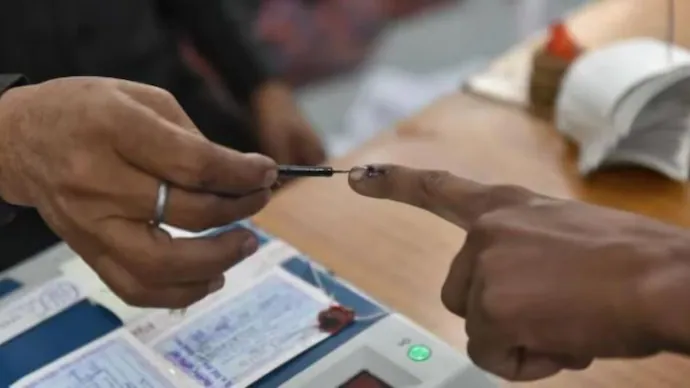
Voting began on Friday for five Maharashtra Legislative Council (MLC) constituencies, setting the stage for a contest between the ruling Mahayuti Alliance and the opposition Maha Vikas Aghadi (MVA). The elections cover three Graduates’ constituencies and two Teachers’ constituencies, with both political alliances facing challenges from rebels and candidates contesting on different party tickets.
A total of 182 candidates are in the fray across the five constituencies. Polling began at 8 am and will continue until 4 pm at 2,419 polling stations across the state. According to officials, 10,68,072 voters are eligible to exercise their franchise in the biennial elections.
The counting of votes is scheduled for October 27, while the entire election process is expected to be completed by October 31. The results will provide an indication of the candidates’ support among graduates and teachers in the respective constituencies, while also determining the composition of the Maharashtra Legislative Council in these seats.
The five constituencies going to the polls are Pune Division Graduates’, Nagpur Division Graduates’, Pune Division Teachers’, Chhatrapati Sambhajinagar Graduates’ and Amravati Teachers’. The elections have been necessitated by the completion of the current members’ terms on December 6.
Maharashtra MLC Elections 2026: Key Details
The Maharashtra Legislative Council elections are being held for five seats in the state’s 78-member upper house. Unlike elections to the Legislative Assembly, the constituencies involved in this round represent graduates and teachers.
- Total constituencies: Five
- Graduates’ constituencies: Three
- Teachers’ constituencies: Two
- Total candidates: 182
- Eligible voters: 10,68,072
- Polling stations: 2,419
- Polling hours: 8 am to 4 pm
- Counting of votes: October 27
- Completion of election process: October 31
The five constituencies are spread across different parts of Maharashtra, including Pune, Nagpur, Chhatrapati Sambhajinagar and Amravati. The number of candidates and polling stations varies significantly from one constituency to another, reflecting differences in the size of the electorate and the number of contestants.
Both the ruling Mahayuti and the opposition MVA are contesting all five seats. However, the presence of additional candidates, including those associated with rival parties or internal disagreements, has made the contests more complex.
Mahayuti vs MVA: Political Alliances Contest All Five Seats
The elections have brought the two major political alliances in Maharashtra into direct competition across all five constituencies. The ruling Mahayuti comprises the Bharatiya Janata Party (BJP), Eknath Shinde’s Shiv Sena and the Nationalist Congress Party (NCP) led by Sunetra Pawar.
The opposition Maha Vikas Aghadi consists of the Congress, the Sharad Pawar-led Nationalist Congress Party (Sharadchandra Pawar) or NCP (SP), and the Uddhav Thackeray-led Shiv Sena (UBT).
Both alliances are contesting the five seats, although the candidates and party arrangements differ by constituency. In some places, parties have fielded candidates against sitting members, while in others, independent candidates backed by political parties are also part of the contest.
The election is taking place amid reports of rebellion affecting both sides. The presence of competing candidates within the broader political landscape has added another dimension to the polls, particularly where party-backed candidates face rivals from within their political circles.
The contests are also significant because they involve a limited group of voters compared with statewide Assembly elections. Graduates’ and Teachers’ constituencies have specialised electorates, making voter registration, local campaigning and candidate connections with professional communities important features of the electoral process.
Amravati Teachers’ Constituency: Kiran Sarnaik Faces Aditi Pohare
The Amravati Teachers’ constituency is witnessing a contest involving sitting MLC Kiran Sarnaik, who is contesting on a Shiv Sena ticket, and Congress candidate Aditi Pohare. The Shiv Sena (UBT) has also fielded a candidate in the constituency.
The contest brings candidates associated with different political parties into competition for a seat representing teachers. Sarnaik is seeking another term as the sitting member, while Pohare is contesting as the Congress nominee.
The presence of a Shiv Sena (UBT) candidate adds another contender to the race. With the broader Mahayuti-MVA contest playing out across the state, the Amravati election also reflects the competing party arrangements within Maharashtra’s political landscape.
The constituency has 81 polling stations, the lowest number among the five constituencies going to the polls. A total of 26 candidates are contesting here, making it the constituency with the fewest candidates in the current election.
Voting in Amravati is scheduled to continue until 4 pm, in line with polling arrangements across the five constituencies. The result will be counted on October 27.
Pune Graduates’ Constituency: BJP Fields Smita Jadhav
The Pune Division Graduates’ constituency has the highest number of candidates in the current round of Maharashtra MLC elections, with 47 contestants in the fray.
The BJP has fielded Smita Jadhav against Harshada Deshmukh, the candidate of the Sharad Pawar-led NCP (SP). Shiv Sena (UBT) has also fielded a candidate, adding another contestant to the election.
The contest is one of the most closely watched races in terms of candidate numbers because the constituency has more contestants than any of the other four seats. A large candidate field can make the voting process more complex for voters and election officials, although the number of candidates alone does not determine the result.
The Pune Graduates’ constituency has 741 polling stations, the second-highest number among the five seats. It is exceeded only by the Chhatrapati Sambhajinagar Graduates’ constituency, which has 842 polling stations.
The BJP and NCP (SP) candidates are among the principal contestants identified in the constituency, while the Shiv Sena (UBT) nominee is also in the race. The final outcome will be known after counting on October 27.
Pune Teachers’ Constituency: BJP’s Kaustubh Gawde Takes on Jayant Asgaonkar
The Pune Division Teachers’ constituency is witnessing a contest between BJP candidate Kaustubh Gawde and sitting Congress MLC Jayant Asgaonkar.
Gawde has been fielded by the BJP against Asgaonkar, who is seeking to defend his seat. The constituency also features independent candidate Sachin Sanap, who is backed by the Shiv Sena.
Sanap is an officer on special duty (OSD) to Maharashtra minister Uday Samant. The Shiv Sena’s support for an independent candidate adds a separate element to the contest, with the candidate not appearing as a formal Shiv Sena nominee in the race.
The Pune Teachers’ constituency has 30 candidates and 310 polling stations. Its candidate count is lower than those in the three Graduates’ constituencies but higher than the 26 candidates contesting the Amravati Teachers’ seat.
The election is part of the broader competition between the Mahayuti and MVA, although the presence of an independent candidate backed by the Shiv Sena illustrates how party support and formal nominations can differ across constituencies.
Chhatrapati Sambhajinagar Graduates’ Constituency: Satish Chavan Faces Pratapsinh Patil
The Chhatrapati Sambhajinagar Graduates’ constituency is witnessing a contest between sitting MLC Satish Chavan of the NCP and Pratapsinh Patil of the NCP (SP). Shiv Sena (UBT) has also fielded a candidate in the constituency.
The contest brings candidates associated with the two NCP factions into direct competition. Chavan is the sitting member, while Patil is contesting on behalf of the Sharad Pawar-led NCP (SP).
The constituency has 41 candidates, making it the second-largest field among the five seats. It also has the highest number of polling stations, with 842 centres arranged for voting.
The scale of the constituency’s polling arrangements makes it the largest among the five seats in terms of the number of polling stations. Pune Graduates’ follows with 741 polling stations, while Nagpur Graduates’ has 445.
The participation of a Shiv Sena (UBT) candidate adds another contender to the race. As with the other constituencies, the outcome will be determined after votes are counted on October 27.
Nagpur Graduates’ Constituency: BJP’s Sudhakar Kohale Against Abhijit Wanjari
The Nagpur Division Graduates’ constituency is witnessing a contest between sitting MLC Abhijit Wanjari and BJP nominee Sudhakar Kohale.
Wanjari is contesting as the sitting member, while Kohale has been fielded by the BJP. The constituency also saw BJP rebel Anil Sole withdraw from the contest and extend his support to Kohale.
According to officials, Sole’s name will remain on the ballot despite his withdrawal. This means voters may still see his name on the ballot paper even though he is no longer actively contesting and has announced support for the BJP nominee.
The development is relevant to the broader issue of rebellion affecting the elections. Candidate withdrawals and the subsequent transfer of political support can influence campaign dynamics, but the effect on the final result will only become clear after counting.
The Nagpur Graduates’ constituency has 38 candidates and 445 polling stations. It has fewer candidates than Pune Graduates’ and Chhatrapati Sambhajinagar Graduates’, but more than either of the two Teachers’ constituencies.
Which Constituency Has the Most Candidates?
The number of candidates varies across the five constituencies. The Pune Division Graduates’ constituency has the largest field, with 47 candidates, while Amravati Teachers’ has the smallest, with 26 candidates.
The constituency-wise candidate figures are as follows:
- Pune Graduates’: 47 candidates
- Chhatrapati Sambhajinagar Graduates’: 41 candidates
- Nagpur Graduates’: 38 candidates
- Pune Teachers’: 30 candidates
- Amravati Teachers’: 26 candidates
The figures add up to 182 candidates across all five constituencies. The distribution shows that the three Graduates’ constituencies account for the larger candidate fields, while the two Teachers’ constituencies have fewer contestants.
The number of candidates is one of several factors shaping the elections. The nature of the electorate, the standing of the sitting members, party nominations and the presence of independent or rebel candidates are also important features of the contests.
Polling Stations: Chhatrapati Sambhajinagar Leads
The five constituencies have a combined total of 2,419 polling stations. Chhatrapati Sambhajinagar Graduates’ has the largest number, at 842, while Amravati Teachers’ has the fewest, at 81.
The constituency-wise distribution of polling stations is:
- Chhatrapati Sambhajinagar Graduates’: 842 polling stations
- Pune Graduates’: 741 polling stations
- Nagpur Graduates’: 445 polling stations
- Pune Teachers’: 310 polling stations
- Amravati Teachers’: 81 polling stations
The figures show that the polling arrangements differ substantially between constituencies. Chhatrapati Sambhajinagar Graduates’ and Pune Graduates’ together account for a significant share of the total polling stations.
Officials have said that 10,68,072 voters are eligible to cast their ballots across the five constituencies. Polling began at 8 am and is scheduled to continue until 4 pm.
After polling concludes, the votes will be counted on October 27. The election process is scheduled to be completed by October 31.
Maharashtra Legislative Council Strength: BJP Remains the Largest Party
The Maharashtra Legislative Council has 78 members, with the BJP currently the largest party in the upper house, according to the figures provided for the elections.
The BJP has 35 MLCs, followed by the Shiv Sena with 12 and the NCP with 10. Among the opposition parties, the Congress and Shiv Sena (UBT) have five members each, while the NCP (SP) has two. The House also has four independent MLCs.
The current party-wise strength highlights the relative representation of the political parties in the Council. The five elections will determine the candidates who fill the seats whose current members’ terms are due to end on December 6.
The BJP’s position as the largest party in the Council provides the context for its participation in the current elections. The Shiv Sena and NCP also have representation in the House, while the Congress, Shiv Sena (UBT) and NCP (SP) form part of the opposition’s presence.
However, the results of the five constituencies will need to be assessed separately from the Council’s existing party strength. The contests involve graduates and teachers voting in their respective constituencies, and the outcome will depend on the votes cast in those seats.
Why the Maharashtra MLC Elections Matter
The biennial elections are significant because they will determine representation in five seats of Maharashtra’s Legislative Council, the upper house of the state legislature. They also provide an opportunity to assess the performance of candidates supported by the state’s two major political alliances in specialised electorates.
The Mahayuti and MVA are contesting all five seats, but the elections are not limited to a straightforward contest between the two alliances. Candidates from different factions, independent contestants and party rebels have also shaped the field.
In Amravati, sitting MLC Kiran Sarnaik faces Congress candidate Aditi Pohare, with Shiv Sena (UBT) also fielding a candidate. In Pune Graduates’, BJP’s Smita Jadhav is contesting against NCP (SP)’s Harshada Deshmukh, while Shiv Sena (UBT) has another candidate in the race.
Pune Teachers’ features BJP candidate Kaustubh Gawde against Congress sitting MLC Jayant Asgaonkar, alongside independent candidate Sachin Sanap, who is backed by the Shiv Sena. In Chhatrapati Sambhajinagar Graduates’, NCP’s Satish Chavan is facing NCP (SP)’s Pratapsinh Patil, while Shiv Sena (UBT) has also nominated a candidate.
In Nagpur Graduates’, sitting MLC Abhijit Wanjari is contesting against BJP nominee Sudhakar Kohale. BJP rebel Anil Sole has withdrawn and extended support to Kohale, although Sole’s name will remain on the ballot.
These constituency-level contests illustrate the range of political arrangements involved in the elections. The results will establish which candidates secure the five seats and how the outcomes affect the representation of the parties involved.
When Will Maharashtra MLC Election Results Be Declared?
Counting of votes for the five Maharashtra Legislative Council constituencies is scheduled for October 27. Officials have said that the entire election process will be completed by October 31.
Voting began at 8 am on Friday and will continue until 4 pm across 2,419 polling stations. A total of 10,68,072 eligible voters are expected to participate in the election process.
The elections were necessitated by the approaching end of the sitting members’ terms on December 6. The five seats cover Pune Division Graduates’, Nagpur Division Graduates’, Pune Division Teachers’, Chhatrapati Sambhajinagar Graduates’ and Amravati Teachers’.
Until counting is completed, the outcome of each constituency remains undecided. The candidate totals, polling arrangements and party nominations provide the framework for the contests, but the final results will be determined by the votes cast.
Conclusion
Voting is underway in five Maharashtra Legislative Council constituencies as the ruling Mahayuti and opposition MVA compete for three Graduates’ seats and two Teachers’ seats. A total of 182 candidates are contesting across 2,419 polling stations, with 10,68,072 voters eligible to participate.
The elections feature contests involving sitting MLCs, party nominees, independent candidates and rebels. Pune Graduates’ has the highest number of candidates at 47, while Chhatrapati Sambhajinagar Graduates’ has the most polling stations at 842. In Nagpur Graduates’, BJP rebel Anil Sole has withdrawn and backed Sudhakar Kohale, although Sole’s name will remain on the ballot.
Counting is scheduled for October 27, and the election process is expected to conclude by October 31. The results will determine the winners of the five seats as Maharashtra’s major political alliances compete for representation in the state’s 78-member Legislative Council.
For breaking news and live news updates, like us on Facebook or follow us on Twitter and Instagram. Read more on Latest India on thefoxdaily.com.






COMMENTS 0