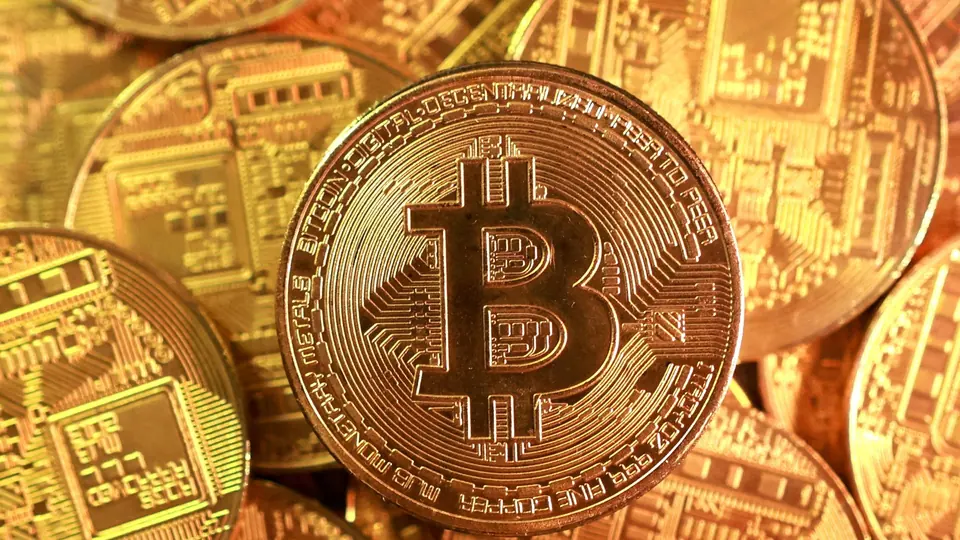
Bitcoin recovered above $82,000 on Monday as falling oil prices helped improve investor confidence in riskier assets following a difficult week for financial markets. The world’s largest Cryptocurrency rose alongside other major digital assets, suggesting that investors were becoming more willing to take on risk as pressure from energy markets eased.
Bitcoin gained as much as 2.3% during early Asian trading and was changing hands at approximately $82,400 by noon in Singapore, according to Bloomberg. The recovery followed a decline of roughly 3% during the previous week, when a broader sell-off in equities weighed on market sentiment.
Other major cryptocurrencies also advanced. Ether rose as much as 3.7%, while Solana gained more than 4.6% during the session. The gains came as US stock futures moved higher and oil prices retreated from a recent five-month high.
Despite Monday’s rebound, Bitcoin remained within its recent trading range of approximately $80,000 to $85,000. The move above $82,000 therefore represented a recovery rather than a confirmed breakout into a new price range.
Why falling oil prices helped Bitcoin recover
The decline in oil prices was a key factor behind the improvement in sentiment across financial markets. Higher energy costs can increase inflation concerns, raise business expenses and complicate expectations for interest rates. These pressures can make investors more cautious about assets whose valuations depend heavily on future growth and market confidence.
Oil prices had climbed to a five-month high before retreating on Monday. Signs that oil supplies from the Middle East had remained steady since the US war with Iran began also helped ease some concerns about potential supply disruptions.
Brent crude fell by as much as 2% during the session. At the same time, futures linked to the S&P 500 rose around 0.8%, while Nasdaq 100 futures gained approximately 1.3%, according to Bloomberg.
The simultaneous movement in oil and equity futures offered some relief to investors who had been concerned about energy costs and the outlook for financial markets. When fears of inflation or supply shocks ease, investors may become more willing to allocate money to assets such as cryptocurrencies, technology stocks and other investments that can experience significant price swings.
However, the relationship between oil prices and Bitcoin is not fixed. Cryptocurrency prices are influenced by several factors, including liquidity, interest-rate expectations, investor positioning, fund flows and developments specific to digital assets. A decline in oil can improve the broader market environment without guaranteeing further gains for Bitcoin.
Bitcoin recovers after a difficult week for risk assets
Bitcoin’s latest advance followed a roughly 3% decline during the previous week, when stocks also came under pressure. Technology shares led the retreat amid renewed concerns about the large amounts of money companies are investing in artificial intelligence infrastructure and development.
Investors have been assessing whether the expected returns from substantial AI spending will justify the capital being committed to data centres, computing equipment and related infrastructure. Concerns about the scale and timing of those returns can affect technology valuations and, in turn, influence broader appetite for risk.
Damien Loh, chief investment officer at Ericsenz Capital, described Bitcoin’s recovery as a retracement following a difficult week for riskier assets. According to Bloomberg, he said the move was a “retracement after a big risk-off week.”
A risk-off period occurs when investors reduce exposure to assets considered more volatile or vulnerable to market uncertainty. Depending on the circumstances, they may move towards cash, government bonds or other investments perceived as offering greater stability.
Bitcoin can be particularly sensitive to these changes in sentiment because its price can move sharply when demand for speculative investments weakens. Although cryptocurrency markets have their own drivers, Bitcoin can trade in the same direction as technology stocks and other growth-sensitive assets when investors respond to broader economic news.
Monday’s rebound suggests that some of the previous selling pressure had eased. It does not, however, establish that investors have fully returned to riskier assets or that the concerns behind last week’s losses have disappeared.
Bitcoin price outlook remains uncertain despite the rebound
The recovery above $82,000 has not removed uncertainty surrounding Bitcoin’s near-term direction. Loh warned that the cryptocurrency could struggle to reach fresh highs in the immediate future because there were no clear catalysts likely to drive it to new records.
He also cautioned that Bitcoin could face further losses in the prevailing market environment, according to Bloomberg. His assessment highlights the difference between a short-term bounce and a sustained upward trend.
For Bitcoin to establish a stronger recovery, investors may look for a combination of improving macroeconomic conditions, sustained demand and renewed confidence in riskier assets. A more stable outlook for energy prices could help, but persistent inflation concerns or renewed pressure on equities could limit the cryptocurrency’s gains.
Oil remains an important variable. Despite Monday’s decline, crude was still trading at around $107 a barrel, above levels seen during most of the previous week. That leaves energy costs elevated and means concerns about inflation and supply disruptions have not necessarily been resolved.
Developments in the Middle East could therefore continue to influence financial markets. A renewed increase in oil prices could revive concerns about inflation and economic growth, potentially reducing demand for volatile assets. Further declines, by contrast, could support investor confidence if they reflect an easing of supply concerns rather than weakening economic demand.
Bitcoin’s recent trading range also provides useful context. With the cryptocurrency fluctuating between $80,000 and $85,000, traders may watch whether it can move beyond either boundary and sustain that move. A temporary rise above $82,000 alone does not establish a decisive change in direction.
US spot Bitcoin ETFs record further outflows
Institutional investment flows are another factor weighing on Bitcoin’s outlook. US-listed spot Bitcoin exchange-traded funds (ETFs) recorded net outflows of $228.6 million last week, according to Bloomberg.
The withdrawals followed $681 million in net outflows during the preceding week. Although the latest amount was smaller, the consecutive weeks of withdrawals indicated that these funds had experienced continued selling pressure.
Spot Bitcoin ETFs allow investors to gain exposure to Bitcoin through exchange-traded products without directly holding the cryptocurrency. Their flows are closely monitored because they provide one measure of demand from investors using traditional financial markets to access Bitcoin.
Net outflows occur when more money leaves these funds than enters them over a given period. Sustained outflows can weigh on sentiment and may reflect reduced demand, profit-taking or a shift towards other investments. They do not necessarily mean that every investor is bearish, nor do they alone determine Bitcoin’s price.
The recent withdrawals also need to be considered alongside wider market conditions. Investors may reduce exposure to Bitcoin ETFs when uncertainty rises, even if they remain interested in the cryptocurrency over a longer period. Conversely, a sustained return of inflows could signal renewed demand, although fund flows should be assessed alongside other indicators.
For now, the latest ETF data offers a counterpoint to Monday’s price recovery. Bitcoin rose as oil prices declined and equity futures strengthened, but institutional fund flows suggest that demand has not been uniformly strong.
What investors should watch after Bitcoin crosses $82,000
Bitcoin’s next move will depend on whether the improvement in broader market sentiment continues and whether cryptocurrency-specific demand strengthens. Several developments could influence its direction over the coming sessions.
- Oil prices and Middle East developments: Changes in crude prices could influence inflation concerns, supply expectations and demand for riskier investments.
- US equity market performance: Continued strength in technology shares and major stock indexes could support risk appetite, while renewed selling may put pressure on cryptocurrencies.
- Bitcoin ETF flows: A shift from net outflows to sustained inflows could indicate improving demand from investors using regulated investment products.
- Trading around $80,000 to $85,000: Bitcoin’s ability to move beyond its recent range and sustain the move may offer a clearer indication of market direction than a brief rebound.
- Inflation and interest-rate expectations: Economic data and central-bank signals can affect liquidity conditions and investors’ willingness to hold volatile assets.
These factors do not provide a guaranteed prediction of Bitcoin’s next move. Cryptocurrency prices can respond quickly to unexpected news, and short-term gains can reverse when market conditions change.
Bitcoin’s recovery offers relief, but a sustained rally is not assured
Bitcoin’s rise above $82,000 on Monday reflected an improvement in investor sentiment as oil prices retreated and US equity futures advanced. Ether and Solana also posted gains, indicating that the recovery extended beyond the largest cryptocurrency.
However, the broader picture remains mixed. Oil prices were still elevated despite their decline, Bitcoin remained within its recent trading range, and US spot Bitcoin ETFs recorded another week of net outflows. Concerns about technology-sector spending and the wider economic outlook also remain relevant to investor positioning.
The key question is whether Monday’s rebound develops into a sustained recovery or remains a temporary bounce after last week’s losses. Until Bitcoin establishes a clearer move beyond its recent range and demand strengthens, its near-term outlook remains uncertain.
For breaking news and live news updates, like us on Facebook or follow us on Twitter and Instagram. Read more on Latest World on thefoxdaily.com.






COMMENTS 0