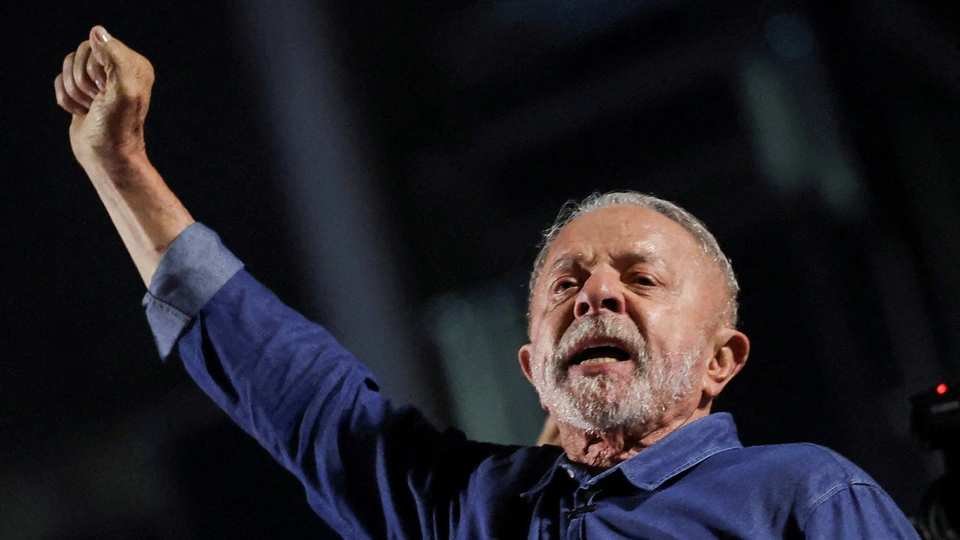
Brazilian President Luiz Inácio Lula da Silva has secured a historic fourth presidential term after defeating Flávio Bolsonaro in the October 25, 2026, runoff election. While the result has energised Lula’s supporters, it has unsettled financial markets, with investors concerned that continued government spending, rising public debt and a lack of credible fiscal reforms could weaken Brazil’s economic outlook.
The market reaction highlights the challenge facing Lula as he prepares for another term. Brazil has significant natural resources, agricultural capacity and mineral wealth, but persistent fiscal pressures and high borrowing costs have constrained investment and economic growth. Investors now want evidence that the re-elected president will prioritise debt stabilisation and financial discipline alongside his social welfare agenda.
Lula’s Historic Victory Raises Questions About Brazil’s Economic Direction
Lula’s victory defied expectations after he trailed Flávio Bolsonaro in the first round of voting. The incumbent president regrouped his campaign, adjusted his strategy and secured a comeback that marked a major moment in Brazilian electoral history.
His supporters view the result as a mandate to continue policies aimed at improving living standards and supporting poorer households. However, financial markets are focused on a different question: how will the government finance its commitments without placing additional pressure on public finances?
Investors had largely expected Flávio Bolsonaro to win, partly because his campaign signalled a willingness to reduce public spending. His defeat has therefore forced markets to reassess the likelihood of a meaningful fiscal adjustment under the next administration.
Flávio’s campaign, however, also faced limitations. Although he spoke about spending cuts, his proposals lacked a convincing implementation plan. His association with his father, former president Jair Bolsonaro, also shaped the political contest. Jair Bolsonaro is described in the supplied account as serving a 27-year sentence for plotting a coup following his own election defeat.
The election result consequently reflects both the weaknesses of the right-wing opposition and the continuing appeal of Lula’s political platform. But winning the presidency does not automatically resolve Brazil’s structural economic problems.
Why Financial Markets Are Worried About Lula’s Return
Investors’ concerns centre on the possibility that the government will continue spending beyond what Brazil’s public finances can comfortably sustain. Persistent deficits can increase borrowing requirements, push up debt-servicing costs and leave governments with less room to respond to economic shocks.
According to the supplied report, the Brazilian real weakened sharply against the US dollar following Lula’s victory, while the Bovespa stock-market index recorded a steep decline that triggered a circuit-breaker. Such movements reflect investor uncertainty about the policies likely to follow the election, although short-term market reactions do not necessarily determine the economy’s longer-term performance.
For investors, the central issue is whether Lula will use his new mandate to establish a more credible fiscal framework or continue expanding government commitments without identifying sustainable sources of funding.
The concern is especially significant because Brazil already faces substantial debt-servicing costs. When a government spends a growing share of its revenue on interest payments, fewer resources remain available for infrastructure, education, healthcare and other public priorities. Persistent fiscal uncertainty can also make investors demand higher returns before committing money to businesses and productive projects.
High Interest Rates Continue to Weigh on Growth
Brazil’s economic challenge extends beyond the immediate response to the election. The country has struggled for decades to translate its natural advantages into consistently strong growth compared with several peer economies.
Its resources include oil, extensive agricultural land and substantial deposits of critical minerals. These assets provide opportunities across energy, food production, mining and related industries. However, investment depends not only on resource availability but also on financing costs, policy predictability, infrastructure and the wider business environment.
The supplied report puts Brazil’s real interest rate at approximately 9%, describing it as a significant burden on businesses and households. High real borrowing costs make it more expensive for companies to expand operations, purchase equipment and hire workers. Households may also face greater difficulty financing major purchases or managing existing debts.
When investment weakens, the effects can extend across the economy. Businesses may postpone expansion, productivity improvements may slow, and employment opportunities can become harder to generate. The result is a difficult cycle in which high financing costs constrain growth while fiscal uncertainty discourages the investment needed to improve productive capacity.
Reducing that pressure will require more than a single announcement. Investors will look for a consistent policy framework that addresses government borrowing, supports economic stability and allows private businesses to plan for the long term.
Brazil’s Budget Deficit and Rising Public Debt
The scale of Brazil’s fiscal challenge is central to the debate over Lula’s next term. The supplied report puts the government’s budget deficit at more than 9% of gross domestic product (GDP) and cites an International Monetary Fund projection that public debt will reach 97% of GDP in 2026, compared with 84% in 2022.
These figures point to growing pressure on public finances. A budget deficit occurs when government expenditure exceeds revenue over a specified period. When deficits persist, governments generally need to borrow more, draw on existing financial resources or adjust spending and taxation.
Public debt is not automatically evidence of an economic crisis. Its sustainability depends on factors including interest rates, economic growth, government revenue, the maturity of outstanding obligations and the government’s capacity to manage future borrowing. However, a rising debt burden becomes more difficult to manage when financing costs are high and economic growth remains subdued.
For Brazil, the combination of a large reported deficit, increasing debt and elevated interest rates makes fiscal credibility particularly important. If investors become less confident that the government can stabilise its finances, borrowing costs may remain under pressure, further complicating efforts to reduce the deficit.
The challenge for Lula is to demonstrate that social spending and fiscal sustainability can coexist. That requires identifying which programmes deliver measurable benefits, how they will be funded and what changes are needed to prevent public debt from rising without a credible limit.
New Social Spending Could Complicate Fiscal Reform
Lula has built much of his political identity around reducing poverty and improving the circumstances of lower-income Brazilians. Those priorities help explain the appeal of his political platform and are likely to remain central to his administration.
However, social programmes require dependable funding. The supplied report estimates that the costs associated with new social policies unveiled during 2026 could amount to roughly 2% of GDP by the end of 2027. If that estimate materialises, the government will need to explain how it intends to accommodate the additional expenditure within a sustainable budget.
Expanding welfare support without a clear funding strategy can increase fiscal pressure. Conversely, abrupt spending cuts can affect vulnerable households and undermine the intended benefits of social policy. The policy challenge is therefore to establish priorities, improve the effectiveness of public expenditure and ensure that new commitments are matched by realistic revenue or savings measures.
Investors are particularly concerned because Lula reportedly downplayed the importance of fiscal discipline during the campaign. His next steps will help determine whether that position translates into continued spending growth or gives way to a more balanced approach once he takes office.
A credible fiscal programme would need to explain not only the government’s spending targets but also how those targets will be enforced, how additional costs will be controlled and how the administration will respond if revenue falls short of expectations.
Why a Spending Cap and Tax Reform Matter
One of the most pressing tasks identified in the supplied report is the introduction of a spending cap designed to help stabilise public debt. Such a measure would aim to place limits on expenditure growth and make government commitments more predictable over time.
The effectiveness of a spending cap would depend on its design and enforcement. A rule that exists only on paper is unlikely to reassure investors if exemptions are widespread or governments repeatedly revise the framework. Brazil would need a credible mechanism that balances fiscal control with essential public services and clearly explains how the rules will operate.
Tax incentives are another potential area for reform. The report argues that numerous tax breaks introduced under previous administrations, including Lula’s own, benefit inefficient firms with strong lobbying connections.
Reviewing those exemptions could help the government determine whether public support is producing sufficient economic and social returns. Tax incentives can sometimes encourage investment or support strategically important activities, but poorly designed exemptions may reduce revenue without generating comparable benefits.
A transparent review would allow policymakers to distinguish productive incentives from arrangements that primarily protect established interests. Removing unjustified exemptions could strengthen revenue while making the tax system more consistent, although the actual savings would depend on the specific measures adopted.
Pension Spending Adds to the Pressure
Brazil’s pension system is another area of concern. According to the supplied report, public expenditure is being pushed higher by generous pension arrangements, particularly those covering civil servants and members of the armed forces. It also states that these costs are rising faster than inflation.
Pension reform can be politically difficult because it affects long-term entitlements and the financial security of beneficiaries. Yet when pension obligations grow faster than the government’s ability to finance them, they can restrict the resources available for other priorities.
The next administration will face the challenge of assessing how pension commitments affect the budget and whether changes are needed to improve long-term sustainability. Any reform would need to account for legal obligations, fairness between different groups and the potential consequences for people who depend on retirement benefits.
Alongside pension spending, a wider review of government expenditure could help identify inefficiencies and improve the value Brazil receives from public funds. The objective would not simply be to cut spending indiscriminately, but to ensure that public resources support clearly defined priorities without creating an unsustainable debt burden.
Key Appointments Could Shape Investor Confidence
Lula’s early appointments will provide another indication of the economic direction he intends to pursue. The supplied report argues that he should appoint a finance minister trusted by investors and present a credible plan for fiscal reform.
A finance minister plays a central role in setting budget priorities, communicating fiscal policy and coordinating the government’s approach to taxation and public borrowing. A candidate with a clear reform strategy and the ability to explain difficult decisions could help reduce uncertainty. However, investor confidence will ultimately depend on whether the administration implements its commitments, rather than on the appointment alone.
The report also highlights upcoming vacancies across important public institutions, including four seats on Brazil’s Supreme Court, two positions on the Central Bank’s board and roles at the country’s financial watchdog. It argues that these appointments should be technical and impartial rather than driven by political considerations.
Appointments to courts, central banks and financial oversight bodies can affect confidence in institutional independence and the predictability of Economic Policy. Transparent selection processes and respect for institutional responsibilities would help demonstrate that public institutions are expected to operate according to their mandates.
For Lula, the challenge is to use his authority responsibly while maintaining confidence in the institutions that underpin Brazil’s economic and democratic systems. Political loyalty alone would not resolve the fiscal concerns facing the country.
Can Lula Balance Poverty Reduction With Fiscal Discipline?
The central question facing Brazil is whether Lula can protect the social priorities that helped secure his re-election while restoring confidence in the country’s public finances.
These goals are not necessarily incompatible. Sustainable public finances can help governments maintain essential programmes over time, while effective social investment can support human development and economic participation. The difficulty arises when spending commitments grow faster than the resources available to finance them.
A credible strategy would need to combine spending reviews, a workable debt-stabilisation framework, careful evaluation of tax incentives and a realistic approach to pension obligations. It would also need to explain how the government intends to support growth without relying on borrowing that becomes increasingly expensive to service.
Brazil’s resource base gives it opportunities in agriculture, energy and critical minerals, but those opportunities cannot guarantee stronger growth on their own. Businesses need a predictable environment in which to invest, while households need economic stability and employment prospects. Fiscal uncertainty and persistently high borrowing costs can undermine both.
The government must also recognise that markets respond to a combination of policy decisions and credibility. A spending cap or reform announcement may initially reassure investors, but confidence is more likely to endure if the administration publishes clear targets, provides transparent information and follows through on its commitments.
What Lula’s Next Term Means for Brazil
Lula’s election victory gives him another opportunity to shape Brazil’s economic and social direction. It also places responsibility on his administration to address the fiscal pressures that have contributed to investor anxiety.
The immediate priorities outlined in the supplied report include appointing a credible finance minister, setting out a realistic fiscal reform programme, establishing an effective spending limit, reviewing tax breaks and addressing the growth of pension expenditure. Progress on these areas would provide a clearer indication of whether the government is prepared to change course.
Failure to address the underlying problems could leave Brazil facing a more difficult combination of high borrowing costs, weak investment and increasing pressure on public finances. A severe deterioration in fiscal confidence could also constrain the government’s ability to fund its own social priorities.
For that reason, the market reaction to Lula’s victory is not simply a response to the identity of the winning candidate. It reflects uncertainty over the policies that will govern public spending, debt management and institutional decision-making in the years ahead.
Lula has demonstrated his ability to recover politically after a difficult first round. His next challenge is economic: convincing investors and the Brazilian public that his fourth term can deliver social progress without undermining fiscal stability. The credibility of his government will depend on whether that promise is translated into a clear, affordable and consistently implemented programme.
For breaking news and live news updates, like us on Facebook or follow us on Twitter and Instagram. Read more on Latest World on thefoxdaily.com.





COMMENTS 0