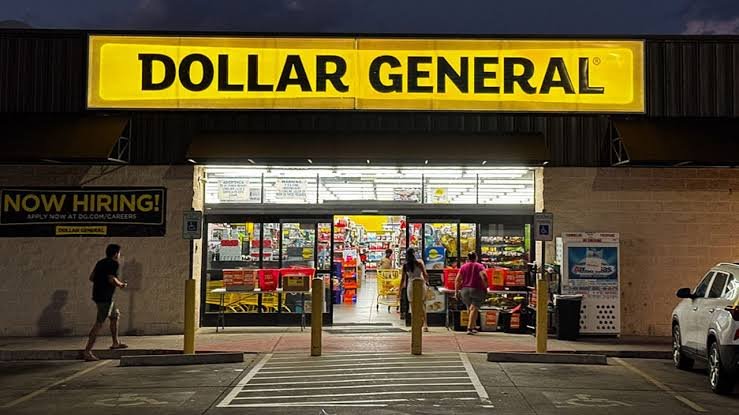
Dollar General has agreed to a $1.875 million settlement to resolve allegations that it repeatedly overcharged customers across New York, raising concerns about pricing accuracy at a retailer known for offering affordable everyday essentials.
The New York attorney general’s office found that the discount chain frequently charged customers more at checkout than the prices displayed on shelf labels, promotional signs, advertising circulars and its mobile application. Government inspections identified individual items with overcharges as high as 26%, 38% and 39%.
Under the agreement, Dollar General will donate $1.875 million worth of food and personal-care products to a regional food bank in upstate New York. The company must also implement comprehensive price-accuracy safeguards across its more than 600 stores in the state.
The settlement follows broader scrutiny of the retailer’s pricing practices. A Guardian investigation published in December reported that Dollar General stores failed more than 4,300 government price-accuracy inspections across 23 states between 2022 and 2025. The findings have intensified questions about whether the company’s pricing procedures consistently protect customers from unexpected charges.
For consumers who shop at discount stores to manage household expenses, the distinction between an advertised price and the amount charged at checkout can have practical financial consequences. The New York agreement seeks to address the problem through improved staff procedures, independent inspections and clearer receipts.
Why Dollar General Is Paying $1.875 Million in New York
The settlement resolves allegations that Dollar General repeatedly charged customers prices higher than those advertised or displayed in its stores. According to the New York attorney general’s office, the discrepancies affected several types of price information, including shelf labels, signs, advertising circulars and the company’s mobile app.
These pricing displays help customers decide which products to purchase and estimate how much they will spend. When the amount charged at the register exceeds the advertised price, shoppers may pay more than expected without immediately recognising the discrepancy.
One government inspection examined 114 items across multiple Dollar General stores and identified overcharges of as much as 26%, 38% and 39% on individual products. These figures illustrate the scale of some discrepancies identified during the checks, although they do not establish that every product or store experienced similar problems.
The state characterised the alleged conduct as repeated and persistent. Rather than addressing the issue through a donation alone, the settlement requires Dollar General to introduce operational safeguards designed to improve pricing accuracy across its New York retail network.
The agreement also highlights the importance of ensuring that prices remain consistent throughout the shopping process. A product may be advertised at one price, displayed on a shelf at another and scanned at checkout at a third. Effective retail controls must prevent these discrepancies and make it easier to identify errors when they occur.
What the Dollar General Settlement Requires
The $1.875 million agreement includes a donation of food and personal-care items as well as changes to the company’s pricing procedures. The requirements apply across more than 600 Dollar General stores in New York.
Donation to an Upstate New York Food Bank
Dollar General will donate $1.875 million in food and personal-care products to a regional food bank in upstate New York. The donation represents the settlement’s community-support component.
Food and personal-care products can help meet essential needs in local communities. However, the agreement’s consumer-protection measures are equally significant because they are intended to address the underlying pricing concerns that prompted the allegations.
Staff Scheduling for Accurate Shelf Labels
The company must establish procedures for scheduling staff to ensure that shelf tags are updated accurately. Keeping labels current is essential when prices change or promotional offers end.
Without clear responsibility for updating shelf tags, customers may encounter outdated prices even when the checkout system reflects a newer amount. Assigning staff to pricing tasks can help retailers reduce this type of discrepancy.
The effectiveness of the requirement will depend on how consistently employees carry out these responsibilities across individual stores. Accurate labels require ongoing attention rather than occasional corrections.
Independent Audits and Secret-Shopper Tests
The settlement also requires Dollar General to hire independent auditors to conduct secret-shopper tests. These checks are intended to help identify pricing discrepancies through inspections of the customer experience.
Independent testing can provide an additional layer of oversight by checking whether prices displayed in stores match the amounts charged at checkout. It can also help identify recurring problems that may not be apparent through routine internal procedures.
For these safeguards to deliver lasting improvements, identified discrepancies must lead to corrective action. The settlement establishes a framework for stronger oversight, but its long-term effectiveness will depend on implementation and continued compliance.
Clearer and Easier-to-Understand Receipts
Dollar General must also reformat its receipts after state investigators found that the company’s receipts used confusing formats that made it difficult for customers to determine what they were actually paying.
Receipts are an important tool for checking transactions. Customers rely on them to verify item prices, confirm discounts and investigate unexpected totals.
If receipt information is difficult to interpret, shoppers may struggle to identify which item was charged incorrectly or whether a promotional price was applied. Clearer formatting can make it easier to compare checkout charges with displayed prices.
Together, the receipt changes and shelf-label requirements address two different stages of a transaction: helping customers understand prices before purchasing and making it easier to verify charges afterward.
What New York Attorney General Letitia James Said
New York Attorney General Letitia James emphasised that customers should be able to rely on the prices retailers advertise.
“When New Yorkers see a sale price advertised on the shelf, they should be able to trust that they’ll be charged that same price at the register,” James said.
Her statement reflects the central issue behind the settlement: customers make purchasing decisions based on the information retailers provide, and the checkout price should reflect the applicable advertised offer.
This expectation is particularly relevant to discount retailers, where customers may compare prices closely or plan purchases around limited household budgets. An unexpected charge can disrupt those plans, especially when discrepancies occur across multiple products.
The settlement seeks to reinforce pricing transparency by requiring Dollar General to improve its procedures rather than relying entirely on customers to identify errors themselves.
Dollar General’s Pricing Problems Extend Beyond New York
The New York settlement comes amid wider scrutiny of Dollar General’s pricing practices. A Guardian investigation published in December reported that the retailer frequently overcharged customers across the United States for products including Flintstones vitamins, Peter Pan peanut butter and Prego pasta sauce.
According to the investigation, Dollar General stores failed more than 4,300 government price-accuracy inspections in 23 states between 2022 and 2025.
The findings indicate that pricing accuracy has been a recurring concern across multiple locations. However, the inspection figures should be interpreted carefully: they describe failed government inspections reported by the Guardian, not the percentage of all Dollar General transactions involving an overcharge.
The investigation also highlighted an inspection at a Dollar General store in Port Henry, New York, where overcharges were flagged on 78% of the items checked.
That result illustrates how extensive discrepancies could be at an individual location. It does not, by itself, establish the rate of overcharging across the company’s entire store network.
Nevertheless, the broader inspection record raises questions about the processes retailers use to maintain accurate prices across large networks. When a company operates hundreds or thousands of stores, changes to product prices, promotions and shelf labels must be coordinated consistently.
The New York settlement addresses that challenge by requiring stronger staff procedures, independent testing and clearer transaction records. Whether these measures also lead to sustained improvements elsewhere cannot be established from the settlement alone.
Why Accurate Prices Matter to Discount Store Customers
Dollar General describes itself as a source of affordable, everyday essentials. For shoppers who choose the retailer because of its pricing, accurate labels and checkout charges are a fundamental part of the value they expect.
Customers often use displayed prices to compare products, plan their shopping baskets and decide whether a purchase fits within their budgets. An unexpected increase at checkout can undermine those decisions.
The impact can be especially difficult to assess when customers purchase several low-cost products. A small discrepancy on one item may be easy to overlook, while several discrepancies can create a larger difference between the expected and actual bill.
Pricing errors can also create additional work for shoppers. Customers may need to review receipts, return to the checkout counter or ask employees to investigate a charge. Clear pricing and understandable receipts reduce the effort required to identify a problem.
For retailers, maintaining price accuracy involves coordinating several operational tasks:
- Updating shelf labels when prices change.
- Ensuring promotional signs reflect the correct offers.
- Aligning checkout systems with advertised prices.
- Assigning employees responsibility for checking labels.
- Investigating discrepancies identified by customers or auditors.
The New York settlement addresses several of these responsibilities. Its broader significance lies in recognising that price accuracy requires coordinated procedures across a store rather than a single correction at the register.
How Shoppers Can Check for Overcharges at Dollar General
Customers can take practical steps to identify possible pricing discrepancies when shopping at Dollar General or other retailers. These precautions do not replace the retailer’s responsibility to charge accurate prices, but they can help shoppers recognise unexpected charges.
- Check shelf labels before purchasing: Pay attention to the displayed price, particularly when an item is advertised as discounted.
- Review promotional conditions: Check whether a sale price applies to a particular size, quantity or other stated condition.
- Examine the receipt: Compare item prices and discounts with the prices you expected to pay.
- Question unexpected charges: If the scanned price differs from the displayed price, ask store staff to review the transaction.
- Keep the receipt: Retaining proof of purchase can help when explaining a discrepancy or requesting a correction.
Customers who identify a potential overcharge can explain the discrepancy using the shelf price, promotional information and receipt. Keeping these details available may make it easier to establish what happened during the transaction.
Did Dollar General Admit to Overcharging Customers?
Dollar General neither admitted nor denied the findings made by New York authorities under the settlement. The agreement resolves the state’s allegations without constituting an admission of every finding by the company.
The retailer did not respond to the Guardian’s questions about the settlement. In an earlier statement to the publication, Dollar General said it was committed to providing customers with accurate prices and was disappointed when it failed to meet that commitment.
The company’s statement outlines its stated commitment to pricing accuracy, but it does not independently establish whether the problems identified by government inspections have been resolved.
The practical test will be whether the required changes produce consistent results. Updated shelf tags, independent audits and clearer receipts can strengthen oversight, but their effectiveness depends on how reliably the procedures are followed.
What Happens Next for Dollar General?
The settlement places responsibility on Dollar General to strengthen pricing safeguards across its New York stores. The company will need to incorporate the required procedures into its operations, including staff scheduling, shelf-label updates, independent inspections and receipt reformatting.
For customers, the most important outcome will be whether the prices displayed in stores consistently match the amounts charged at checkout. For regulators, inspections and evidence of compliance can help determine whether the changes address the problems identified in the state’s investigation.
The Guardian’s findings concerning inspections in 23 states also provide a wider context for assessing the retailer’s pricing practices. However, the available information does not establish how frequently overcharges may occur following the settlement or whether similar corrective measures have been introduced across other states.
The $1.875 million agreement combines a substantial product donation with measures intended to improve Consumer Protection. Its long-term significance will depend on whether Dollar General consistently implements the required safeguards and maintains accurate pricing across its stores.
Ultimately, the case highlights a basic expectation in retail: customers should be charged the prices advertised for the products they purchase. For a discount chain whose appeal rests on affordable everyday essentials, maintaining that trust is central to the value it promises consumers.
For breaking news and live news updates, like us on Facebook or follow us on Twitter and Instagram. Read more on Latest World on thefoxdaily.com.






COMMENTS 0