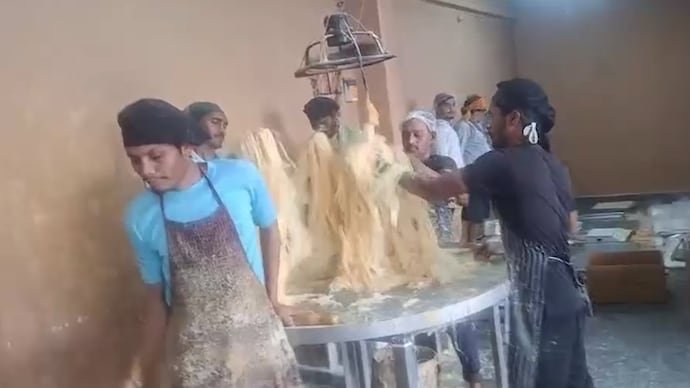
Karnataka has stepped up its Food Safety inspections with a statewide crackdown on sweet manufacturers and other food businesses, uncovering expired products, missing label information, unhygienic production areas and unauthorised food colours.
The special inspection drive, conducted across Bengaluru and several districts on Monday, resulted in the seizure of hundreds of kilograms of food products. Six food business units were temporarily closed after officials found serious violations, while notices and legal proceedings were initiated against several other establishments.
Among the largest seizures was 400 kg of khova from a Bengaluru unit. Officials also seized expired curd, expired chocolate flavour, incorrectly labelled savouries, chikki, cocoa products and other food items during inspections.
The operation was carried out following directions from Karnataka Health and Family Welfare Minister U T Khader under the Food Safety and Standards Act, 2006, and the Food Safety and Standards (Licensing and Registration of Food Businesses) Rules, 2011.
Why Karnataka launched the special food safety drive
The latest inspections were designed to examine how sweets and related food products are manufactured, stored and sold to consumers.
Officials inspected food businesses in Bengaluru Urban, Bengaluru Rural, the Greater Bengaluru Authority, Mysuru, Dakshina Kannada, Belagavi, Kalaburagi and Hubballi-Dharwad.
Rather than focusing only on the finished sweets displayed for customers, inspectors also examined manufacturing and storage conditions and collected samples of products and ingredients for laboratory testing.
The inspection list included sweets and savouries such as Mysore Pak, jalebi, Jahangir and mixture, along with khova, pulses, gram or channa, tea powder and cooking and fresh oil.
The samples collected during the drive have been sent to government food laboratories. Their analysis will help determine whether the products comply with prescribed food safety standards.
Expired food and labelling violations found
One of the most significant concerns identified during the inspections was the presence of expired food products.
Officials also found products that did not carry mandatory information required on food packages. These details are important because they allow consumers and regulators to identify a product, determine its shelf life and establish who is responsible for manufacturing it.
The violations reported during the drive included missing or improper information relating to:
- Manufacturer’s name and address
- Batch number
- Date of manufacture
- Use By date
- Maximum retail price
- FSSAI licence or registration number
Inspectors also reported unhygienic manufacturing and storage conditions at several premises. In some cases, officials found unauthorised artificial colours being used or stored.
These findings matter because food safety does not depend solely on whether a finished product looks fresh. Storage conditions, ingredient handling, manufacturing hygiene and accurate labelling all form part of the food safety chain.
400 kg of khova seized in Bengaluru
One of the biggest actions took place at Balaji Milk Khova in Bengaluru.
Officials found food products that lacked several mandatory declarations, including the date of manufacture, Use By date, batch number, maximum retail price and FSSAI logo, licence or registration number.
The inspection resulted in the seizure of 150 kg of Kalakand Khova and another 250 kg of khova. Together, the two quantities amounted to 400 kg of seized product.
The estimated value of the seized khova was Rs 77,500.
The unit was also found operating in unhygienic conditions and was issued a notice by the authorities.
The seizure highlights why khova and similar dairy-based ingredients receive particular attention during food safety inspections. Such ingredients are widely used in Indian sweets, making their manufacturing, storage and shelf-life controls important parts of the production process.
More food products seized across Bengaluru
Several other Bengaluru establishments faced action during the inspection drive.
At Asha Sweets in Yeshwanthpur, officials seized approximately 49 kg of tea powder, 20 kg of khova or Kalakand and 2.5 kg of pistachios suspected of violating food safety norms. Samples were collected for further action.
At Bikaner Sweets on Magadi Road, inspectors reported unhygienic conditions along with serious labelling deficiencies. The manufacturing unit was temporarily closed and legal proceedings were initiated.
Officials also seized around 60 kg of food products at Lal Sweets Pvt Ltd. The products included banana chips and chakli masala that did not carry mandatory declarations such as manufacturer information and the FSSAI licence number.
Inspectors additionally reported fly infestation and unhygienic conditions at the unit. A notice was issued following the inspection.
At Mithai Factory in Bengaluru, officials seized 14 packets of incorrectly labelled chikki and five litres of expired Nandini curd. Incorrectly labelled chocolate decoration materials were also found, including 13 large packets and six small packets.
At Sandesh Sweets, four food samples suspected to be non-conforming were collected and sent to a government laboratory for analysis.
Expired chocolate flavour and other products seized in Belagavi
The inspection campaign also uncovered violations outside Bengaluru.
In Belagavi, officials seized around 10 kg of expired chocolate flavour from A1 Purohit. Another 5 kg of Rasgulla was disposed of according to the prescribed procedure.
Officials also identified labelling and hygiene violations at Kalyani Sweets and A1 Kunda, with action initiated against the businesses.
The presence of expired ingredients is particularly significant because ingredients used in commercial food production can affect more than a single batch of finished products. Where such materials are incorporated into sweets or other foods, regulators may need to determine the extent of the affected stock.
367 kg of ready-to-eat savouries seized in Mysuru
A major seizure was also reported at Word of Mysore Pack in Mysuru.
Officials seized incorrectly labelled products that included 367 kg of ready-to-eat savouries, 4 kg of cocoa powder, 4.5 kg of cracked cocoa beans and 6 kg of khova.
The estimated value of the seized products was Rs 1.56 lakh.
The action demonstrates that the inspection drive was not limited to traditional sweets. Packaged savouries and ingredients were also examined for compliance with food safety and labelling requirements.
Units temporarily closed in multiple districts
The inspections resulted in temporary closures where authorities identified serious deficiencies.
In Kalaburagi, Maharaja Sweets was temporarily closed after officials found unhygienic conditions and labelling deficiencies.
In Mangaluru, Swagath Sweets was found operating without the required food licence. Officials also reported unhygienic conditions and labelling violations. The unit was temporarily closed and legal action was initiated.
Bikaner Sweets in Bengaluru was similarly shut temporarily following findings related to hygiene and labelling.
These temporary closures represent a stronger form of regulatory intervention than simply issuing an advisory. They allow authorities to prevent a business from continuing operations while violations are addressed and legal processes move forward.
Other food businesses also face notices and legal action
The enforcement drive extended beyond the establishments involved in the largest seizures.
Authorities initiated notices and legal proceedings against several other food businesses over reported food safety and hygiene violations.
The establishments named in the action include Triveni Bakery and Mita Bharat in Hubballi, Kalyani Sweets and A1 Kunda in Belagavi, India Sweets and Venkateshwara Sweets in Bengaluru, and Popular Bakery Pvt Ltd in Puttur.
The action indicates that Karnataka’s latest campaign is being treated as a broader inspection exercise rather than a response to a single complaint or isolated food product.
Why food labelling matters to consumers
Labelling can appear to be a technical compliance issue, but it has a direct connection to Consumer Protection.
A properly labelled food package gives consumers information needed to make basic purchasing decisions. The manufacture date and Use By date help establish how long a product is intended to remain suitable under the applicable conditions. Manufacturer details and batch information can help regulators trace a product when a safety problem is reported.
The FSSAI licence or registration number is also an important regulatory identifier. When mandatory declarations are missing, consumers have less information about the product and authorities may face additional challenges when tracing its source.
For this reason, mislabelling is not necessarily a cosmetic problem. Depending on the nature of the violation, it can affect traceability, enforcement and the ability of consumers to assess what they are buying.
Hygiene violations add another layer of concern
The inspection findings also show why regulators look beyond product labels.
Officials reported unhygienic manufacturing and storage conditions at multiple establishments, with fly infestation specifically noted at Lal Sweets. Such conditions can create opportunities for contamination if food is not adequately protected during production or storage.
The reported use or storage of unauthorised artificial colours was another concern identified during the campaign.
Food safety enforcement therefore involves several connected checks: whether a business is properly licensed, whether ingredients and finished products are within their permitted shelf life, whether food is manufactured under hygienic conditions and whether packaging contains the required information.
What happens to the seized food products?
Seized products do not automatically become evidence that every item produced by a business is unsafe. The precise status of individual products can depend on inspection findings, sampling and laboratory analysis.
In this drive, officials collected samples of several foods for testing at government laboratories. Laboratory results can establish whether sampled products meet the applicable food safety standards and can support further regulatory action where violations are confirmed.
Some products, such as the 5 kg of Rasgulla seized in Belagavi, were disposed of according to the prescribed procedure.
This distinction is important. A regulatory seizure can involve products suspected of violating requirements, while laboratory testing and subsequent proceedings determine what further action is appropriate in cases where testing is required.
More inspections expected across Karnataka
The Food Safety and Drug Administration Department has indicated that the special inspection campaign will continue.
Future drives are expected to cover food manufacturing units as well as other food business establishments across Karnataka.
The department has said legal action will be taken against operators found violating food safety laws and regulations. It has also indicated that violations involving expired products, misbranding, inadequate labelling and unhygienic manufacturing conditions will not receive leniency.
For businesses, the message is straightforward: food safety compliance is not limited to passing an occasional inspection. Maintaining proper records, licences, hygiene standards, storage practices and accurate product information is an ongoing responsibility.
What Karnataka consumers should take away from the crackdown
The latest enforcement drive provides a practical reminder for consumers as well.
When buying packaged sweets, savouries or other processed foods, checking the label can reveal basic information about the product’s manufacturer, batch, price, manufacturing date, Use By date and regulatory registration or licence.
Consumers should also be cautious about products that appear improperly stored, damaged or inadequately labelled. For fresh sweets and loose products, visible cleanliness and the conditions in which food is handled can provide additional clues about the establishment’s hygiene practices, although appearance alone cannot determine whether food is safe.
For Karnataka’s food safety authorities, the challenge will now be to ensure that the current inspection campaign leads to sustained compliance rather than temporary changes made only when enforcement teams arrive.
Why the latest Karnataka food safety action matters
The scale and range of the reported violations show why food safety enforcement requires more than checking restaurant kitchens or testing a few finished products.
The latest Karnataka drive found problems involving expired food, missing labels, licensing, hygiene, storage and ingredients across multiple districts. The 400 kg khova seizure in Bengaluru stands out for its size, but the wider pattern is equally important: regulators are examining the entire chain through which food is manufactured, packaged and sold.
For consumers, the most useful outcome will be continued enforcement combined with transparent testing and appropriate legal action. For food businesses, the inspections reinforce that accurate labelling, valid licensing, safe storage and hygienic production are fundamental requirements rather than optional safeguards.
With the Food Safety and Drug Administration Department promising more inspections, Karnataka’s latest crackdown is likely to be followed by further checks across the state’s sweet manufacturing and food business sector. The effectiveness of the campaign will ultimately depend on whether those inspections produce lasting improvements in compliance and reduce the chances of unsafe or improperly labelled products reaching consumers.
For breaking news and live news updates, like us on Facebook or follow us on Twitter and Instagram. Read more on Latest India on thefoxdaily.com.





COMMENTS 0