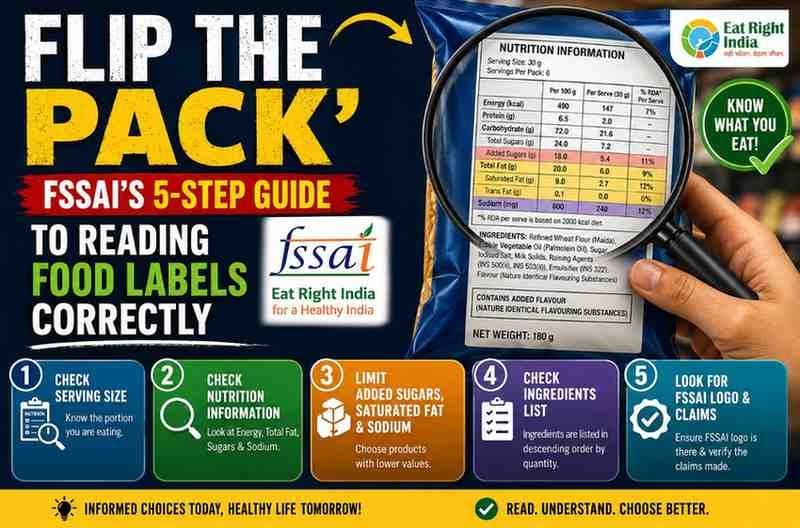
Introduction: Ever picked up a packaged snack because it said “healthy,” “natural,” or “low-fat” on the front? You’re not alone. But what if those claims don’t tell the full story? The FSSAI food label guide emphasizes one powerful habit: flip the pack and read what’s on the back. In a time when processed foods dominate supermarket shelves, understanding how to read food labels correctly is essential for making informed, healthy choices. This article breaks down the 5-step method recommended by experts, explains why it matters, and reveals the hidden truths most consumers miss.
Why Reading Food Labels Is More Important Than Ever
Modern diets are increasingly reliant on packaged and processed foods. While these products offer convenience, they often contain hidden sugars, unhealthy fats, and high sodium levels.
Key insight: Front-of-pack labels are designed to sell. Back-of-pack labels are designed to inform.
Ignoring this information can lead to long-term health risks such as obesity, diabetes, and heart disease—even when you think you’re eating “healthy.”
The FSSAI 5-Step Guide to Reading Food Labels
Step 1: Start with the Ingredients List
The ingredients list is the most honest part of any food label. Items are listed in descending order by weight, meaning the first few ingredients make up the majority of the product.
- If sugar, refined flour (maida), or oil is listed first, the product is likely unhealthy
- Look for whole ingredients like whole grains, nuts, and natural sources
Pro tip: The shorter and more recognizable the ingredient list, the better.
Step 2: Check the Nutritional Information Panel
This section provides details about calories, protein, fats, carbohydrates, and more.
- Pay attention to calories per serving
- Check protein and fiber content for satiety
- Be cautious of high fat and sugar levels
Important insight: Numbers alone don’t tell the full story—context matters. A high-calorie food with good nutrients can be healthier than a low-calorie processed snack.
Step 3: Understand Serving Size
One of the most misleading aspects of food labels is serving size. A packet may contain multiple servings, even if it appears to be a single portion.
Example: A snack labeled as 120 calories per serving might actually contain 3 servings—making the total 360 calories.
Why it matters: Misinterpreting serving size leads to underestimating calorie intake.
Step 4: Watch Out for Hidden Sugars and Sodium
Sugar and salt often appear under different names, making them harder to identify.
- Hidden sugars: Glucose, fructose, sucrose, corn syrup
- High sodium indicators: Sodium content above recommended limits
Critical insight: Even products labeled “no added sugar” may contain natural or alternative sweeteners that still impact blood sugar.
Step 5: Look Beyond Marketing Claims
Terms like “organic,” “multigrain,” or “low-fat” can be misleading if taken at face value.
- “Low-fat” products may be high in sugar
- “Multigrain” doesn’t always mean whole grain
- “Natural” has no strict regulatory definition in many cases
Key takeaway: Always verify claims by cross-checking the ingredients and nutrition panel.
Comparison: Front Label vs Back Label Reality
| Aspect | Front of Pack | Back of Pack |
|---|---|---|
| Purpose | Marketing and attraction | Detailed information |
| Transparency | Selective | Comprehensive |
| Reliability | Can be misleading | More accurate |
The Hidden Psychology of Food Packaging
Food companies invest heavily in packaging design to influence buying decisions. Bright colors, health buzzwords, and attractive images create a perception of health—even when the product may not be nutritionally balanced.
Unique insight: Your brain often decides based on visual cues within seconds. Reading the label introduces logic into that decision.
Common Mistakes Consumers Make
- Relying only on front-of-pack claims
- Ignoring serving size details
- Not recognizing alternative names for sugar
- Assuming “healthy-looking” products are actually healthy
Why this matters: These small mistakes can accumulate into significant dietary imbalances over time.
Real-World Impact: How Label Reading Improves Health
Developing the habit of reading food labels can lead to:
- Better weight management
- Reduced risk of lifestyle diseases
- Improved nutrient intake
- More informed and conscious eating habits
For families, this habit is especially important in shaping children’s long-term relationship with food.
A Smarter Shopping Strategy: What to Prioritize
When comparing packaged foods, focus on:
- Higher protein and fiber content
- Lower added sugar and sodium
- Minimal processing and additives
Practical tip: If two products look similar, the one with simpler ingredients is usually the better choice.
The Future of Food Labeling: Greater Transparency Ahead
Globally, there is a push toward clearer and more transparent labeling systems. Front-of-pack warning labels and color-coded systems are being introduced in many countries to help consumers make quicker decisions.
Prediction: In the near future, digital tools and mobile apps may allow consumers to scan products and instantly understand their health impact.
Conclusion: Flip the Pack Before You Trust the Pack
In a world full of marketing claims and processed foods, reading food labels is no longer optional—it’s essential. The FSSAI 5-step guide provides a simple yet powerful framework to help you make smarter choices.
Final takeaway: Don’t let the front of the package decide for you. Flip it, read it, and choose wisely.
Because the real story of your food isn’t on the front—it’s on the back.
For breaking news and live news updates, like us on Facebook or follow us on Twitter and Instagram. Read more on Latest Lifestyle on thefoxdaily.com.






COMMENTS 0