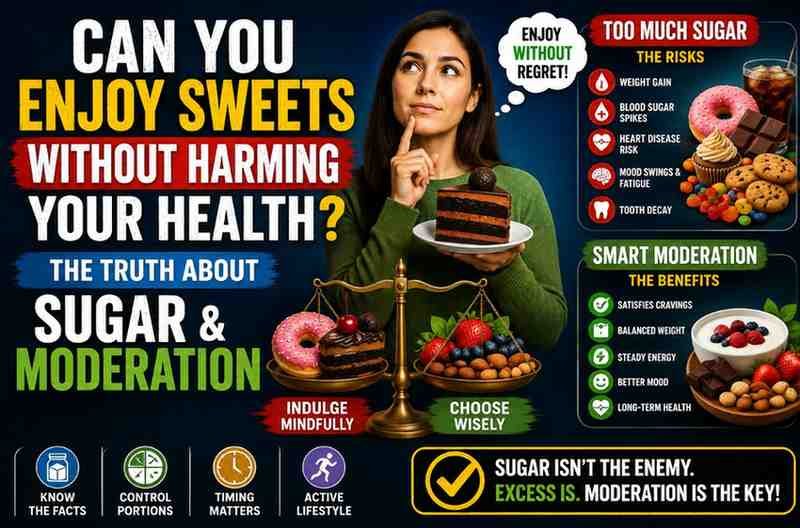
Introduction: When a beloved celebrity like Jackie Shroff openly shares his love for traditional Indian sweets like mawa cake, kheer, and sheera, it resonates with millions. After all, who doesn’t crave something sweet at the end of a long day? But this raises an important question: is indulging in sweets every night harmful, or can it be part of a healthy lifestyle? With rising concerns about sugar intake and metabolic health, experts increasingly emphasize moderation over restriction. This article explores the deeper connection between sugar, habits, and health offering practical insights into how you can enjoy your favorite desserts without compromising long-term well-being.
The Emotional Connection: Why Sweets Feel So Comforting
Sweets are not just food—they are deeply tied to culture, memory, and emotion. In India, desserts like kheer and sheera are often associated with celebrations, family gatherings, and comfort.
But there’s also a biological explanation. Sugar triggers the release of dopamine, a “feel-good” neurotransmitter that creates a sense of pleasure and reward. This is why many people, like Jackie Shroff, develop a nightly ritual of enjoying sweets—it becomes both a habit and a source of emotional relaxation.
Key insight: The problem isn’t the occasional dessert it’s when emotional comfort turns into a daily dependency.
What Happens When You Eat Sweets Every Night?
Regular sugar consumption, especially at night, can have subtle but significant effects on your body over time.
Short-Term Effects
- Temporary energy boost followed by fatigue
- Disrupted sleep cycles
- Increased cravings the next day
Long-Term Effects
- Weight gain and increased belly fat
- Higher risk of insulin resistance
- Elevated risk of heart disease and metabolic disorders
Why nighttime matters: Your metabolism slows down in the evening, making it harder for your body to process excess sugar efficiently.
The Expert Perspective: Moderation vs Indulgence
Health experts consistently highlight one principle: you don’t need to eliminate sweets you need to control how often and how much you consume.
Moderation means:
- Enjoying sweets occasionally, not habitually
- Keeping portion sizes small
- Balancing desserts with a nutrient-rich diet
Critical insight: Completely restricting sweets often backfires, leading to binge eating. A balanced approach is more sustainable.
Traditional Indian Sweets: Hidden Nutritional Context
Interestingly, not all sweets are created equal. Traditional Indian desserts often contain ingredients that offer some nutritional value.
Mawa Cake
- Rich in dairy fats and calories
- Provides energy but should be consumed sparingly
Kheer
- Made with milk and rice
- Contains calcium and protein, but also added sugar
Sheera (Sooji Halwa)
- Contains semolina, ghee, and sugar
- Offers quick energy but is calorie-dense
Unique angle: These sweets are not inherently “bad”—their impact depends on frequency and portion size.
Comparison: Daily Indulgence vs Mindful Consumption
| Habit | Daily Indulgence | Moderate Consumption |
|---|---|---|
| Frequency | Every night | 2–3 times per week |
| Impact on Health | Increased risk of chronic disease | Minimal risk when balanced |
| Cravings | Stronger and more frequent | Controlled and occasional |
| Long-term Sustainability | Low | High |
The Hidden Risk Most People Ignore
One of the biggest misconceptions is that traditional or homemade sweets are always healthier. While they may lack preservatives, they still contain significant amounts of sugar and fat.
Important insight: Your body processes sugar similarly, regardless of whether it comes from packaged desserts or homemade kheer.
This means that portion control remains essential, even with “natural” or traditional foods.
Smart Strategies to Enjoy Sweets Without Guilt
1. Control Portion Size
Instead of a full bowl of kheer, opt for a small serving. This satisfies cravings without overloading your system.
2. Time Your Indulgence Wisely
Eating sweets earlier in the day allows your body more time to burn off the extra calories.
3. Pair with Protein or Fiber
Combining sweets with nuts or yogurt can slow sugar absorption and reduce blood sugar spikes.
4. Avoid Emotional Eating
Ask yourself: Are you truly hungry, or just stressed or bored?
5. Create a “Treat Schedule”
Planning dessert days helps prevent impulsive daily indulgence.
Why This Conversation Matters Today
India is witnessing a rapid rise in lifestyle diseases such as diabetes and obesity. Increased access to high-calorie foods, combined with sedentary lifestyles, is amplifying the impact of dietary habits.
Emerging trend: Even younger populations are now experiencing health issues once associated with older age groups.
This makes mindful eating—not strict dieting—a critical skill for long-term health.
A Broader Insight: Food, Identity, and Balance
Completely avoiding sweets is neither realistic nor culturally necessary. Food is an essential part of identity, tradition, and joy.
Balanced perspective: The goal is not to remove pleasure from eating—but to ensure that pleasure does not come at the cost of health.
Jackie Shroff’s love for sweets reflects a common human experience. The takeaway is not to judge the habit, but to understand its impact and manage it wisely.
Future Outlook: The Rise of Mindful Indulgence
As awareness grows, more people are shifting toward mindful eating habits. This includes:
- Reducing added sugar intake
- Choosing healthier dessert alternatives
- Focusing on quality over quantity
Prediction: In the coming years, the concept of “mindful indulgence” will replace extreme dieting, allowing people to enjoy food while maintaining health.
Conclusion: Enjoy the Sweetness, But Stay in Control
Loving sweets is perfectly natural—but turning that love into a daily habit can have long-term consequences. The key is not restriction, but moderation, awareness, and balance.
Final takeaway: You don’t have to give up your favorite desserts like mawa cake, kheer, or sheera. You just need to enjoy them wisely.
Because in the end, the healthiest lifestyle is not the one without treats—it’s the one where treats don’t control you.
For breaking news and live news updates, like us on Facebook or follow us on Twitter and Instagram. Read more on Latest Health on thefoxdaily.com.






COMMENTS 0