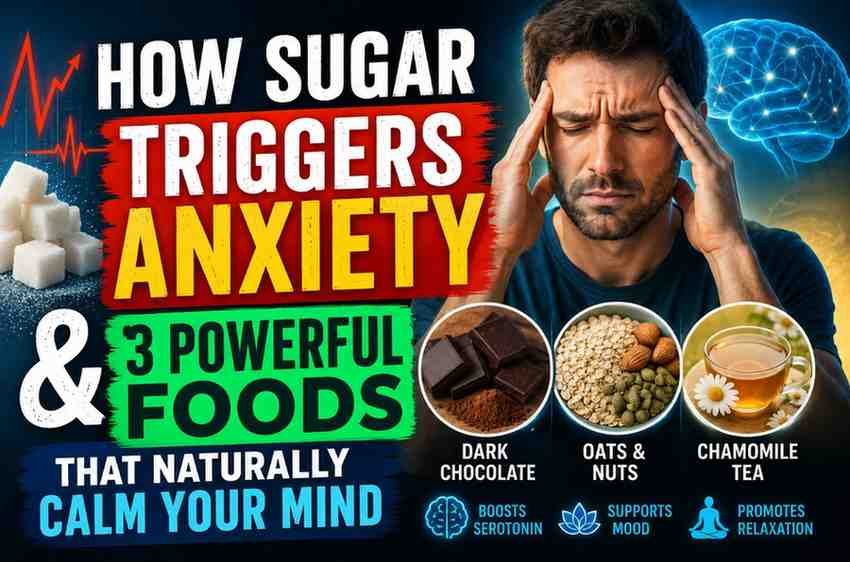
Introduction: Why do anxious thoughts often come with sugar cravings? Who is most affected by this hidden connection between diet and mental health? What foods can actually calm your mind instead of fueling stress? In today’s fast-paced world, anxiety is rising across all age groups, often worsened by poor dietary habits. Many people unknowingly rely on sugary snacks for quick comfort, only to experience sharper mood crashes later. This article explains how sugar affects anxiety, why your brain keeps asking for it, and most importantly, three powerful food alternatives that help regulate mood naturally. Backed by nutritional science and behavioral insights, this guide shows how small dietary changes can create a big impact on emotional stability.
Understanding the Sugar Anxiety Connection
Sugar doesn’t just affect your waistline—it directly impacts your brain chemistry. When you consume high amounts of refined sugar, your blood glucose levels spike rapidly. This triggers a temporary surge in energy and dopamine, often described as a “feel-good” effect. However, this is short-lived.
Within a short period, your blood sugar crashes, leading to fatigue, irritability, and heightened anxiety. This cycle creates a loop where your body craves more sugar to regain that temporary calm, reinforcing unhealthy eating habits.
Why this matters: Anxiety is not just psychological it is deeply physiological. Blood sugar instability can mimic or worsen anxiety symptoms such as:
- Restlessness and nervousness
- Rapid heartbeat
- Difficulty concentrating
- Mood swings
In simple terms, your brain confuses sugar crashes with emotional distress.
The Science Behind Cravings: Why Your Brain Wants Sugar
Your brain consumes about 20% of your daily energy intake, making it highly sensitive to fluctuations in glucose levels. When you’re stressed or anxious, your body releases cortisol, a hormone that increases appetite especially for quick-energy foods like sugar.
Key insight: Sugar cravings during anxiety are not about hunger they’re about emotional regulation.
Additionally, processed sugar disrupts the gut microbiome. Since the gut produces a large portion of serotonin (the “feel-good” neurotransmitter), an unhealthy gut can directly contribute to anxiety and mood disorders.
Eat These 3 Things Instead: Smart Alternatives to Sugar
1. Complex Carbohydrates: Slow Energy, Stable Mood
Unlike refined sugar, complex carbohydrates digest slowly, providing a steady release of glucose into the bloodstream. This prevents sudden spikes and crashes, helping maintain emotional stability.
Best options:
- Oats
- Brown rice
- Whole wheat bread
- Quinoa
Why they work: These foods promote the production of serotonin without causing blood sugar instability. They also keep you fuller for longer, reducing unnecessary cravings.
Real-world impact: Replacing sugary breakfast cereals with oatmeal can significantly reduce mid-morning anxiety and improve focus.
2. Protein-Rich Foods: The Mood Stabilizers
Protein helps regulate blood sugar levels and supports the production of neurotransmitters like dopamine and serotonin. It also slows down digestion, preventing energy crashes.
Best options:
- Eggs
- Lentils and beans
- Greek yogurt
- Nuts and seeds
Why they work: Protein contains amino acids like tryptophan, which play a crucial role in mood regulation. A protein-rich diet helps maintain consistent energy levels throughout the day.
Unique insight: Pairing protein with carbohydrates (like peanut butter on whole-grain toast) enhances nutrient absorption and keeps anxiety-triggering hunger at bay.
3. Healthy Fats: Brain Fuel for Calmness
Healthy fats are essential for brain health and hormone regulation. They help reduce inflammation, which has been linked to anxiety and depression.
Best options:
- Avocados
- Walnuts
- Flaxseeds
- Olive oil
Why they work: Omega-3 fatty acids found in these foods support brain function and reduce stress responses. They also improve communication between brain cells, promoting emotional balance.
Practical example: Adding a handful of walnuts to your daily diet may help reduce chronic stress over time.
Comparison: Sugar vs Healthy Alternatives
| Factor | Refined Sugar | Healthy Alternatives |
|---|---|---|
| Energy Release | Rapid spike and crash | Slow and sustained |
| Impact on Mood | Temporary relief, followed by anxiety | Stable and balanced mood |
| Effect on Brain | Disrupts neurotransmitters | Supports brain function |
| Long-term Health | Increases risk of mental health issues | Improves overall well-being |
Why This Matters More Today Than Ever
Modern lifestyles are filled with stress, irregular sleep patterns, and processed foods. This combination creates a perfect environment for anxiety to thrive. Sugar, often marketed as comfort food, actually worsens the problem.
Emerging perspective: Mental health management is no longer limited to therapy and medication—it increasingly includes nutritional psychiatry, a field that studies how diet affects mental well-being.
Ignoring dietary triggers means addressing only half the problem.
The Hidden Pattern Most People Miss
Here’s a critical insight: People often mistake emotional hunger for physical hunger. When anxiety hits, the brain looks for quick relief—usually in the form of sugar.
Breaking the cycle requires awareness:
- Identify when cravings are emotional
- Choose nutrient-dense foods instead of sugary snacks
- Maintain consistent meal timing
This shift doesn’t just reduce anxiety it improves overall mental resilience.
Future Outlook: The Rise of Food-Based Mental Health Solutions
The future of mental health care is moving toward holistic approaches. Diet, sleep, and lifestyle are becoming central pillars alongside traditional treatments.
Prediction: In the coming years, personalized nutrition plans for anxiety management will become as common as fitness routines. Food will be recognized not just as fuel, but as a powerful tool for emotional regulation.
Conclusion: Small Changes, Powerful Results
Sugar may offer temporary comfort, but it ultimately fuels anxiety. By replacing it with complex carbohydrates, protein-rich foods, and healthy fats, you can stabilize your mood, improve focus, and reduce stress naturally.
Key takeaway: Managing anxiety isn’t just about what you avoid—it’s about what you choose instead.
Start small. Swap one sugary snack a day with a healthier alternative. Over time, these simple changes can transform not just your diet, but your mental well-being.
For breaking news and live news updates, like us on Facebook or follow us on Twitter and Instagram. Read more on Latest Health on thefoxdaily.com.






COMMENTS 0