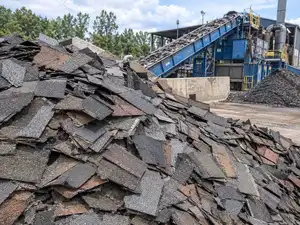
Discarded roofing shingles are usually treated as construction waste, but Missouri found another use for them: turning old roof materials into part of its road network. In 2005, the Missouri Department of Transportation (MoDOT) launched a pilot project using reclaimed asphalt shingles in pavement on Route 61/67 in St. Louis County.
The experiment offered a way to reduce the amount of roofing waste sent to landfills while lowering the cost of producing asphalt mixtures. Six years after the road was constructed, MoDOT reported that the pavement’s overall performance remained favorable, although some reflective cracking had appeared.
The project helped Missouri develop specifications for using recycled roofing shingles in road construction. It also became an example for other transportation departments exploring how discarded materials could be incorporated into highway infrastructure.
How Missouri Began Turning Roofing Waste Into Road Material
Missouri’s effort began after a contractor approached MoDOT in 2002 with a proposal to use reclaimed asphalt shingles, commonly known as RAS, in hot-mix asphalt. The proposal focused on shingles removed from existing roofs during demolition or replacement, rather than only unused manufacturing scraps.
At the time, using post-consumer roofing shingles in state highway pavement was not a widely established practice. MoDOT began reviewing technical information and other states’ specifications to understand whether the material could be safely and effectively incorporated into road mixtures.
The department and its industry partners continued investigating the idea through testing and a demonstration project in December 2004. The results were considered sufficiently encouraging for a field trial. In 2005, a pilot pavement project using reclaimed shingles was constructed on Route 61/67 in St. Louis County.
The initiative was significant because it explored a use for shingles that would otherwise require disposal. Roofing materials contain asphalt binder and mineral granules, making them a potential source of material for asphalt pavement when properly processed and tested.
What Happened on Route 61/67?
The Route 61/67 project was designed to evaluate how mixtures containing recycled roofing shingles would perform under real road conditions. The trial included different asphalt mixtures, allowing researchers and transportation officials to compare their characteristics.
The test sections included mixtures containing reclaimed asphalt pavement (RAP), reclaimed asphalt shingles (RAS), or combinations of the two. Some sections used conventional asphalt binder, while others incorporated a portion of recycled roofing material.
After six years, some reflective cracking was observed on the roadway. Reflective cracks occur when movement or existing cracks in an underlying pavement layer appear through a newer asphalt surface. Despite this visible deterioration, MoDOT considered the pavement’s overall performance favorable.
The finding was important because it showed that the use of recycled shingles did not automatically prevent a pavement from delivering acceptable performance over several years. However, the result was not proof that every mixture containing roofing waste would perform equally well. Asphalt composition, binder selection, processing and construction quality all influence pavement durability.
Why Old Roofing Shingles Can Be Used in Asphalt
Asphalt roofing shingles contain several materials that can contribute to road construction. Their composition generally includes asphalt binder, mineral granules, mineral filler and a reinforcing backing material. Once recovered and processed, these components can be incorporated into hot-mix asphalt under controlled specifications.
The asphalt binder already present in the shingles can replace part of the new asphalt binder normally required in a pavement mixture. The mineral granules and filler also contribute to the material’s composition.
However, roofing shingles cannot simply be collected from demolition sites and poured into a road mix. They must be processed to remove unwanted debris and reduce the material to a suitable size. Quality control is necessary to ensure that the recycled material meets the required standards.
Old shingles can also contain contaminants or materials that require careful handling. Processing and testing therefore play an important role in making reclaimed roofing waste suitable for highway construction.
Missouri Introduced Specifications After the Pilot Project
The Route 61/67 trial helped MoDOT move from experimentation towards wider use of reclaimed shingles. Following the pilot project and additional testing, the department developed a provisional specification in 2006 that permitted RAS in certain asphalt mixtures.
Missouri subsequently incorporated provisions allowing recycled shingles in its Standard Specifications for Highway Construction in 2008. The specifications established conditions governing the types and quantities of shingles that could be used in approved mixtures.
The initial permitted amount was limited, with later changes allowing a maximum of 7% reclaimed asphalt shingles in specified mixtures. The rules also addressed asphalt binder selection and other technical requirements intended to maintain pavement quality.
This regulatory development was essential to expanding the practice. A successful demonstration project can show that an approach is worth investigating, but consistent specifications are needed before contractors can use recycled materials across a larger number of public road projects.
Recycling Shingles Delivered Potential Cost Savings
One of the main attractions of the programme was its economic value. Reclaimed shingles provide an additional source of asphalt binder, reducing the amount of new material that asphalt producers need to purchase.
According to a 2015 case study by the American Association of State Highway and Transportation Officials (AASHTO), using recycled asphalt shingles at levels of 5% to 7% could save Missouri between $3 and $5 per ton of asphalt mixture.
For a typical resurfacing project using approximately 30,000 tons of asphalt, the estimated savings could range from $90,000 to $150,000. The actual financial benefit depends on material prices, the quantity of recycled shingles used and the design of the asphalt mixture.
These savings became particularly relevant as construction costs increased. Asphalt production depends on materials such as aggregates and liquid asphalt, along with labour, fuel and equipment. Replacing a portion of virgin material with properly processed recycled content can help contractors manage some of those expenses.
Use of Recycled Shingles Expanded Across Missouri
After the initial trials, the use of reclaimed asphalt shingles expanded beyond the Route 61/67 project. Missouri’s specifications gave contractors a framework for incorporating both manufacturing waste and shingles recovered from existing roofs into approved asphalt mixtures.
According to MoDOT information presented in a 2011 transportation conference paper, the proportion of Missouri asphalt projects using mixtures containing recycled shingles increased over time. Around 20% of projects used RAS-containing mixtures in 2008, rising to 49% in 2010. The average RAS content in those mixtures during 2010 was approximately 4.1%.
The programme also encouraged the development of a supply chain for collecting and processing discarded shingles. Contractors and recycling companies began preparing the material for use in asphalt production, connecting roofing waste recovery with road construction demand.
A 2015 AASHTO case study reported that approximately 20 state transportation departments either permitted or were working towards permitting the use of post-consumer recycled shingles in asphalt mixtures. Missouri’s early experience helped demonstrate how a state agency and private contractors could develop specifications and practical methods for using the material.
Environmental Benefits of Reusing Roofing Materials
Discarded asphalt shingles can occupy significant landfill space, particularly when large quantities are generated during roof replacement and building demolition. Reusing them in road construction offers an alternative destination for material that would otherwise be disposed of.
The approach provides several potential environmental benefits:
- Less landfill waste: Recovering shingles for road construction reduces the quantity of roofing material requiring disposal.
- Lower demand for virgin asphalt binder: The asphalt already present in recycled shingles can replace a portion of newly produced binder.
- More efficient material use: Recovered roofing components can become part of another infrastructure product rather than being discarded.
- Potential cost reductions: Replacing some new materials with recycled content can lower asphalt mixture costs.
The benefits depend on responsible collection, processing and quality control. Recycling does not make every roofing material suitable for road construction, and the environmental impact of processing and transporting recovered shingles also needs to be considered.
Why Testing and Quality Control Matter
Although recycled shingles offer a useful source of asphalt binder, their properties can differ from those of newly produced materials. Roofing asphalt is exposed to weather and ageing over time, which can make its binder harder and stiffer.
If too much reclaimed material is added without adjusting the mixture design, the resulting pavement may become more susceptible to certain forms of cracking. Engineers therefore need to consider the amount of recycled binder, the characteristics of the virgin binder and the expected traffic and climate conditions.
MoDOT’s specifications included limits and requirements intended to address these concerns. The department also examined how the proportion of virgin binder affected the mixture and whether a different binder grade was needed in some circumstances.
Research conducted later in Missouri continued to examine recycled asphalt mixtures, including combinations containing reclaimed pavement, roofing shingles and other recycled materials. A study sponsored by MoDOT and carried out with researchers at the University of Missouri evaluated 16 field sections and tested material samples to assess pavement performance.
The research concluded that Missouri’s approach to using recycled materials was sound and had improved over time, while also identifying opportunities to refine mixture design and performance testing. This reflects an important distinction: the objective is not simply to maximise recycled content, but to use it at levels and in combinations that maintain reliable pavement performance.
Missouri’s Experiment Became an Example for Other States
Missouri’s experience attracted attention because it addressed two practical challenges at once: the disposal of roofing waste and the cost of road construction. The Route 61/67 pilot showed that recovered shingles could be incorporated into a highway pavement mixture and still receive a favorable performance assessment after six years.
The project also demonstrated the importance of cooperation between public transportation agencies, contractors and recycling businesses. MoDOT’s work with industry partners helped turn an experimental proposal into specifications that could be applied to additional projects.
Other states subsequently explored or expanded the use of reclaimed shingles in asphalt. Their approaches have varied according to local material supplies, environmental regulations, technical requirements and pavement standards.
A Road-Building Idea That Connected Waste Reduction With Infrastructure
Missouri’s 2005 Route 61/67 project was an early example of how a discarded construction material could be given a second use in public infrastructure. The six-year assessment did not report a completely crack-free surface, but MoDOT still considered the pavement’s overall performance favorable.
The wider programme showed that recycling roofing shingles could offer measurable material-cost savings while diverting waste from landfills. Its expansion also highlighted the importance of technical specifications, testing and careful mixture design when using recycled materials in roads.
Rather than treating old roofing shingles solely as waste, Missouri helped establish a system in which they could become a resource for road construction. The experiment became part of a broader shift towards incorporating recovered materials into transportation projects while maintaining the performance standards expected of public highways.
For breaking news and live news updates, like us on Facebook or follow us on Twitter and Instagram. Read more on Latest World on thefoxdaily.com.

COMMENTS 0