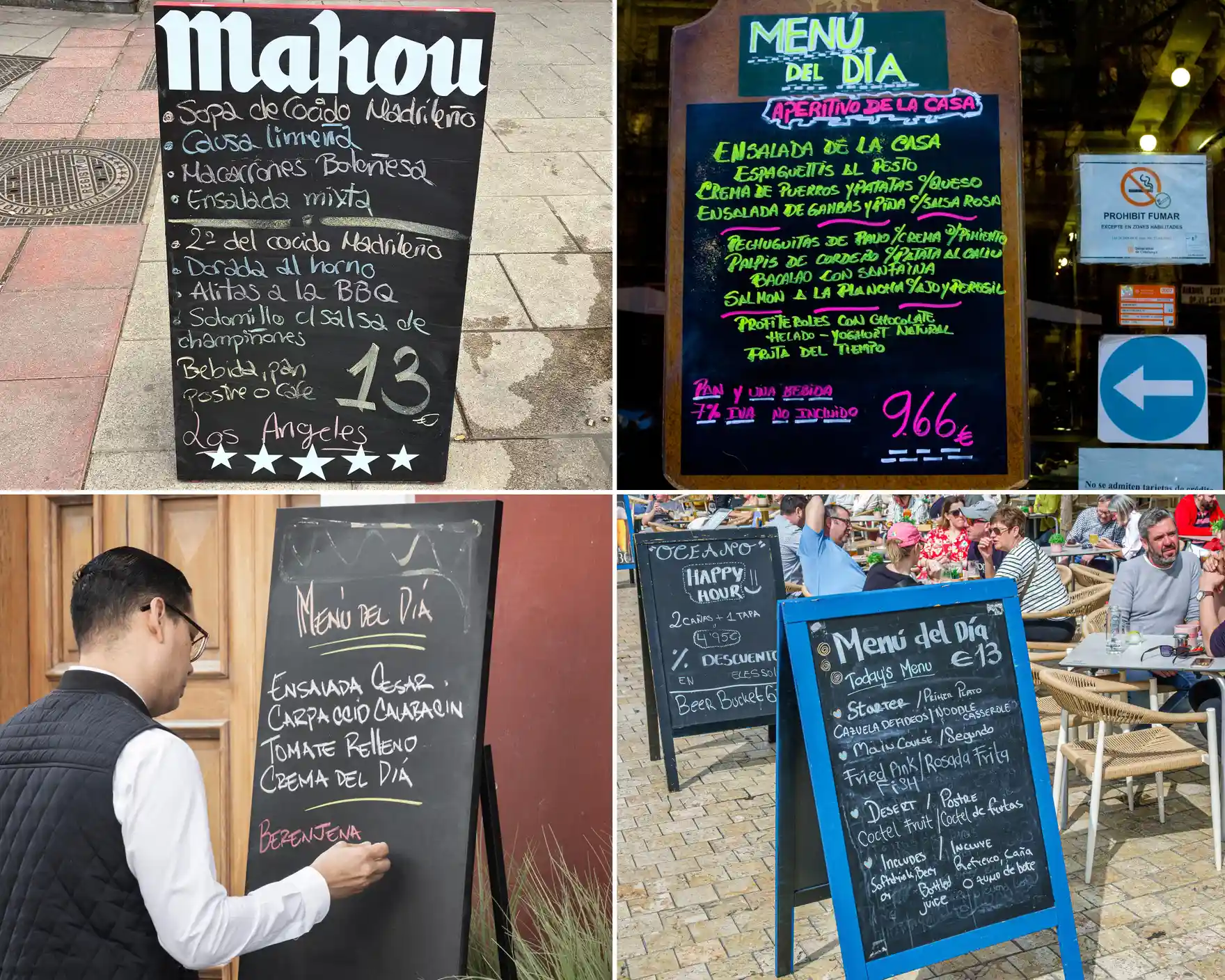
The menú del día, Spain’s traditional fixed-price lunch, remains a familiar feature of the country’s restaurants. Written on chalkboards and displayed outside neighbourhood eateries, it offers workers and other diners a complete midday meal at a set price, typically including a starter, a main course, dessert or coffee, bread and a drink.
Yet this long-standing dining ritual is facing growing pressure. Changing work routines, limited lunch breaks, rising food and energy costs, and competition from supermarket meals are making the traditional sit-down lunch harder to sustain. Although approximately four million menús are still served on Spanish weekdays, the custom is gradually losing ground.
The debate is not simply about whether Spaniards will continue eating lunch in restaurants. It is also about affordability, changing tastes and the role neighbourhood eateries play in bringing people together. As Spanish food journalist Lakshmi Aguirre argues in her book, Menú del Día: Everyday Scenes of a First Course, a Second Course and Pudding, the tradition has changed alongside Spanish society and may still have a future if it adapts.
How the Menú del Día Began Under Franco
The origins of the menú del día are closely linked to Spain’s tourism strategy during the dictatorship of Francisco Franco. In the mid-1960s, the government sought to present Spain to foreign visitors as a country where food was plentiful, good and affordable, following the hardship associated with the years after the Spanish Civil War.
Manuel Fraga, then the regime’s information and tourism minister, introduced a tourist menu that required establishments serving food to provide a structured meal at a regulated price. The initiative was intended to give visitors a predictable dining option while projecting an image of an accessible and welcoming tourist destination.
The prescribed meal included a soup or other starter, a main course selected from at least three options based on eggs, fish or meat, a side dish, and a dessert. Dessert could consist of fruit, something sweet or cheese.
The price was set between 50 and 250 pesetas. Regulations also specified the accompanying wine, including a quarter-litre serving described as Spanish red or white wine that was pure, clean and pleasant on the palate, with an alcohol content of at least 12%.
These requirements reveal how a policy designed partly to manage the visitor experience helped establish a recognisable format for everyday restaurant meals. A defined selection of courses and a fixed price made it easier for diners to understand what they were paying for and for restaurants to organise lunch service.
From Tourist Menu to Everyday Spanish Tradition
By the early 1970s, the tourist menu had been renamed the menú del día. The change helped distance the meal from its original association with attracting foreign visitors and encouraged ordinary Spaniards to regard it as an affordable option for themselves.
Over time, the set lunch became deeply embedded in everyday life. It offered workers a convenient way to eat a substantial meal away from home and gave local restaurants a familiar structure around which to organise their menus.
Its historical origins have largely faded from public memory. Aguirre has described how people she spoke to while researching her book were often surprised to learn about Fraga’s role in its creation. For many diners, the menú del día feels like an enduring Spanish custom rather than a tradition shaped by a government tourism policy.
That transformation is significant. A practice can acquire a meaning far removed from the circumstances in which it began. The menú del día may have originated in an authoritarian government’s effort to promote tourism, but its subsequent place in Spanish society has been shaped by restaurants, workers, families and generations of diners.
Why the Menú del Día Is Declining
The pressures on Spain’s traditional set lunch are economic as well as cultural. Its appeal has always depended on offering a complete meal at a price that ordinary customers can afford. When the costs of ingredients, energy and restaurant operations rise, maintaining that balance becomes more difficult.
Rising costs put pressure on small restaurants
Family-run restaurants often rely on a changing selection of starters and main courses to make the menú del día attractive. Preparing several dishes every day requires ingredients, kitchen time, staff and careful planning.
Higher food and energy costs can squeeze already limited margins. Restaurants must decide whether to raise prices, simplify their offerings or reduce the variety available to customers. Each option can affect the value that makes the traditional menu distinctive.
The reported average price of a menú del día is now €14.70. While a fixed-price meal can still provide a predictable way to budget for lunch, its affordability depends on customers’ incomes and the alternatives available to them.
Workers have less time for a traditional lunch
Another challenge is the growing preference for speed and convenience. People with limited time may bring food from home, buy a ready meal at a supermarket or eat quickly in a workplace canteen rather than spend time in a restaurant.
These choices can reduce the need for a multi-course lunch, even when diners appreciate the quality and social atmosphere of the traditional experience. The issue is not necessarily a rejection of Spanish Food Culture; it may simply reflect the practical demands of modern working life.
The menú del día requires more than the money to pay for it. Customers also need enough time to sit down, eat several courses and return to work or other responsibilities. As Aguirre observes, having time to enjoy a meal is itself a form of privilege.
Restaurant formats are changing
Some restaurants have responded by offering a simpler “dish of the day” instead of a full selection of starters and main courses. This approach reduces the need to prepare multiple options and can make daily service easier to manage.
The change also illustrates a wider challenge for traditional dining formats: a restaurant must balance the expectations of customers with the practical realities of running a business. A simpler offering may help keep lunch service viable, even if it no longer delivers the full experience associated with the classic menú del día.
For breaking news and live news updates, like us on Facebook or follow us on Twitter and Instagram. Read more on Latest World on thefoxdaily.com.






COMMENTS 0